

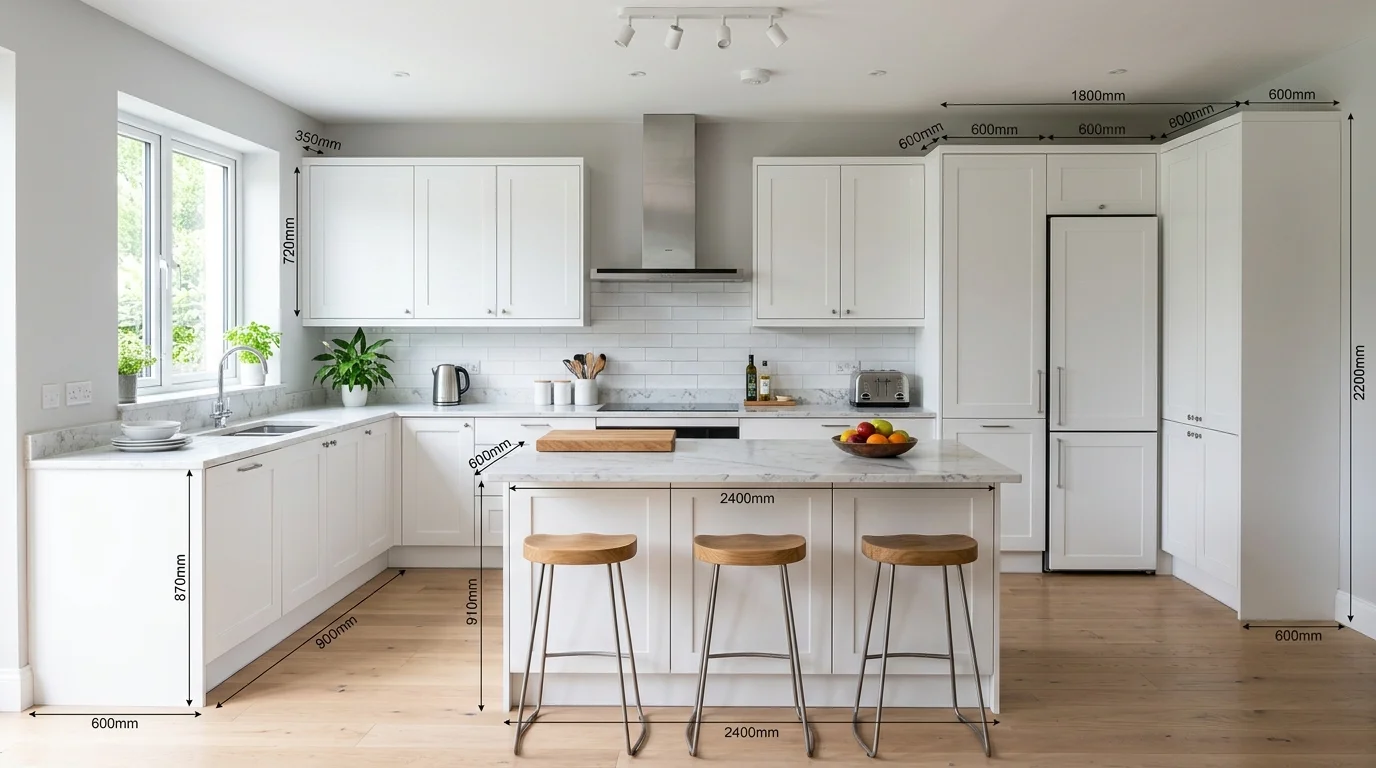
Kitchen cabinet sizes are one of the first things you should understand before planning a remodel, buying stock cabinets, or designing a custom kitchen layout. The right cabinet dimensions affect countertop height, appliance fit, storage capacity, walkway clearance, and everyday comfort.
In most kitchens, standard base cabinets are 34.5 inches high without a countertop and 24 inches deep. However, the final size can change once you add countertops, fillers, panels, toe kicks, appliances, and trim. Therefore, it is important to look at each cabinet type separately instead of relying on one general measurement.
This guide explains standard kitchen cabinet sizes for base, wall, upper, tall, pantry, sink, oven, microwave, corner, drawer, and pull-out cabinets. You will also find clearance rules, inch-to-metric conversions, measuring tips, common mistakes, and a pre-order checklist.
Kitchen Cabinet Sizes Chart: Quick Standard Dimensions
Use this kitchen cabinet sizes chart as a quick reference before measuring, ordering, or speaking with a contractor. Exact measurements can vary by manufacturer, but these are the most common standard kitchen cabinet dimensions used in many residential kitchens.
| Cabinet type | Standard height | Standard depth | Common widths | Best use |
|---|---|---|---|---|
| Base cabinets | 34.5 in without countertop, about 35 to 36 in finished | 24 in without countertop, about 25 to 26 in with overhang | 9 to 48 in | Countertops, sinks, drawers, prep space |
| Wall cabinets | 12 to 42 in | 12 in standard, 15 to 24 in for special uses | 9 to 48 in | Dishes, glasses, light storage |
| Tall cabinets | 84, 90, or 96 in | 12 to 24 in | 12 to 36 in | Pantry, broom, utility storage |
| Pantry cabinets | 84, 90, or 96 in | 12 to 24 in | 12 to 36 in | Food storage and pull-out shelves |
| Sink base cabinets | 34.5 in without countertop | 24 in | 30, 33, or 36 in | Single, offset, or double sinks |
| Oven cabinets | Often 84 to 96 in | 24 in | 24, 27, 30, or 33 in | Wall ovens and microwave combos |
| Refrigerator wall cabinets | 12, 15, 18, or 24 in high | 12 or 24 in | 30 to 36 in or wider | Storage above refrigerator |
The main point is simple. Base cabinet dimensions set the working height of the kitchen, wall cabinet dimensions affect reach and clearance, and tall cabinet dimensions determine how much vertical storage you can use.
Standard Base Cabinet Sizes and Measurements
kitchen cabinet sizes are the lower cabinets that support countertops. In addition, they are used for sinks, drawers, trash pull-outs, cookware, cleaning supplies, and general storage. Because they carry the countertop, sink, and many appliances, base cabinet dimensions must be planned carefully.
Base Cabinet Height
The standard base cabinet height is 34.5 inches without a countertop. After adding a countertop, the finished standard cabinet height is usually about 35 to 36 inches. This height works well for most people because it provides a comfortable surface for chopping, cooking, and washing dishes. Countertop thickness also matters. A thin countertop may keep the finished height close to 35 inches, while a thicker stone or quartz countertop may bring the height closer to 36 inches. In custom kitchens, base cabinets can be adjusted for taller users, shorter users, or accessible kitchen needs.
Base Cabinet Depth
The standard base cabinet depth is 24 inches without the countertop. Once the countertop is installed, the total depth usually becomes about 25 to 26 inches because of the front overhang. This depth gives enough storage space without making items too hard to reach. However, extra-deep lower cabinets can make it difficult to access items at the back. For this reason, deep base cabinets work best with drawers, roll-out trays, or pull-out organizers.
Base Cabinet Width
Standard base cabinet width usually increases in 3-inch increments. Common options include 9, 12, 15, 18, 21, 24, 27, 30, 33, 36, 42, and 48 inches. Narrow cabinets are useful for tray dividers, spice pull-outs, and filler spaces. Meanwhile, medium widths work well for drawers, trash pull-outs, and everyday storage. Wider base cabinets are often used for sinks, pots, pans, and large drawer banks.
Toe Kick Dimensions
The toe kick is the recessed space at the bottom of a base cabinet. A common toe kick height is about 4 inches, with a depth of about 3 inches. This small recess lets your feet move closer to the cabinet, which makes countertop work more comfortable. Many cabinet dimension guides skip toe kick measurements. However, they matter because they affect finished cabinet height, comfort, and installation accuracy.
Standard Wall and Upper Kitchen Cabinet Sizes
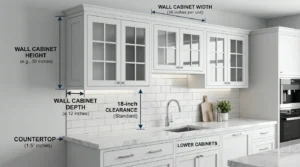
Wall cabinets, also called upper cabinets, are mounted above countertops, appliances, or open wall space. Because they sit above eye level, they are usually best for dishes, glasses, dry goods, spices, and lightweight storage.
Wall Cabinet Height
Standard wall cabinet height options commonly include 12, 15, 18, 24, 30, 36, and 42 inches. Shorter wall cabinets are often used above refrigerators, microwaves, and range hoods. Taller wall cabinets are used when the design goes closer to the ceiling. For an 8-foot ceiling, 30-inch or 36-inch wall cabinets are common. For 9-foot ceilings, 36-inch or 42-inch cabinets can create a taller look. In 10-foot kitchens, stacked cabinets or decorative space above the upper cabinets may work better.
Wall Cabinet Depth
Standard wall cabinet depth is usually 12 inches. This depth is practical because it keeps items reachable and prevents the upper cabinets from feeling too heavy over the countertop. Some upper cabinet dimensions use a 15-inch depth for extra storage. Above a refrigerator, a 24-inch-deep cabinet is common because it lines up better with the refrigerator body and creates more useful storage.
Wall Cabinet Width
Wall cabinet width usually follows the same 3-inch increment system as base cabinets. Common widths include 9, 12, 15, 18, 21, 24, 27, 30, 33, and 36 inches. Wider options are also available for some designs. The width should align with base cabinets, appliances, windows, and the overall kitchen layout. As a result, matching upper and lower cabinet lines creates a cleaner and more intentional look.
Upper Cabinet Height From Countertop
The standard distance between countertop and upper cabinets is 18 inches. This clearance gives enough room for small appliances, food prep, and backsplash installation. In some kitchens, the upper cabinet height from countertop may be 15 to 20 inches. A lower placement can help shorter users reach shelves more easily. However, a higher placement can create more breathing room for coffee makers, stand mixers, and other tall countertop appliances.
Standard Tall Cabinet and Pantry Cabinet Sizes
Tall cabinets run from the floor upward and are often used for pantry storage, broom storage, utility items, or built-in appliances. For this reason, they are especially useful in kitchens that need more vertical storage.
Tall Cabinet Height
Standard tall cabinet height options are usually 84, 90, and 96 inches. An 84-inch cabinet works well in many 8-foot-ceiling kitchens. A 90-inch cabinet can leave room for crown molding or a small ceiling gap. Finally, a 96-inch cabinet can reach close to the ceiling in many standard rooms. Tall kitchen cabinet dimensions should be planned with ceiling height, flooring thickness, crown molding, and any soffits in mind.
Tall Cabinet Depth
Tall cabinet depth is commonly 12 or 24 inches. A 12-inch-deep pantry cabinet is excellent for canned goods, jars, spices, and boxed foods because everything stays easy to see. On the other hand, a 24-inch-deep tall cabinet provides more space for brooms, mops, vacuum accessories, and small appliances.
If you choose a deep pantry cabinet, pull-out shelves can make storage much easier to use.
Tall Cabinet Width
Common tall cabinet width options include 12, 18, 24, 30, and 36 inches. A narrow 12-inch pantry can fit into compact layouts. A 24-inch pantry is a strong all-purpose option, while a 36-inch pantry can hold pull-outs, large food storage, and household supplies.
Pantry Cabinet Dimensions
Pantry cabinet dimensions depend on the type of storage you want. Shallow pantries are better for food visibility. Deeper pantries are better for bulk storage, appliances, and utility items. For many homes, the best pantry layout includes adjustable shelves, pull-out baskets, or roll-out trays.
Specialty Cabinet Dimensions
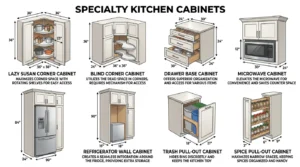
Specialty cabinets are often where a kitchen becomes more functional. These cabinets solve specific problems, such as awkward corners, appliance placement, sink support, trash storage, and narrow gaps.
Sink Base Cabinet Sizes
Sink base cabinet size depends on the sink type. For a single-basin sink, a 30-inch sink base is often enough. Some offset double sinks may need a 33-inch cabinet, while larger double-basin sinks usually require a 36-inch sink base. Farmhouse and apron-front sinks need extra planning because the cabinet face may need modification. Therefore, always confirm the sink manufacturer’s minimum cabinet size before ordering.
Corner Cabinet Sizes
Corner kitchen cabinet dimensions vary by design. A blind corner cabinet may use a long base cabinet that extends into the corner with one accessible opening. In contrast, a diagonal corner cabinet sits across the corner at an angle. A Lazy Susan cabinet uses rotating shelves to make the corner easier to access. Corner cabinets can save space. However, they also affect door swing, drawer clearance, and adjacent cabinet widths, so they should be planned early in the layout.
Drawer Base Cabinet Sizes
Drawer base cabinet sizes commonly range from 15 to 36 inches wide. Smaller drawer bases work well for utensils, towels, and small tools. Wider drawer bases are excellent for pots, pans, dishes, mixing bowls, and food containers.
In many modern kitchens, drawer bases are easier to use than lower cabinets with doors because drawers bring the contents toward you.
Oven Cabinet Sizes
Oven cabinet dimensions depend on the appliance. Common wall oven widths include 24, 27, and 30 inches. The cabinet must match the oven cutout requirements, not just the outer appliance width. For double ovens or oven and microwave combinations, check the manufacturer’s installation guide before finalizing cabinet width, height, and ventilation space.
Microwave Cabinet Sizes
Microwave cabinet dimensions depend on whether the microwave is built in, placed on a shelf, installed above a wall oven, or mounted over a range. A built-in microwave cabinet needs enough width, depth, ventilation, and trim-kit space. A microwave shelf should be deep enough to support the unit safely while still allowing easy access. Also, avoid placing a microwave too high, especially in family kitchens where multiple people use it daily.
Refrigerator Wall Cabinet Sizes
A cabinet above the refrigerator is usually 12, 15, 18, or 24 inches high. A 24-inch-deep refrigerator wall cabinet often works better than a standard 12-inch-deep cabinet because it is easier to reach and aligns more neatly with the appliance. In addition, check refrigerator door swing, hinge clearance, and the space needed for ventilation.
Trash Pull-Out and Spice Pull-Out Cabinet Sizes
Trash pull-out cabinets are commonly 15 to 24 inches wide. They work best near the sink, dishwasher, or prep zone. Spice pull-outs are often 9 to 12 inches wide and are most useful near the range or cooktop. These small cabinet choices can greatly improve workflow without taking up much space.
Kitchen Cabinet Sizes in Inches, CM, and MM
Many guides only list dimensions in inches, but conversions help homeowners, designers, and contractors compare measurements more accurately. Accurate cabinet measurements matter most when you are ordering cabinets online, using international appliance specifications, or working with a local carpenter. For metric planning, cabinet dimensions in mm should be checked against the actual manufacturer drawings. Rounded conversions are useful for early planning, but exact specifications matter before ordering.
Cabinet Size Tolerances: Nominal vs Actual Dimensions
A cabinet labeled 36 inches wide may not always behave like a perfect 36-inch installed space. Cabinet box dimensions, door overlay, face frames, frameless construction, fillers, side panels, and wall irregularities can all affect the final fit. This is why professional layouts often include filler strips. Fillers help cabinets fit neatly against uneven walls, corners, appliances, and trim. Scribe molding can also hide small gaps where a cabinet meets a wall.
When comparing framed vs frameless cabinet dimensions, remember that frameless cabinets often provide slightly more interior access. Framed cabinets, however, have a face frame that can affect opening width. Both styles can work well, but they should be measured according to the manufacturer’s technical drawings.
Kitchen Cabinet Clearance Requirements
Cabinet clearance is just as important as cabinet width or depth because it affects how easily you can move, cook, and open appliances. As a result, good clearance keeps the kitchen comfortable, safe, and practical.
Countertop to Upper Cabinet Clearance
The standard distance between countertop and upper cabinets is 18 inches. This space allows room for backsplash tile, small appliances, and food preparation. If you use large countertop appliances, consider whether you need extra clearance. For example, a stand mixer, blender, or coffee machine may require more room than expected.
Island to Cabinet Clearance
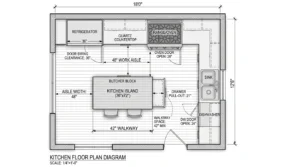
A comfortable kitchen island clearance is often about 42 to 48 inches between the island and opposite cabinets or counters. Smaller kitchens may use less space, but tight walkways can make cooking, cleaning, and opening appliance doors more difficult.
Appliance Door Clearance
Appliance door clearance is one of the most common planning mistakes. Refrigerator doors need room to open fully. Dishwasher doors need floor space when lowered. Oven doors need safe standing room in front. In addition, deep drawers and pull-outs need enough clearance to open without hitting another cabinet, appliance, or handle.
Walkway and Work-Aisle Clearance
In a one-cook kitchen, a narrower aisle may still function well. However, busy households usually benefit from wider aisles because they reduce crowding and make it easier to move between the sink, stove, refrigerator, and prep area.
Kitchen Cabinet Sizes by Kitchen Layout
Different kitchen layouts need different cabinet planning. Cabinet dimensions by layout can help you choose measurements that match the room instead of forcing the room to fit the cabinets.
Galley Kitchen Cabinet Planning
In a galley kitchen, two cabinet runs face each other. Standard 24-inch base cabinets work well, but aisle clearance must be planned carefully. To keep the space from feeling crowded, use 12-inch wall cabinets and choose drawer bases for easier access in narrow rooms.
L-Shaped Kitchen Cabinet Planning
An L-shaped kitchen often needs a good corner solution. Blind corner cabinets, Lazy Susan cabinets, or drawer-based corner systems can all work, depending on the layout. In addition, keep the sink, dishwasher, and prep storage close enough for an efficient workflow.
U-Shaped Kitchen Cabinet Planning
A U-shaped kitchen offers a lot of storage, but it can create tight corners. Use corner cabinet dimensions carefully, and check that drawers and appliance doors can open without blocking each other.
How to Measure for Kitchen Cabinets
Accurate kitchen cabinet measurements begin before you choose finishes, doors, or hardware. Measure the room carefully and record everything that affects the layout.
Step 1: Measure Wall Lengths
Measure each wall from corner to corner. Also, take measurements at the floor, countertop height, and upper wall height because walls are not always perfectly straight.
Step 2: Measure Ceiling Height
Measure ceiling height in several locations. This is especially important if you plan to use tall cabinets, stacked upper cabinets, or crown molding.
Step 3: Mark Windows, Doors, and Openings
Record the width and height of windows, doors, archways, and pass-through openings. In addition, note trim size because trim can affect cabinet placement.
Step 4: Locate Plumbing, Electrical, Gas, and Vents
Mark sink plumbing, dishwasher connections, outlets, switches, gas lines, range hoods, exhaust vents, and light fixtures. Moving utilities can add cost, so cabinet placement should account for them early.
Step 5: Measure Appliances
Measure the refrigerator, range, cooktop, dishwasher, microwave, wall oven, and sink. Better yet, use the official appliance specification sheet before ordering cabinets.
Step 6: Create a Simple Layout Sketch
Draw the room shape, mark measurements, and label each cabinet run. A basic sketch helps you see where base cabinets, upper cabinets, tall cabinets, appliances, and clearances will fit.
How Countertops, Flooring, Backsplash, and Soffits Affect Cabinet Dimensions
Cabinets do not exist alone. Other kitchen materials can change the final installed dimensions. Countertops affect finished height and depth. Flooring can slightly change toe kick height or appliance fit. Backsplash height can influence the placement of upper cabinets. In addition, soffits can limit tall wall cabinets or prevent cabinets from reaching the ceiling.
Crown molding, light rail molding, end panels, and decorative trim also need space. Plan these details before ordering so the final installation looks intentional.
Stock vs Semi-Custom vs Custom Cabinet Sizes
Stock cabinet sizes are pre-made in standard widths, heights, and depths. They are usually more affordable and faster to order. In many straightforward kitchens, stock cabinet sizes are enough. Semi-custom cabinet sizes offer more flexibility. You may be able to adjust width, depth, finish, door style, or storage features. This option works well when you need a better fit but do not need fully custom work.
Custom cabinet dimensions are built for your exact kitchen. They are best for unusual walls, luxury kitchens, special appliances, accessibility needs, or highly specific storage goals. Custom cabinets usually cost more and take longer, but they can solve problems that stock cabinets cannot.
Universal Design and Accessible Cabinet Dimensions
Accessible kitchens should be comfortable for people with different heights, mobility needs, and reach ranges. Lower countertops, drawer bases, pull-out shelves, open knee spaces, and reachable wall cabinet placement can make the kitchen easier to use. For wheelchair-friendly planning, standard base cabinet height may need adjustment. Some areas may also need open space under the countertop. Pull-out pantry shelves and drawers are often easier to access than deep lower cabinets with doors. Universal design is not only for accessibility. It can also make everyday cooking easier for children, older adults, and anyone who wants a more comfortable kitchen.
Common Kitchen Cabinet Size Mistakes
Avoiding mistakes is often easier than fixing them after cabinets arrive. One common mistake is measuring old cabinets instead of measuring the room. Old cabinets may not reflect the best layout for a new kitchen. Another mistake is forgetting countertop overhang, which can affect finished depth and appliance alignment.
Many homeowners also forget appliance door clearance. A dishwasher, oven, refrigerator, or deep drawer can block a walkway if the layout is too tight. Wall cabinets that are too deep can make the kitchen feel heavy and uncomfortable. Likewise, skipping filler strips can create installation problems near walls and corners. Finally, do not ignore ceiling height. Tall cabinets, crown molding, soffits, and stacked cabinets all depend on accurate vertical measurements.
FAQs
What are standard kitchen cabinet sizes?
Standard cabinet dimensions vary by type. Base cabinets are commonly 34.5 inches high and 24 inches deep without a countertop. Wall cabinets are usually 12 inches deep and range from 12 to 42 inches high. Tall cabinets are often 84, 90, or 96 inches high.
How deep are kitchen cabinets?
Base cabinets are usually 24 inches deep without the countertop and about 25 to 26 inches deep with countertop overhang. Wall cabinets are usually 12 inches deep, although deeper options are used above refrigerators and in some custom designs.
How deep are upper kitchen cabinets?
Upper kitchen cabinets are usually 12 inches deep. Some designs use 15-inch-deep uppers for extra storage, while above-refrigerator cabinets may be 24 inches deep.
What is the standard base cabinet height?
The standard base cabinet height is 34.5 inches without a countertop. With a countertop installed, the finished height is usually about 35 to 36 inches.
What is the standard distance between countertop and upper cabinets?
The standard distance between countertop and upper cabinets is 18 inches. However, some kitchens use slightly less or more depending on user height, appliance size, and design preference.



Leave a Reply