

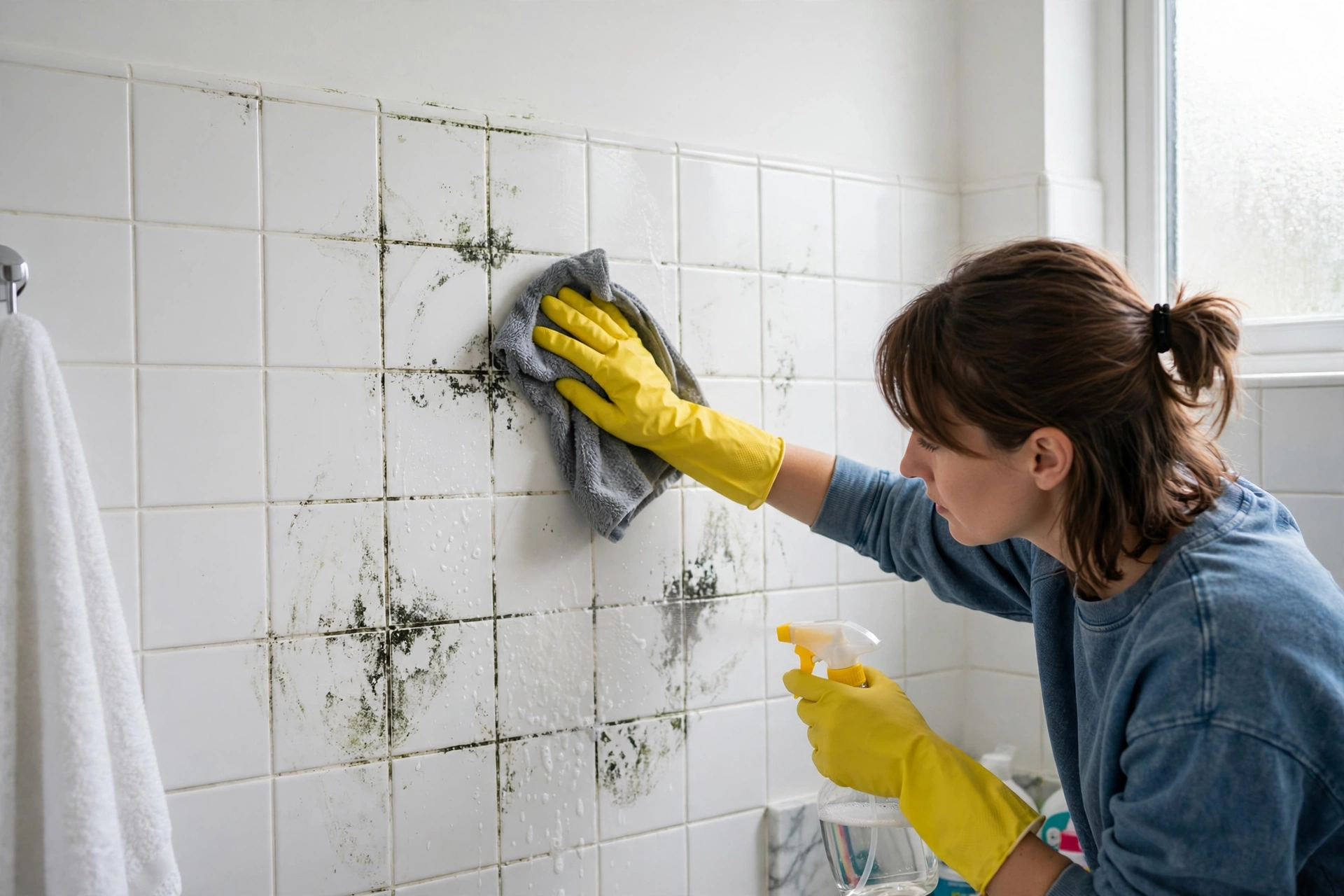
Black mold shows up as dark patches on walls, ceilings and window frames, and it loves damp UK homes. Many people spot it in bathrooms, bedrooms and kitchens, then wonder how to shift it for good. This guide explains what black mold is, why it grows, and how to remove it safely. You will also learn how to treat walls, fabric and wallpaper, plus when to call a professional. First, it covers the safety steps. Next, it walks through each surface in turn, so you can pick the method that fits your home.
What Is Black Mold?
In fact, black mold is the common name for dark fungal growth on damp surfaces. It often looks like black or dark green spots, and it can feel slimy when wet. In fact, it feeds on moisture and on the surface itself, such as plaster, paint or wallpaper paste. Also, it grows fast in warm, damp rooms with little airflow. That is why bathrooms, kitchens and cold bedrooms see it most. It can also irritate airways, so people with asthma should take extra care and keep the room aired. In short, spotting it early makes removal far easier.
Why Black Mold Grows in UK Homes
Black mold needs just three things: moisture, warmth and something to feed on. For example, in UK homes, condensation causes most cases. Warm, moist air hits a cold wall, and water forms on the surface. In addition, poor ventilation makes it worse, because the damp air has nowhere to go. Leaks cause it too, from roofs, pipes or gutters. Cold walls behind furniture trap damp air as well. Finally, a damp carpet can hold moisture too, so read our carpet cleaning guide before the damp spreads to the floor. Fix the moisture first, or the patches will return no matter how well you clean.
Stay Safe Before You Start
Cleaning chemicals need respect, so set up safely first. First, open a window and run the extractor fan to ventilate the room. Next, put on rubber gloves, and wear a mask if the patch covers a large area. Keep children and pets out of the room while you work. Test any product on a hidden spot first, so you can check for damage or colour change. In addition, never mix bleach with other cleaners, as the mix can release harmful fumes. If the patch covers more than a square metre, or if anyone at home has asthma or breathing problems, call a professional instead. Safety comes first, every time.
Black Mold on Walls
How to get rid of mold on walls starts with the right prep. First, clear the area and cover the floor with old sheets. Next, open the window and put on gloves and a mask. Next, pick your cleaner: a ready-made spray works well on flat walls, while white vinegar suits small patches. Spray the patch until it looks wet, then leave it to dwell for ten minutes. Next, scrub gently with a brush and wipe the surface with a disposable cloth. Finally, dry the wall fully with a fan or open window. Do not paint over the patch yet — the wall must dry out first, or the growth will return under the paint.
What You Will Need
In fact, you need only a few basic items. Grab a spray bottle, a stiff brush, a bucket, and several disposable cloths. Also, add rubber gloves and a mask, plus a ready-made spray or white vinegar. Keep a fan nearby to dry the wall after cleaning. That is the whole kit.
Clean the Wall Step by Step
Start by brushing off any loose flakes into a bag. Next, spray the cleaner over the whole patch and a little beyond the edges. Also, leave it for ten minutes so it can soak in. Then scrub in small circles, working from the outside in. In addition, wipe the surface with a clean cloth and check for missed spots. Repeat the spray and scrub once more if stains remain. Finally, dry the wall fully and leave the window open for an hour. If the stain will not shift, the growth may sit deep in the plaster, so try a biocidal wash or call a professional.
How to Remove Mould from Wallpaper
In fact, wallpaper needs a gentle touch, because soaking it can tear the paper or lift the paste. First, test your cleaner on a hidden corner and wait for it to dry. If the paper holds its colour, blot the patch with a barely damp cloth and a little cleaner. Do not rub hard, and do not soak the paper. However, if the stain sits deep in the paper, you cannot wash it out. In that case, peel the section off, treat the wall behind it, and hang fresh paper once the wall feels dry. To remove mould from wallpaper without damage, patience beats force every time.
How to Get Rid of Mould on Fabric
First, fabric holds moisture, so it needs fast action. Take the item outside first and brush off loose spores, so they do not spread through the house. Then check the care label before you wash it. For example, washable clothes and curtains can go in the machine on a hot wash. Delicate items need a gentler route. Dry everything fully in fresh air, because damp fabric grows new patches fast.
Washable Clothes and Curtains
Brush the item outside, then wash it at the hottest setting the label allows. Add your usual detergent, and dry the item fully before you put it away. However, if the stain survives the wash, soak it in a vinegar solution for an hour and wash it again. For a stubborn case, here is how to remove mold from fabric that still smells after washing: repeat the soak, wash it once more, and dry it in sunlight if you can. If the smell stays after that, take the item to a professional cleaner.
Removing Mould from Material You Cannot Wash
In fact, some items cannot go in the machine, such as upholstery, mattresses and heavy curtains. Start by brushing them outside, then blot the patch with a cloth dampened with a suitable cleaner. Do not soak the material, as trapped moisture makes things worse. Let it dry fully with the window open. In short, removing mould from material like this takes patience, and you may need two or three rounds. However, if the patch covers a wide area or the smell stays, replace the item or call a professional.
Spray Mould and Mould Remover Gel: Which to Use?
A spray mould product suits flat, easy-to-reach surfaces, because it coats the patch fast. A mould remover gel suits vertical surfaces and grout lines, because the thick gel clings instead of running off. Both types work the same way: they break down the growth so you can wipe it away. Pick a black mould remover made for the surface you need to treat, and follow the label instructions exactly. Do not mix products, and test on a hidden spot first. For most small patches, either type does the job.
Does Bleach Kill Mould?
Does bleach kill mould? Bleach can fade the dark stain on hard, non-porous surfaces such as tiles and glass. However, it does not reliably kill the roots in porous materials such as plaster, grout or wood. The stain may vanish, yet the growth can return within weeks. Government guidance prefers ready-made mould products over bleach for most jobs. If you use bleach at all, dilute it as the label directs, use it only on small hard-surface patches, and never mix it with other cleaners. Always ventilate the room and wear gloves.
Black Mold: When to Call a Professional
Some jobs belong to a specialist. Call one if the patch covers more than a square metre, or if it keeps coming back after two good cleans. The same applies if the damp comes from a leak or structural fault, or if anyone at home has asthma or breathing problems. If you rent your home, tell your landlord, because damp repairs often sit with them. A professional can find the moisture source and treat the area safely, so the problem stays fixed.
How to Stop Black Mold Coming Back
Cleaning solves today, but prevention solves tomorrow. First, ventilate the home every day, even in winter. Run extractor fans when you cook or shower, and wipe condensation from windows each morning. Next, heat the home evenly, so cold walls do not collect moisture. Fix leaks fast, and do not dry wet clothes on radiators without airflow. Finally, check hidden spots twice a year: behind wardrobes, under sinks and around window frames. Small habits like these keep black mold away for good.
FAQs
Can black mold make you ill?
It can irritate airways, eyes and skin, and people with asthma may feel it more. If you notice symptoms that worry you, see your GP. This guide gives general information only and cannot diagnose anyone.
Does bleach kill mould?
Bleach fades the stain on hard surfaces, but it does not reliably kill the roots in porous materials. Ready-made mould products usually work better, and you should never mix bleach with other cleaners.
Can you paint over black mold?
No. Clean the patch first, treat the surface, and let the wall dry fully. Paint over a damp patch only traps the growth underneath, and it will break through again.
How do I stop black mold coming back?
Ventilate daily, heat the home evenly, wipe condensation away, and fix leaks fast. Check hidden spots twice a year, and act on small patches before they spread.
Should I throw away stained fabric?
If the item washes clean and dries fully, keep it. If the stain or smell stays after two washes, or the item cannot be washed at all, replace it or take it to a professional cleaner.
Small patches take an hour or two, and the right method depends on the surface. Work safely, dry everything fully, and fix the damp at the source. Do that, and your home will stay fresh and clean.




Leave a Reply