

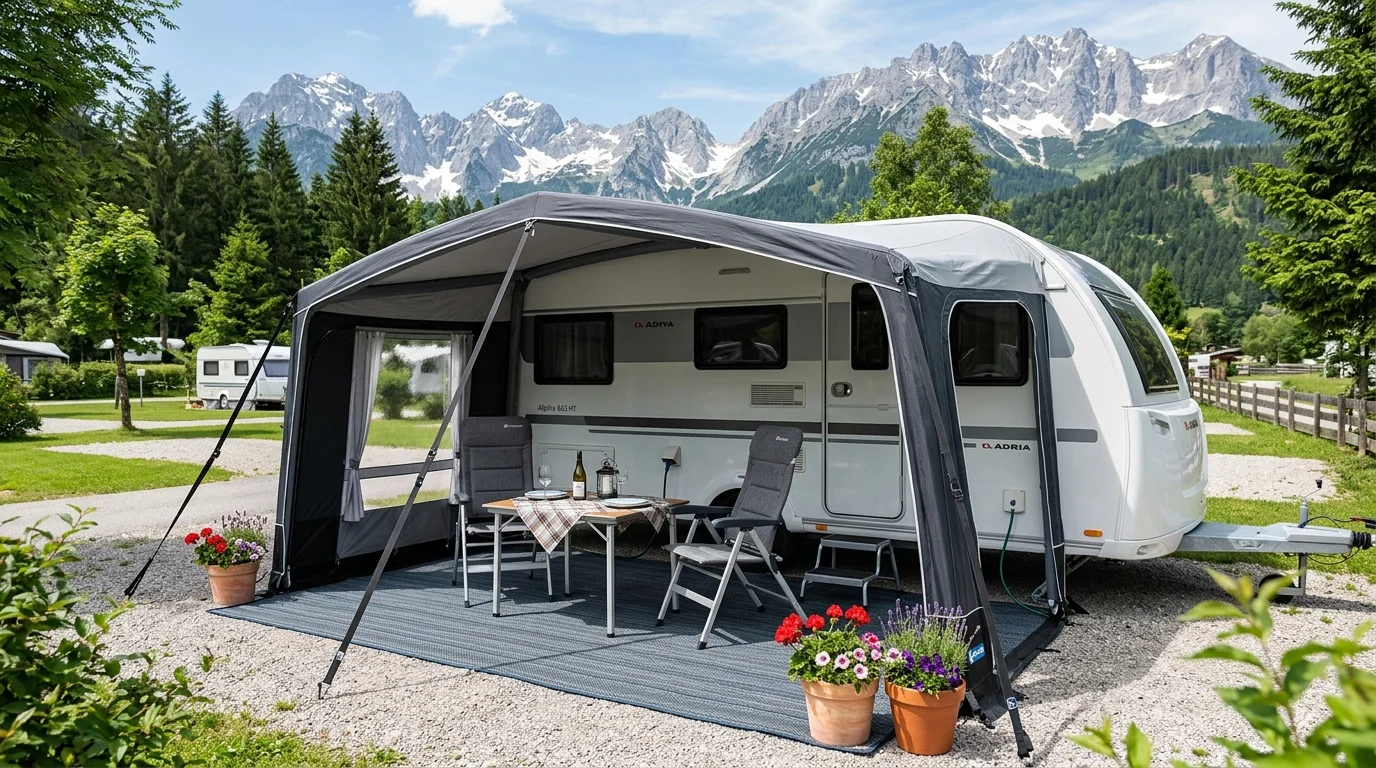
An awning carpet is a highly specialized piece of outdoor gear that completely transforms your mobile living space. Whether you are setting up a permanent pitch for the season or frequently moving your caravan tent across different coastal destinations, choosing the correct outdoor floor cover is essential for structural cleanliness and physical comfort. Arriving at a campsite only to realize your outdoor setup is muddy, uneven, or tracking dirt into your vehicle can quickly ruin the start of a vacation.
Fortunately, resolving your outdoor flooring needs requires just a little bit of planning. By understanding the right materials, dimensions, and weights, you can build a flawless outdoor setup while protecting the natural environment around your pitch.
What is an Awning Carpet
When trying to design a welcoming outdoor living space next to your vehicle, it is incredibly tempting to use a generic household patio rug or a basic plastic tarpaulin. However, standard domestic rugs are designed for stationary residential decks. They completely lack the rugged technical specifications required to survive the abrasive ground conditions found beneath a heavy motorhome awning.
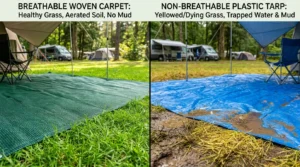
A true high-quality awning carpet balances visual luxury with high levels of weather resilience, rapid drying capabilities, and an open-weave texture. A regular solid tarp acts as a barrier that traps ambient moisture directly beneath the material, leading to pools of slippery mud, stagnant odors, and ruined soil. In contrast, premium camping carpets are specifically engineered to handle heavy foot traffic, sharp gravel pressure, and sudden downpours while keeping dirt from entering your vehicle.
The Difference Between Breathable awning carpet and Solid Plastic Mats
The primary distinction between standard utility floor covers and premium carpets lies in the structural weave. Solid plastic mats are cheap and water-resistant, but they create a harsh barrier that destroys the environment underneath. Because they block all fresh air, they cause grass to rot within a matter of days.
Breathable tent carpets utilize an advanced interlocking matrix that allows water and fresh air to filter through naturally. This open design protects the campsite environment while providing a firm, supportive surface underfoot. Additionally, these technical fabrics do not absorb liquid, meaning they remain odor-free and exceptionally easy to clean even after weeks of exposure to damp earth.
How to Measure Before You Buy:
Accurately mapping out your outdoor footprint prevents massive complications during setup. If your carpet is too large for the pitch, the excess fabric will bunch up against the side of your vehicle, creating immediate tripping hazards. If it is too narrow, your tables and chairs will sit unevenly on bare dirt, tracking mud directly into your clean cabin.
Why Your Carpet Should Be Slightly Shorter Than the Total Awning Length
Experienced travelers always select a mat that is slightly shorter than the maximum length of their roll-out awning. By leaving a small, hand-width gap of visible ground on each side, you ensure that the main support legs anchor cleanly to the earth without catching the edges of the carpet fabric. This calculated margin stops the material from wrinkling, prevents pool formation during heavy rain, and allows you to sweep away debris with minimal effort.
Standard Dimensions for Popular Models
Most premium gear manufacturers design their inventory to complement specific vehicle profiles. While standard depths typically stay around 2.5 meters, the overall width varies dramatically depending on your layout. For a small balcony or tiny teardrop trailer, a compact size like 1.2 by 2 meters provides ample coverage.
For larger, heavy-duty seasonal installations, options expanding to 3 by 5 meters or 4 by 6 meters are common. If you are utilizing a classic commercial awning setup or a heavy-duty mounted system, you must check the exact model extension numbers before buying to ensure a perfectly flush fit.
Weight, Packing Volume, and Payload:
Maximum payload capacity is a vital safety factor that every caravan owner must track closely. Every extra item stored in your lower lockers subtracts from your legal weight allocation, which makes heavy flooring material a significant logistical concern. It can feel overwhelming to balance all these packing restrictions when you are trying to fit everything into a small motorhome cabin.
Why Dense PVC Mats Can Challenge Your Vehicle Weight Limits
Traditional heavy-duty PVC floor coverings offer great structural durability, but they carry a severe weight penalty. They are inherently dense, stiff, and highly resistant to compact folding, meaning they absorb huge amounts of storage space in your exterior lockers. Even worse, if you are forced to pack a thick PVC mat away while it is wet, it retains significant water weight, adding hidden stress to your axle and risking mold development inside your storage bays.
Lightweight Woven Polypropylene Alternatives for Long Trips
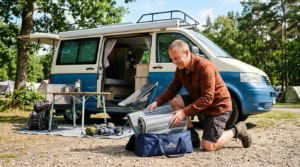
For long-distance expeditions, choosing a light-to-mid-weight woven polypropylene carpet is the smart play. This material folds down incredibly flat and slides neatly into a ventilated carry bag, letting you save your valuable payload capacity for essential travel tools.
When your equipment stays lightweight, your journey becomes much smoother. Taking just two minutes to clear out the folds of a lightweight polypropylene carpet ensures it stays pristine for your next destination without taking up crucial space or adding unnecessary kilograms to your vehicle.
Material Choices to Endure the Challenging Outdoor Climate
The outdoor climate requires materials that can withstand scorching midday sun, sudden coastal wind changes, and thick morning frost. Buying cheap, unrated fabrics will leave you with faded patterns and frayed borders before the season even finishes.
Durable Tent awning carpet with Built-in UV Protection
A truly durable tent carpet features advanced UV stabilizers woven directly into the synthetic fibers. This protective engineering prevents the stylish gray tones or striped aesthetics from breaking down and fading under prolonged sun exposure. Furthermore, look for options that feature heavy-duty finished hems and reinforced bound edges, which prevent the fabric from splitting apart when you pull heavy metal chairs across the surface.
Air-Permeable awning carpets: The Best Friend of the Campsite
Excellent breathability is the hallmark of modern camping gear. An air-permeable layout ensures that the living turf beneath your feet can absorb sunlight, catch fresh air, and survive throughout your vacation. By selecting a highly breathable polypropylene pattern, you eliminate the pooling of stagnant groundwater and keep the air around your awning smelling clean and fresh.
Campsite Regulations: Is Your Carpet Truly Grass-Friendly?
Before you unroll your gear at a new destination, it is crucial to understand localized campsite rules. Many modern resorts have implemented strict environmental rules regarding ground covers to preserve their green spaces.
Why Solid Tarpaulins Are Strictly Banned at Many Sites
Solid canvas tarps or non-breathable plastic sheets completely cut off oxygen to the soil. Within forty-eight hours, the covered grass suffocates, rots, and leaves a smelly patch of slick mud for the next traveler. Because of this environmental damage, solid ground covers are strictly prohibited at top-tier parks. Ignoring these rules can lead to unpleasant arguments with park managers or unexpected fines.
How to Verify If Your Carpet Meets Ventilation Requirements
To ensure your chosen mat is entirely grass-friendly, inspect the manufacturer documentation for certified breathable ratings. You can easily test this yourself by holding the fabric up to the sun: you should clearly see a fine, uniform grid of tiny holes throughout the weave. This smart design allows air and dew to drop down naturally while keeping dirt from working its way up to your bare feet.
Installation and Anchoring of awning carpet:
High winds can quickly transform an expensive outdoor carpet into a dangerous, flapping sail if it is not secured properly to the earth. Taking the time to anchor your perimeter tightly keeps the entire living space looking sharp and prevents standard wear and tear.
Utilizing Eyelets and Flat Pegs Without Creating a Tripping Hazard
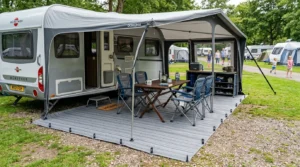
Always select a carpet model that comes standard with heavy-duty built-in eyelets or reinforced perimeter loops. Lay the mat down with the textured side facing up, stretch it tautly from the center outward, and pin the corners down using flat, low-profile stakes driven completely flush with the dirt. Avoid using standard upright metal tent stakes along active walking paths, as these create dangerous tripping hazards for young children and guests moving around the patio zone at night.
Conclusion
Finding the ultimate ground covering awning carpet depends on your specific lifestyle on the road. For active explorers who change destinations every few days, a lightweight, highly flexible woven polypropylene carpet is the ideal choice to conserve precious vehicle payload capacity. Alternatively, if you prefer long-term seasonal stays at a fixed campsite, investing in a denser, luxury awning carpet or a custom-fitted mat system provides unmatched comfort and long-lasting floor protection.
By matching your measurements carefully to your vehicle profile and respecting the local ecosystem, you will guarantee a clean, mud-free, and highly attractive outdoor home throughout your travels. With a solid anchoring strategy and the right breathable materials, you can look forward to a relaxing, stress-free experience under the open sky.



Leave a Reply