


Granite kitchen surfaces bring natural beauty, unique mineral movement, and long-term value into any home. Because granite forms deep within the earth under intense heat and pressure, it possesses exceptional physical strength. However, granite remains a porous natural stone. Without proper maintenance, liquids can seep into the microscopic surface pores, leading to unsightly dark spots, water rings, or dull patches. Understanding how to clean granite countertops correctly preserves the factory polish and keeps your kitchen looking flawless for years.
Many homeowners feel overwhelmed by conflicting cleaning advice online. Some sources recommend harsh household chemicals, while others suggest aggressive scrubbing techniques. In reality, caring for natural stone requires a gentle, consistent approach. By following simple daily habits, using safe sanitizing methods, and applying effective stain removal poultices, you can easily maintain your kitchen stone without risking permanent damage.
Daily Cleaning Routine for Natural Stone
Keeping stone surfaces clean on a day-to-day basis requires minimal effort and very few supplies. Professional cleaning services such as Merry Maids emphasize that fancy specialty sprays are rarely needed for regular maintenance. The ideal routine relies on three basic elements that you likely already have in your kitchen: warm water, mild dish soap, and soft microfiber towels.
To begin your daily wipe-down, fill your sink or a basin with warm water and add a few drops of mild, pH-neutral dish soap. Avoid soap formulas that contain citrus extracts like lemon or lime, as well as heavy antibacterial additives. Dip a soft microfiber cloth into the soapy water and wring out the excess moisture until the towel is damp rather than soaking wet. Gently wipe down the stone in broad, smooth passes to clear away food crumbs, dust, and light surface grease.
After removing surface debris, rinse your cloth thoroughly with fresh warm water and wipe the surface a second time to remove any remaining soap suds. Leaving soap film behind creates a cloudy layer that dulls the polished finish over time. Finally, buff the entire surface dry using a fresh, completely dry microfiber towel. Drying the stone immediately is essential because standing tap water leaves behind mineral deposits that form dull water spots.
Products You Should Never Apply to Granite
Knowing which cleaning supplies to avoid is just as important as knowing how to wash your surfaces. Leading stone suppliers like Hilltop Surfaces warn that aggressive chemical cleaners strip away protective sealers and cause irreversible surface damage.
Acidic solutions represent the single biggest threat to natural stone surfaces. White vinegar, lemon juice, lime juice, and commercial cleaners containing citric acid chemically react with the minerals inside granite. This reaction causes etching, which burns away the polished shine and leaves dull, rough patches on the stone.
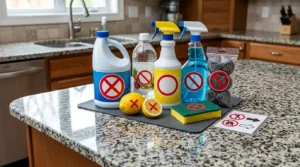
Harsh household disinfectants should also be avoided completely. Windex, bleach, ammonia, Lysol sprays, and Clorox wipes contain strong chemical agents that weaken the protective seal over time. Once the sealer breaks down, liquids penetrate the stone much faster. Additionally, you should never scrub your counters with abrasive tools such as steel wool, wire brushes, or green scouring pads. These rough tools create microscopic scratches across the polished finish that trap dirt and ruin the natural sheen.
Safe DIY Isopropyl Alcohol Sanitizing Spray
Standard daily wiping removes surface grime, but handling raw poultry or meat requires deeper sanitization. Many homeowners wonder how to clean granite countertops to kill germs without resorting to bleach or acidic disinfectants. The safest solution is a homemade isopropyl alcohol spray.
To make this safe sanitizer, mix equal parts of seventy percent isopropyl alcohol and distilled water in a clean spray bottle. You can add three to five drops of a stone-safe essential oil like lavender for a pleasant scent if desired. Spray the mixture lightly across your dry stone surfaces after cooking. Allow the solution to rest on the stone for three to five minutes so the alcohol can effectively eliminate bacteria. Once the dwell time is complete, wipe the surface dry with a fresh microfiber towel. This simple method disinfects your workspace thoroughly while leaving a streak-free shine and keeping your sealant layer safe.
Removing Tough Stains with Homemade Poultices
When spills sit too long on porous stone, liquids sink into the surface pores. Regional stone fabricators like BC Stone point out that treating stained stone requires matching the cleaning technique to the specific type of stain rather than using harsh chemicals.
Oil and grease stains from cooking oil, butter, milk, or salad dressing leave dark spots beneath the surface. To draw oil out of the stone, make a baking soda poultice. Mix baking soda with warm water until it forms a thick paste with the consistency of peanut butter. Spread the paste over the stained area in a quarter-inch-thick layer, cover it with plastic wrap, and tape the edges down with painter’s tape. Let the poultice sit for twenty-four hours so the baking soda can pull the oil upward out of the stone pores. Remove the plastic, let the paste dry completely, scrape it away gently with a plastic tool, and rinse with warm water.
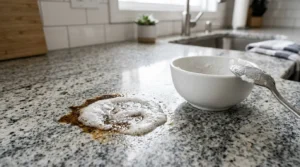
For organic stains caused by red wine, coffee, tea, or fruit juice, create a similar poultice by mixing baking soda with three percent hydrogen peroxide instead of water. Apply the paste, cover it with plastic wrap, and wait twenty-four hours. The hydrogen peroxide safely lightens organic pigments without bleaching the natural color of the stone.
For hard water spots around faucets, soak a soft cloth in warm soapy water and gently rub the area. If crusty mineral deposits remain, carefully lift them using a plastic blade before wiping dry.
Plastic Razor Blade Scraping Technique
When hardened food, candle wax, dried glue, or paint sticks to your kitchen surfaces, scrubbing with rough sponges will scratch the polish. A safe and unique way to handle stubborn stuck-on residue is the plastic razor blade technique.
Purchase single-edge plastic razor blades, which are designed specifically to clean delicate surfaces without scratching. Dampen the dried food spot with a small amount of warm soapy water to soften it. Hold the plastic razor blade at a forty-five-degree angle against the stone surface and slide it smoothly forward beneath the residue. The plastic edge shaves off the stuck debris without gouging the stone or stripping the sealer underneath.
Maintaining Seams, Joints, and Edges
Granite counter installations feature seams where two stone slabs join together, as well as edges around undermount sinks and backsplashes. These areas collect moisture, food particles, and soap residue over time.
Never use sharp metal tools, knives, or wire brushes to pick debris out of counter seams. Metal tools chip the stone edges and dislodge the color-matched epoxy filler. Instead, apply a small amount of warm soapy water along the seam and scrub gently with a soft-bristled toothbrush. Wipe the area dry immediately with a microfiber towel to prevent moisture from settling into the joint.
Around undermount sinks and backsplashes, check the silicone caulk weekly. Spray these edges with your isopropyl alcohol sanitizer and wipe them dry to prevent mold and mildew from growing along the damp seams.
Preventing Thermal Shock and Oil Bottle Rings
Protecting your investment involves daily habits that prevent damage before it occurs. Two common causes of stone damage are thermal shock and oil bottle discoloration.
Although granite handles high temperatures well, sudden extreme temperature changes cause thermal shock. Placing a boiling pot or hot skillet directly onto a cool counter surface creates localized stress that can cause the stone to crack. Always place trivets, hot pads, or silicone mats beneath hot cookware to protect the stone.
Cooking oil bottles stored directly on the counter often leak small amounts of grease down their sides. Over time, this oil penetrates the stone and leaves dark ring stains. When deciding how to clean granite countertops safely, avoiding acidic solutions like vinegar is essential to protect the surface. Keep cooking oils, vinegar bottles, and soap dispensers on a decorative ceramic tray, glass plate, or coaster rather than setting them directly on the stone.
The Ten Minute Water Test for Sealers
A crucial aspect of mastering how to clean granite countertops involves knowing when your protective seal needs to be reapplied. Sealers do not make stone completely waterproof, but they slow down liquid absorption so you have time to clean up spills.
To test your seal, pour three to four drops of tap water onto a frequently used area of your counter. Leave the water drops undisturbed for ten to fifteen minutes. If the water remains in tight droplets on top of the stone, your seal is working properly. If the water flattens out, soaks into the stone, or leaves a dark wet mark, your protective layer has worn down. When your stone fails the water test, clean the surfaces thoroughly, let them dry for twenty-four hours, and apply a fresh coat of quality stone sealer.
FAQs
What is the safest daily cleaner for natural stone?
Warm water mixed with a few drops of pH-neutral dish soap used alongside a soft microfiber cloth is the safest daily cleaning solution.
Can you use Lysol wipes on natural stone surfaces?
No, Lysol wipes contain harsh chemical agents that break down stone sealers over time, leaving the surface dull and vulnerable to stains.
How often should natural stone countertops be sealed?
Most kitchen stone surfaces require resealing once or twice a year, depending on how heavily the kitchen is used and the results of your water test.
How to clean granite countertops and restore shine to dull stone counters?
Restore natural shine by buffing the stone dry after every wash, removing leftover soap film with an alcohol spray, and applying specialized stone polish.
Conclusion
Learning how to clean granite countertops correctly is the secret to preserving their timeless luxury, structural strength, and natural shine for decades to come. By sticking to a basic daily routine of warm water, pH-neutral dish soap, and microfiber towels, you can easily remove surface grime without the need for harsh chemicals. Remember to steer clear of acidic cleaners like vinegar or lemon juice, use a safe isopropyl alcohol spray when deep sanitizing is needed, and tackle stubborn stains with custom baking soda poultices.




Leave a Reply