

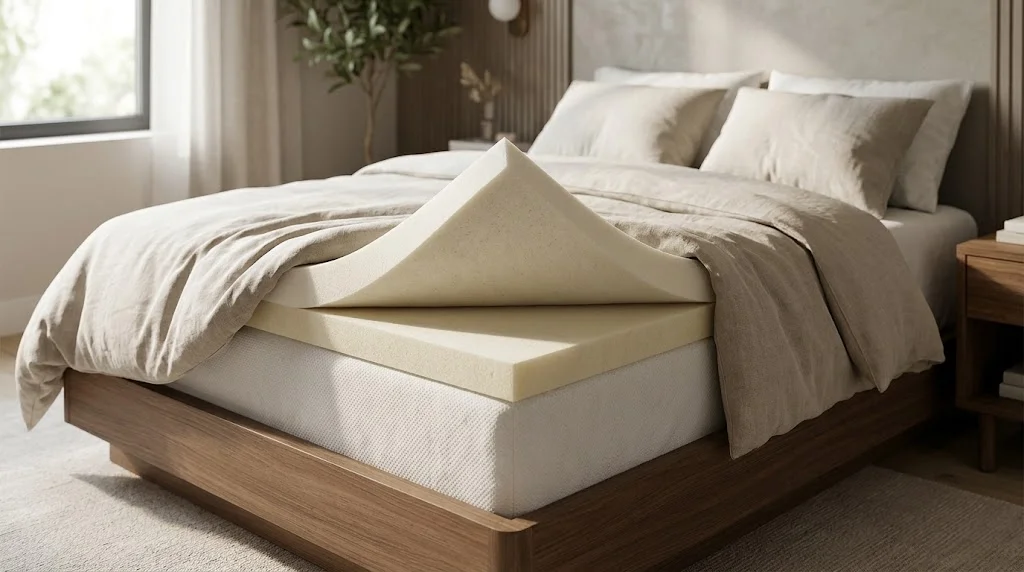
Waking up with stiff joints or persistent shoulder pain often forces sleepers to evaluate their bedding setup. If your bed feels unyielding, adding an extra layer of cushioning seems like the most logical, affordable upgrade. However, placing a memory foam topper on memory foam mattress setups introduces distinct physical challenges that many people overlook.
Viscoelastic foam responds to heat and pressure. When you stack two identical materials together, you alter the structural support of your sleeping surface. Doing this can either transform a rigid bed into a cloud of pressure relief or create an unsupportive sinkhole that ruins your spinal alignment. Understanding the mechanics behind this pairing helps you avoid costly comfort mistakes.
The Short Answer: When Stacking Memory Foam Works and When It Fails
The simple answer is yes, you can do it, but only under specific circumstances. A memory foam topper on memory foam mattress combination is designed to alter surface feel, not to salvage a broken foundation.
Softening a Rigid, Flat Mattress
This pairing works best when your existing mattress is relatively new, structurally flat, but simply too firm for your comfort. Many high-density all-foam beds require an extended break-in period or are rated medium-firm to firm for durability.
If you sleep on your side, an unyielding surface places intense pressure on your hips and shoulders, leading to numbness and restless tossing. In this specific scenario, introducing a memory foam topper on memory foam mattress gives you immediate contouring. The topper cradles your sensitive pressure points while the solid core underneath preserves the necessary spinal lift.
Why a Topper Cannot Fix a Sagging Bed
The biggest mistake sleepers make is attempting to revive an old, sagging bed with a new foam pad. Mattress toppers are pliable. They mold directly to the surface beneath them.
If your bed has an existing body impression or sagging middle, a soft topper simply drapes into that hollow. You might feel a brief moment of plushness when you climb in, but your pelvis will quickly sink right back into the depression. Stacking foam over a worn bed accelerates lumbar strain and leaves you waking up with lower back pain. When the core polyfoam of your bed has degraded, replacement is the only functional remedy.
Biomechanics and Sleep Ergonomics: What Happens to Your Spine?
Your spine maintains a subtle natural curve when you rest. The primary job of any bed is to keep that curve neutral, regardless of whether you lie on your side, back, or stomach. Stacking two layers of slow-response foam fundamentally changes how your body moves throughout the night.
The Quicksand Effect and Loss of Pushback
Traditional innerspring and hybrid mattresses provide an active upward push known as resilience. Pure memory foam does not push back; it slowly yields under pressure.
When you install a memory foam topper on memory foam mattress, you double the depth of slow-recovery material. This produces what sleep specialists call the quicksand effect. As your body warmth softens the layers, you sink deeper and deeper into the bed.
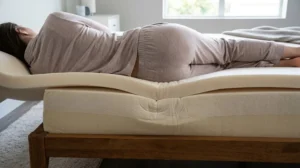
This deep contouring makes changing positions during the night difficult. Instead of rolling effortlessly, you must engage your core muscles to climb out of the trough your body created. For restless sleepers or those with limited joint mobility, this sensation can feel restrictive and claustrophobic.
Body Weight Dynamics
Body weight dictates how deeply you compress foam layers:
-
Lightweight sleepers under 130 pounds frequently find standard memory foam beds too stiff because they lack the mass needed to activate the foam contouring. For them, a plush topper acts as an effective comfort bridge.
-
Average-weight sleepers between 130 and 230 pounds generally find a delicate balance. A thin topper provides contouring without fully overriding the supportive base layer below.
-
Heavier sleepers over 230 pounds face notable challenges. Concentrated weight causes rapid sinkage through both foam layers, leading directly to bottoming out against the firm transition core. For heavier profiles, double foam setups frequently result in pelvic sagging and spinal strain.
Sleeping Positions and Spinal Alignment
Your preferred sleeping posture determines whether this setup helps or harms your back:
-
Side Sleepers: This group benefits the most. Side sleeping concentrates your entire body weight onto two small surface areas: the shoulder and the greater trochanter of the hip. Adding a contouring top layer allows these joints to sink just enough to keep the neck and thoracic spine straight.
-
Back Sleepers: Back sleepers require moderate contouring under the lumbar curve accompanied by robust support beneath the hips. A thin topper works reasonably well, provided the base mattress remains completely level.
-
Stomach Sleepers: This posture rarely succeeds with double foam. When you sleep on your stomach, your midsection sinks faster than your chest and legs. Placing a memory foam topper on memory foam mattress causes severe lumbar hyperextension, bending the spine backward and causing sharp morning aches.
Thermal Management: Double Heat Trapping and Cooling Solutions
Temperature regulation remains one of the most common complaints among memory foam owners. Viscoelastic foam is inherently an insulator. Its dense cellular composition slows air circulation, capturing and radiating body warmth straight back toward the sleeper.
The Problem of Stacking Closed-Cell Layers
Standard foam features millions of microscopic closed cells. When you lay on your mattress, your body compresses these cells, essentially squeezing out whatever residual air pockets were present.
By stacking a memory foam topper on memory foam mattress, you create a thick thermal barrier. The upper layer traps heat directly beneath your torso, while the lower layer prevents that heat from dissipating downward or outward. If you already sleep hot, pairing these two materials without active cooling enhancements creates an uncomfortably warm environment that disrupts deep, restorative sleep.
Cooling Countermeasures
If you decide to layer foam, choosing advanced thermal technologies is essential:
-
Open-Cell Memory Foam: Unlike traditional formulations, open-cell foam is engineered with interconnecting air pathways that permit heat to escape under compression.
-
Gel Infusions: Liquid gel beads or swirling compounds mixed into the foam absorb initial body heat, drawing it away from your skin during the critical phase of falling asleep.
-
Phase Change Materials (PCM): These technical fabric treatments absorb, store, and release heat to keep the immediate contact surface within a balanced temperature range.
-
Breathable Covers: Avoid synthetic polyester encasements. Encase your bedding in covers woven from eucalyptus, bamboo rayon, or organic cotton to encourage natural air exchange.
Density, Thickness, and Foundation Checks
Getting the right dimensions and structural specs prevents your bed from feeling like an unsupportive swamp.
Selecting Depth: The Two-Inch Rule
Thickness determines how much the topper alters your resting posture. Mattress toppers generally range from one to four inches in depth.
When layering over an existing foam mattress, a two-inch topper is widely considered the safe, functional limit. Two inches offers ample pressure relief for joints while preventing your body from descending too far from the supportive mattress base.
Choosing a three or four-inch topper over a memory foam bed creates excessive give. It exaggerates the sinking sensation and almost always compromises lumbar support. Keep the thicker pads for aging innerspring beds that need substantial cushioning, not all-foam foundations.
Foam Density Grades and Durability
Density reflects how much raw material is packed into every cubic foot of foam, directly influencing support and longevity:
-
Low Density (under 3 lbs per cubic foot): Highly pliable, highly breathable, and budget-friendly, but breaks down quickly and offers minimal support.
-
Medium Density (3 to 4 lbs per cubic foot): The sweet spot for most sleepers. It balances conforming comfort with decent durability and moderate airflow.
-
High Density (5 lbs per cubic foot and above): Exceptional durability and deep contouring, but traps noticeably more heat and makes movement noticeably more difficult.
Bed Base Foundation Check
Before spending money on extra bedding, inspect the support system resting under your mattress. All-foam mattresses depend heavily on a rigid, completely flat foundation.
If you have a slatted bed frame, measure the distance between each slat. Slats spaced wider than three inches apart permit flexible foam to bow and push through the gaps under regular body weight. This bowing mimics the sensation of a worn mattress.
Placing a memory foam topper on memory foam mattress rests on a flawed premise if your foundation is flexing. Inspect your platform, reinforce wider gaps with a solid bunkie board, and verify that the base is flat before modifying your comfort layers.
Practical Setup, Maintenance, and Alternatives
Even when the numbers line up, everyday maintenance presents a few logistical hurdles you need to resolve.
Preventing Topper Slippage
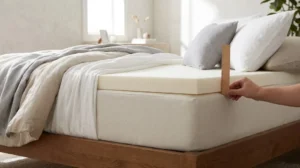
Friction between two smooth fabric covers is minimal. Without secure anchors, shifting positions causes the topper to creep toward the edge of the bed, leaving you constantly readjusting it.
To keep everything centered, choose a topper equipped with heavy-duty elastic corner straps. If your topper lacks straps, placing a thin, rubberized non-slip mattress pad directly between the mattress and the topper creates instant grip.
Additionally, standard bedding will rarely fit over the combined height of a mattress and an extra pad. Invest in deep-pocket fitted sheets designed to accommodate profiles up to eighteen inches deep to keep your bedding securely anchored.
Smarter Alternatives to Memory Foam
If you need to change your bed’s surface feel but want to avoid the risks of double foam, several alternative materials perform exceptionally well:
-
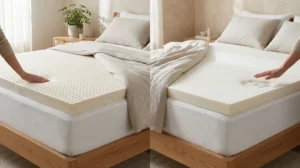
Natural Latex: A natural latex topper offers instant pushback and buoyant lift. It cushions pressure points while keeping you resting on top of the bed rather than inside it, making movement effortless and sleeping cooler.
-
High-Resilience Polyfoam: If your current memory foam mattress feels too soft or lacks edge support, a firm polyfoam layer can reinforce the surface without creating a contour trap.
-
Wool and Cotton Pillow-Tops: Natural fibers provide soft, breathable padding that significantly improves airflow without modifying the underlying orthopedic alignment of your mattress.
Cost Analysis and Mattress Warranty Checks
A quality topper costs between one hundred and two hundred and fifty dollars, while a dependable new mattress typically starts around six hundred dollars. If your mattress is less than three years old, flat, and simply too firm, a topper represents a cost-effective, practical adjustment.
However, check your manufacturer documentation before buying. Most mattress warranties cover structural sagging only if visible indentations exceed 0.75 to 1.5 inches while the bed is unoccupied. If your mattress sags beyond that threshold, filing a warranty claim for a full replacement is far wiser than spending money on temporary surface solutions.
Using a memory foam topper on memory foam mattress gives you a plush, comfortable sleep surface when applied to an overly firm, intact bed. Make sure your base is level, select a moderate two-inch profile with cooling properties, and anchor it properly to enjoy balanced, restorative rest.
FAQs
Can a memory foam topper fix a sagging memory foam mattress?
No, a topper cannot fix a sagging mattress. Mattress toppers are flexible and mirror the contours of whatever rests beneath them. If your bed has developed an indentation or valley, the topper will conform to that depression, causing your hips to drop and straining your lower back.
Will putting a memory foam topper on a memory foam mattress make me hot?
It can easily increase your sleeping temperature if you use standard closed-cell foam. Stacking two layers of heat-retaining viscoelastic material doubles thermal insulation. To prevent night sweats, look for toppers made with open-cell foam, gel infusions, or breathable natural covers.
How thick should a topper be when placed on a memory foam bed?
A two-inch topper is ideal. It provides noticeable pressure relief on joints without letting you sink too deeply. Toppers that are three or four inches thick usually cause excessive sinkage, make changing sleeping positions difficult, and compromise spinal alignment.
How do I stop my topper from sliding off my memory foam bed?
Smooth encasements slide easily against each other. To keep your topper in place, use models with built-in corner straps, lay a thin rubberized non-slip grip pad between the two layers, and use deep-pocket fitted sheets that wrap securely underneath the entire mattress.





Leave a Reply