

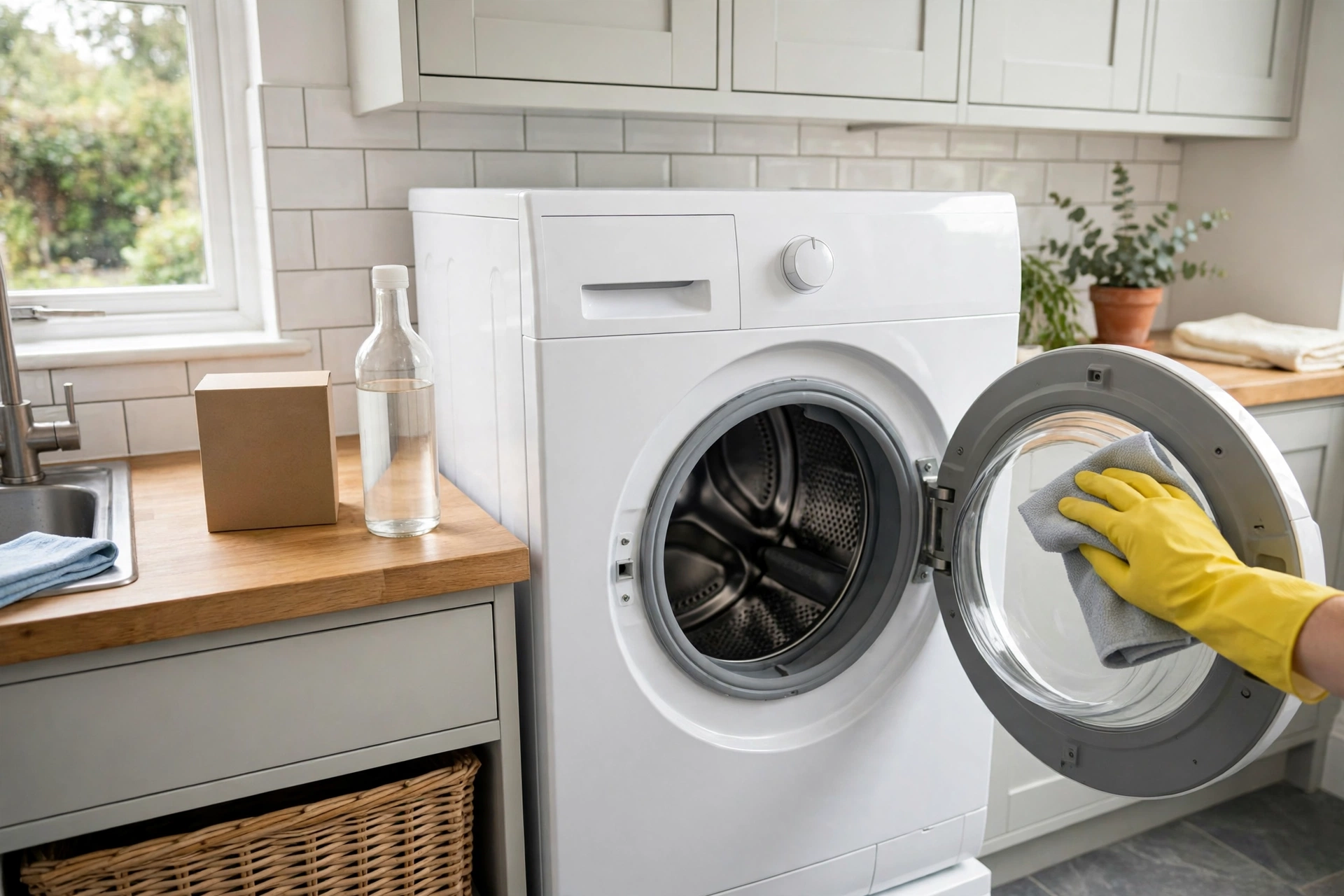
A stinky laundry machine usually smells because mould and bacteria grow in the rubber seal, detergent drawer and drain filter. Clean all three, then run an empty 60°C wash with soda crystals or a washing machine cleaner. Leave the door ajar after every wash, and the smell should clear within a day.
Most machines smell for the same reason. Cool washes, detergent and softener leave a thin film inside the drum. In fact, that film feeds mould and bacteria, and the smell then moves onto your clothes.
This guide shows you how to find the smell, clean every part, and keep it away. Overall, the job takes about half an hour, plus one hot cycle.
What Makes a Stinky Laundry Machine Smell?
A washing machine is warm, dark and damp after every wash. As a result, it suits mould and bacteria perfectly. Cool washes make it worse. Most UK households wash at 30°C, yet cool water cannot melt waxy softener.
Too much detergent leaves a film that never rinses away. Instead, it coats the drum, pipes and seal.
Meanwhile, the seal traps moisture, the drawer collects soap scum, and the filter catches lint and food bits. Finally, hard water adds limescale.
Which Smell Is It? Find the Cause First
Different smells point to different parts. First, find yours below, then start with the matching part.
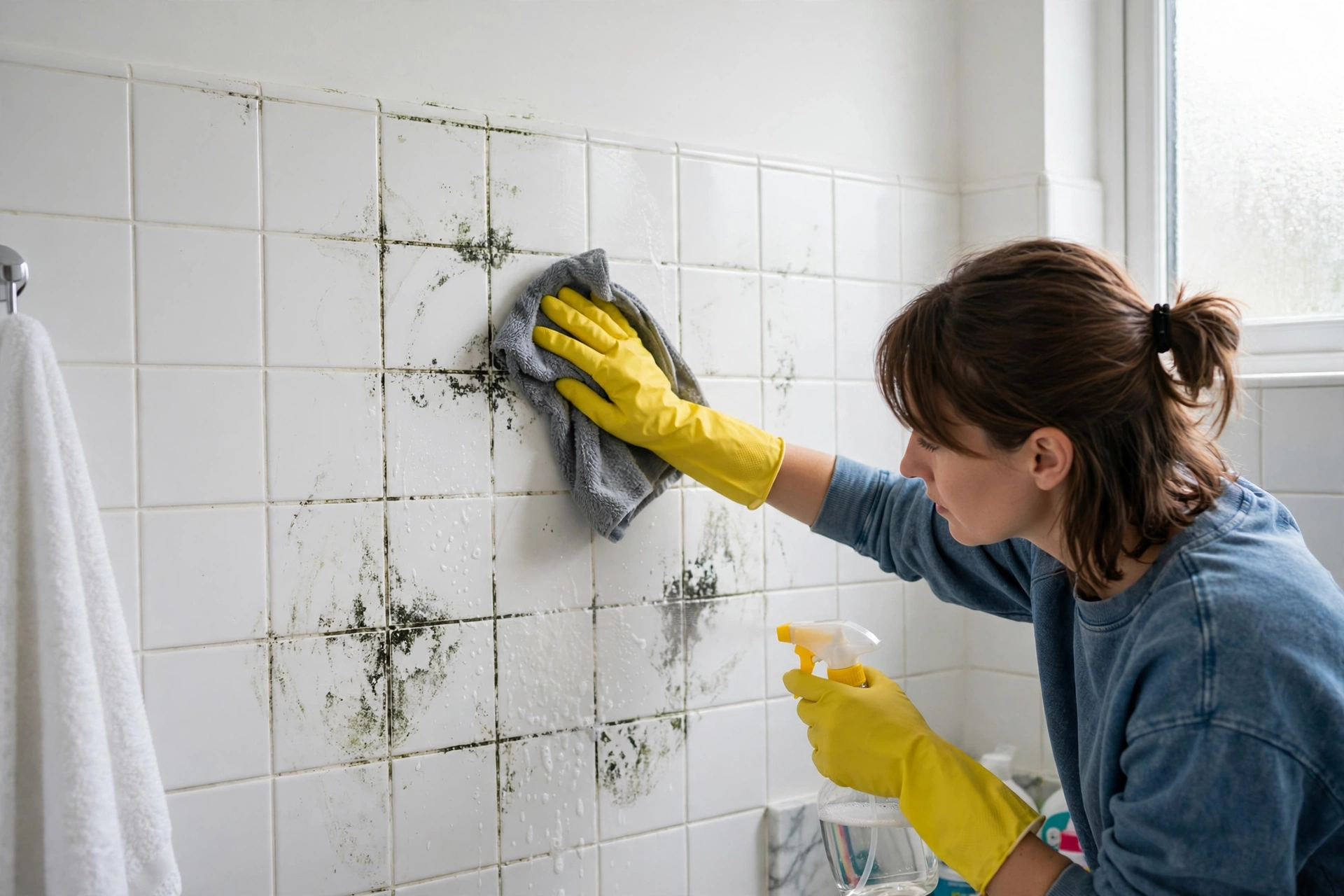
A musty smell usually comes from the seal or drawer. For example, black spots inside the seal folds mean you have found it. Likewise, pink film means the drawer needs a scrub.
A rotten-eggs smell is different. In that case, check the pump filter first, since rotting debris smells awful. Next, check the drain hose for a droop below the U-bend.
A sour smell on clothes means bacteria live in the fabric. Consequently, strip-wash towels and gym kit at 60°C too.
What You Need Before You Start
You need rubber gloves, two microfibre cloths, an old toothbrush, and warm soapy water. In addition, keep a torch, a shallow tray and two old towels ready for the filter.
Finally, pick your drum cleaner: 500 g of soda crystals, a washing machine cleaner, or cleaning tablets for washer use. Switch the machine off and empty the drum.
How to Clean a Stinky Laundry Machine Step by Step
Work through the machine in order: drawer, seal, filter, then drum.
First, remove the detergent drawer. Press the release catch, slide it out, and soak it in warm soapy water for ten minutes. Next, scrub the corners and siphon cap with an old toothbrush. Then scrub the ceiling jets inside the empty housing. Dry every piece before refitting.
Second, clean the rubber seal. Pull the folds back and wipe inside with a warm, soapy cloth. Scoop out trapped hair and sludge, then dry the seal.
Third, clear the drain filter. Open the small flap at the bottom front and put a tray underneath. Unscrew the cap slowly. Rinse the filter, clear away hair and fluff, and screw it back firmly.
Finally, run the hot wash. Put 500 g of soda crystals into the empty drum, not the drawer. Select a 60°C cottons cycle, or your machine’s drum-clean programme. Avoid an Eco 40–60 cycle, since it may not reach 60°C.
How to Clean Washing Machine Seal Black Mould
Black mould on the seal is the most common cause of a stinky laundry machine. In fact, cleaning it properly takes five minutes.
Start with warm soapy water on a microfibre cloth. Wipe deep inside every fold. This is how to clean washing machine rubber seal folds that hold black mould: work the cloth right into each crease, then dry the fold with a second cloth. However, hard scrubbing can lift the seal, so go gently.
For a grubby seal, use oxygen bleach instead. Dissolve a spoonful in warm water, dampen kitchen roll, and press it into the fold for 45 minutes.
Never use neat chlorine bleach: it is harsh on rubber and does not shift limescale. Never mix bleach with vinegar or any acid, since that gives off dangerous chlorine gas.
Sometimes the black marks stay. That is normal: mould pigment stains porous rubber for good.
Replace the seal only if it is cracked, gummy, or still sour after cleaning.
If mould has spread elsewhere, read our mould removal guide for the wider job. In short, that is how to clean rubber seal on washing machine models of any brand: wipe it with warm soapy water, dry it, and leave the door open.
Cleaning Tablets for Washer: Are They Worth It?
Cleaning tablets for washer use are the easiest option. You drop one in the drum and run a hot cycle. In addition, they suit a simple monthly routine.
Most tablets use oxygen bleach, which lifts grease and kills odour bacteria. Use one per clean, once a month.
Freshener tabs are different. They mask light smells between deep cleans. However, they do not replace a proper deep clean.
For example, supermarket own-brand tablets work well. Never use dishwasher tablets. They foam too much, and manufacturers warn against them.
Finally, tablets cost more than soda crystals, at around £1 per wash. On the other hand, they are quicker and simpler.
Vinegar and Bicarbonate of Soda: Do They Work?
White vinegar and bicarbonate of soda are popular home remedies. Vinegar cuts limescale and grease. Bicarb lifts grime and neutralises odours. However, they work best separately.
Pour 500 ml of white vinegar into the empty drum and run a hot cycle. Or use 100 g of bicarb instead. Do not mix them in the same wash. Vinegar is an acid and bicarb is an alkali, so they neutralise each other.
For instance, use vinegar only now and then. Frequent use can soften rubber seals. For grease, use soda crystals. For limescale, run a separate citric-acid wash.
How to Stop Your Washing Machine Smelling Again
Cleaning fixes the smell, but habits keep it away. Small changes after every wash matter most.
First, leave the door ajar after every wash, and slide the drawer open a crack too. Airflow dries the drum and stops mould.
Next, take wet clothes out at once. Even eight hours in a closed drum lets bacteria multiply.
Then check your dose. Measure with the cap lines for your water hardness and load size.
In addition, cut softener right back, and skip it on towels and sportswear.
Finally, run a hot wash regularly. A 60°C towel load every fortnight keeps the drum sanitised. If you wash mostly at 30°C, run an empty 60°C wash monthly.
Follow a simple calendar. Wipe the seal after every wash, scrub the drawer monthly, and run the hot wash monthly. Clean the filter every two to three months. A stinky washer machine rarely comes back.
When the Smell Will Not Go Away
Sometimes the smell survives a full deep clean. Instead, work through the checks below.
First, look under the kitchen sink. The drain hose should loop up in a high arc, at least 60 cm off the floor, before it joins the sink spigot. If it droops flat, dirty water can siphon back in. Fix it with a cable tie.
Next, check the standpipe. A partial blockage traps stagnant water and residue, which smells like rotten eggs. A drain unblocker may clear it.
Then consider the heater. If the machine no longer heats properly, no cleaning cycle will work. That points to a faulty element or thermostat.
Finally, call a repairer if you find a leak, a cracked seal, a pump that will not drain, or a heater that will not heat. If the machine is rented, tell your landlord in writing. A stinky laundry machine with a mechanical fault needs an engineer.
Frequently Asked Questions About Your Stinky Laundry Machine
Why does my washing machine smell bad?
A stinky laundry machine smells because mould and bacteria grow in the seal, drawer, filter and drum.
How do I clean a smelly washing machine in the UK?
First, scrub the drawer and seal, then clear the filter. Next, run an empty 60°C wash with soda crystals or a cleaner.
How do I get rid of smell from the washing machine drum?
Run an empty 60°C cycle with 500 g of soda crystals or a dedicated cleaner, then wipe the drum dry.
Can you use vinegar to clean a washing machine?
Yes, now and then: pour 500 ml into the empty drum and run a hot cycle.
How often should you clean your washing machine?
Deep clean every one to two months, or about every 30 washes.
How do I clean washing machine drawer mould?
Soak the drawer in warm soapy water for ten minutes, scrub the corners and siphon cap, and scrub the ceiling jets.
Why does my washing machine smell like rotten eggs?
It usually points to the drain, so check the pump filter, then the drain hose loop and the standpipe.




Leave a Reply