

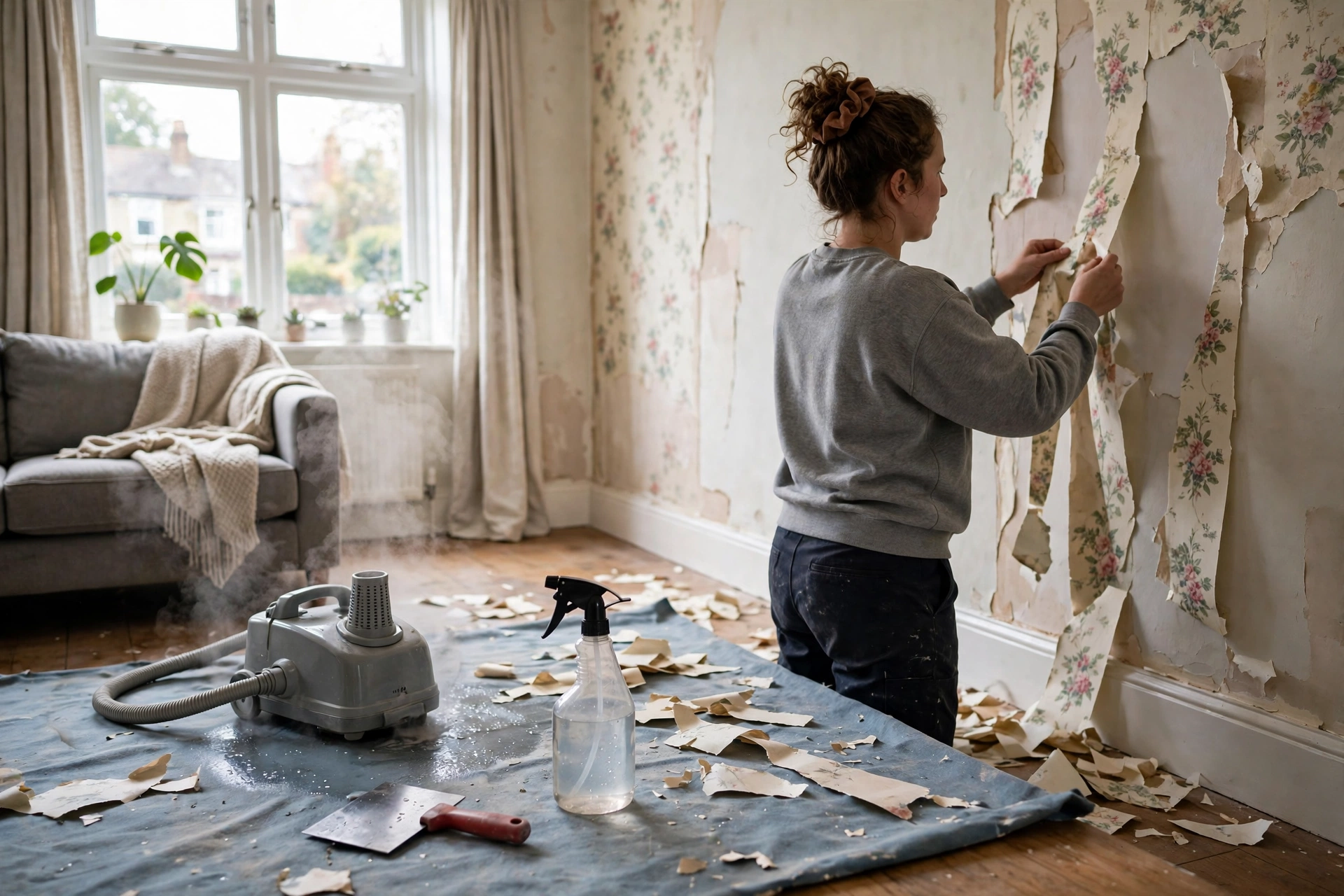
Old paper can turn a fresh decorating job into a slow chore. A good wallpaper stripper makes the work far easier, but only with the right method for your wall. This UK guide shows you how to tell what kind of paper you have. It covers which tools to reach for. It also shows how to leave the wall smooth and ready for paint or new paper.
How to Tell What Kind of Wallpaper You Have
First, find a loose corner near a skirting board or a door frame. Next, lift the edge with a fingernail or a blunt knife and pull gently. The way it comes away tells you what you face. For example, peelable paper lifts off in full sheets and leaves little behind. Strippable paper also peels away, but it leaves a thin backing layer on the wall. In contrast, traditional pasted paper tears in small pieces and needs water or steam to soften the glue. Painted-over paper feels sealed and resists water, so a scorer or a steamer works better. Woodchip feels rough and bumpy and clings hard; steam usually beats soaking here.
Finally, test a small hidden patch first — it stops you soaking a wall that would have peeled dry.
What You Need Before You Start
First, gather your tools before you touch the wall. You need dust sheets, a bucket, a sponge and a spray bottle. You also need a broad scraper, a scoring tool, a step ladder, gloves and a dust mask. Next, lay dust sheets across the floor and tape them to the skirting boards. Then switch off the power to the room and cover the sockets with tape. Move furniture out of the way. Finally, fill the spray bottle with warm water and a drop of washing-up liquid. A tidy start keeps the clean-up short.
Wallpaper Stripper Methods: Which One Suits Your Wall?
A wallpaper stripper comes in three main forms: dry peeling, soaking and steam. Dry peeling suits peelable and strippable papers and costs nothing. Soaking suits traditional pasted paper and small rooms. Steam suits woodchip, painted-over paper and several layers at once. Match the method to your test patch. Start with the gentlest method and move up only if the paper resists. That order protects the plaster.
Wallpaper Stripper or Steamer: Which Is Faster?
A steamer wins on speed for big rooms and stubborn layers. It softens the glue in seconds and lets you pull long strips in one pass. Dry peeling wins on small jobs, because you skip the set-up and drying time. Soaking sits in the middle: cheap and simple, but slower than steam.
Dry Stripping: Your First Wallpaper Stripper Test
This is the simplest wallpaper stripper job you will ever do: no water, no steam, no waiting. First, lift a bottom corner with your scraper and pull the strip slowly downwards at a low angle. Keep the strip close to the wall and pull with steady pressure. If the strip tears, lift a fresh edge and start again. Next, work strip by strip from the bottom of the wall to the top. Soak any thin backing layer later and scrape it off. If nothing lifts at all, stop and move on to soaking or steam. Forcing dry paper tears it into tiny pieces and doubles your work.
Soaking and Spraying: A Liquid Wallpaper Stripper
A liquid wallpaper stripper softens old glue with water, and it suits traditional pasted paper best. First, fill a spray bottle or a sponge with warm water and a drop of washing-up liquid. Next, wet one strip at a time and wait about ten minutes. The paper should darken as the water soaks through. Then test a corner with your scraper: if it lifts easily, peel the strip away. If it still resists, wet it again and wait longer. A chemical stripper solution works the same way on small areas. Warm soapy water does the job on most walls. Score sealed paper first, so water can reach the glue. Finally, work on one strip at a time, so the wall stays wet.
How to Use a Wallpaper Steamer
First, fill the steamer tank with water and let it heat up. Next, hold the flat plate against the bottom of a strip for ten to fifteen seconds. Then lift it and scrape the softened paper away. Work upwards in small sections and keep the plate moving. Never hold the plate in one spot for long, because the heat can soften plaster or bubble paint. Wear gloves: steam burns fast. Finally, empty the tank when you finish and let it cool before you store it. A steamer turns a stubborn room into a quick job, but respect the heat.
Wallpaper Scraper: How to Use One Without Gouging the Wall
A wallpaper scraper does the hard work, but a wrong angle gouges the plaster. First, hold the blade almost flat against the wall, at about 30 degrees. Next, push with short, firm strokes and let the edge slide under the softened paper. Keep the blade sharp: a blunt edge tears the paper and digs into the wall. Wipe the blade clean often. Use a broad blade for open walls and a narrow one near corners and sockets. If you meet a hard patch, soak or steam it again instead of forcing the blade. Patience here saves hours of filling later. Pick a wallpaper scraper with a firm handle and a replaceable blade.
Stubborn Patches and Paste Residue
Most walls leave a few stubborn patches behind. First, wet each patch again and give it a few more minutes. Then scrape it off with the blade held flat. A scoring tool helps here: run it lightly over the patch so the water can reach the glue. Next, wipe the bare wall with warm water and a sponge to lift the paste residue. Change the water often, because dirty water spreads paste back onto the wall. Let the wall dry, then feel it for rough or sticky spots. A clean, dry wall takes paint or new paper far better than a sticky one. Soaking a second time beats a forced blade every time.
Wallpaper Steamer Hire: When Hiring Beats Buying
A wallpaper steamer hire makes sense for a one-off job. Most tool-hire shops lend steamers by the day, and a single room rarely needs more than that. Hiring suits you if you plan to strip one room and never touch a steamer again. Buying suits you if you decorate often or plan to strip several rooms over time. A wallpaper steamer hire also suits flats and small homes, where a bulky machine has nowhere to live. Check what the hire includes: tank, plate, hose and scraper. Pick it up the morning you start. Finally, return it clean and dry. For most homes, one hired day beats a bought machine gathering dust.
Can You Wallpaper Over Wallpaper?
Can you wallpaper over wallpaper? Yes, you can, but most decorators advise against it. New paste adds moisture, and that moisture can wake the old glue. Then the old layer bubbles and lifts. Seams from the old layer can show through the new one. A dark pattern can ghost through a pale covering. Trapped moisture also feeds mould, which you cannot see until you strip the wall. Papering over only works when the old layer lies flat and firmly fixed. It must have no texture, no vinyl coating and no damage. Even then, hang lining paper first to hide the old pattern. In most homes, stripping the wall takes a day and saves a redo.
What to Do If You Find Mould Behind the Paper
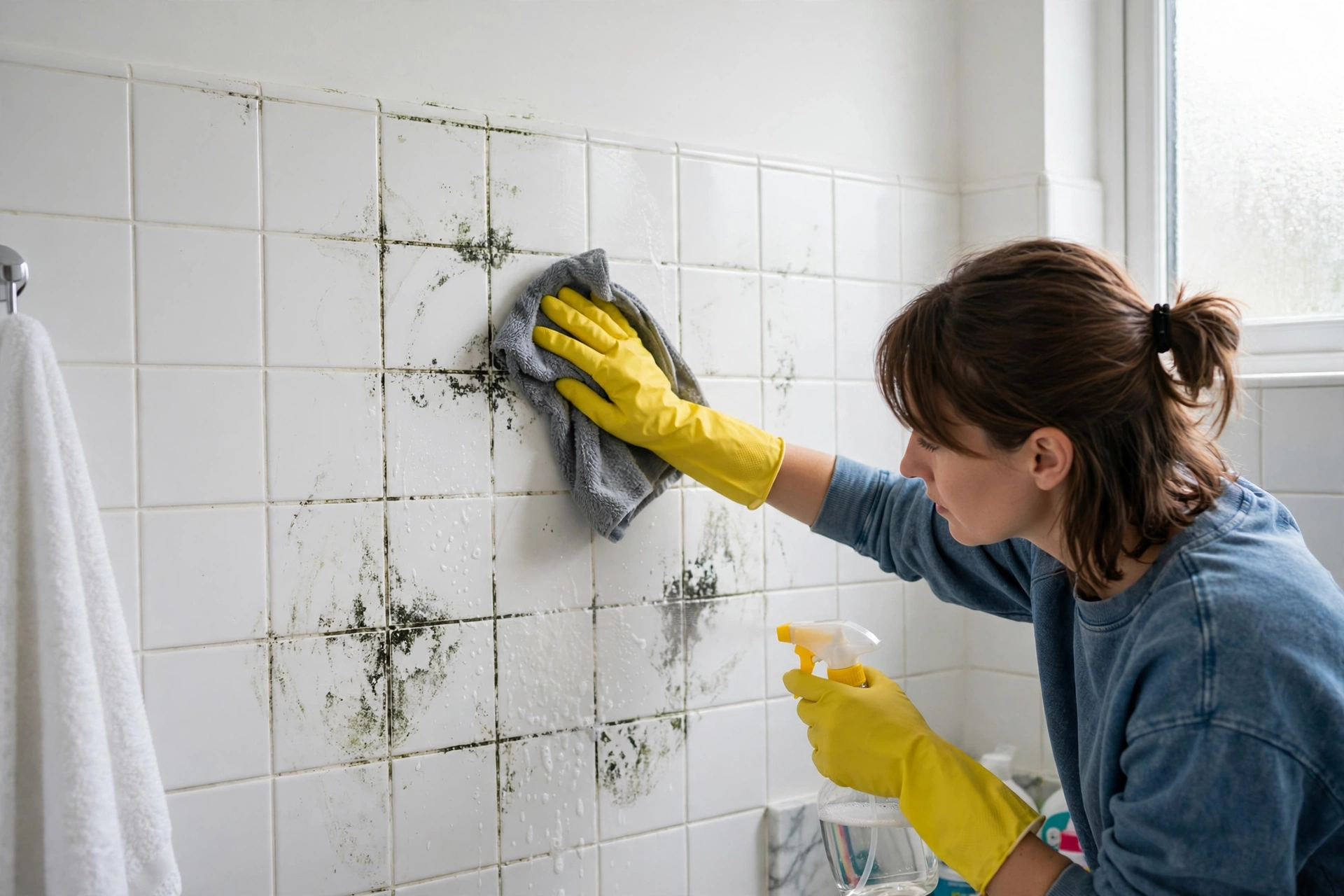
Old paper can hide damp and mould. Look at the bare wall once the paper comes off. Dark spots, a musty smell or soft plaster all point to damp. First, dry the wall fully and find the damp source before you decorate again. A leak, condensation or poor ventilation causes most cases. Do not paint or paper over mould, because it will grow back through the new finish. For safe removal steps, read our mould removal guide. Treat the wall, let it dry, and only then start decorating.
Preparing the Wall After Removal
A bare wall needs a little care first. First, fill small holes and cracks with filler and let it set. Next, sand the filler smooth once it dries, then brush the dust away. Wash the whole wall with warm water and a sponge to lift the last paste. Let the wall dry fully, which can take a day in a cold room. Then prime bare plaster with a suitable primer, so the finish grips well. Finally, check the wall in daylight for bumps that need one more sand. A well-prepared wall makes the next step easy and the finish last.
Safety First: Dust, Steam and Old Paste
Stripping looks simple, but a few safety steps matter. First, wear a dust mask and gloves from the start: old paste and dust irritate lungs and skin. Switch off the power and keep water away from sockets. Treat a steamer with respect: the plate burns on contact. Wear gloves and keep children and pets out of the room. In homes built before the 1980s, old plaster or textured coatings can hide asbestos. Get a professional test before you scrape or sand anything suspect. Never sand a surface you suspect holds asbestos.
Wallpaper Stripper FAQs
Do I need a wallpaper stripper for every job?
No. Peelable paper often lifts off dry with your hands and a scraper. Reach for a wallpaper stripper only when dry peeling fails.
How long does it take to strip a room?
A small room often takes a morning. A large room with stubborn layers can take a full day. Steam speeds the work.
Can I hire a wallpaper steamer for one day?
Yes. Most tool-hire shops lend steamers by the day, and one day covers a single room. Pick it up in the morning and return it clean.
Can you wallpaper over wallpaper to save time?
You can, but it rarely saves time in the end. The old layer can bubble, seams can show through, and trapped damp can feed mould. Strip the wall first for a finish that lasts.
Will stripping damage my plaster?
It should not, if you keep the blade flat and never force dry paper. Soak or steam stubborn patches again, and fill any small nicks before you decorate.
Removing old paper takes patience, but the right method turns a dreaded job into a simple one. Test the paper first, pick the gentlest method that works, and leave the wall clean, dry and smooth.



Leave a Reply