

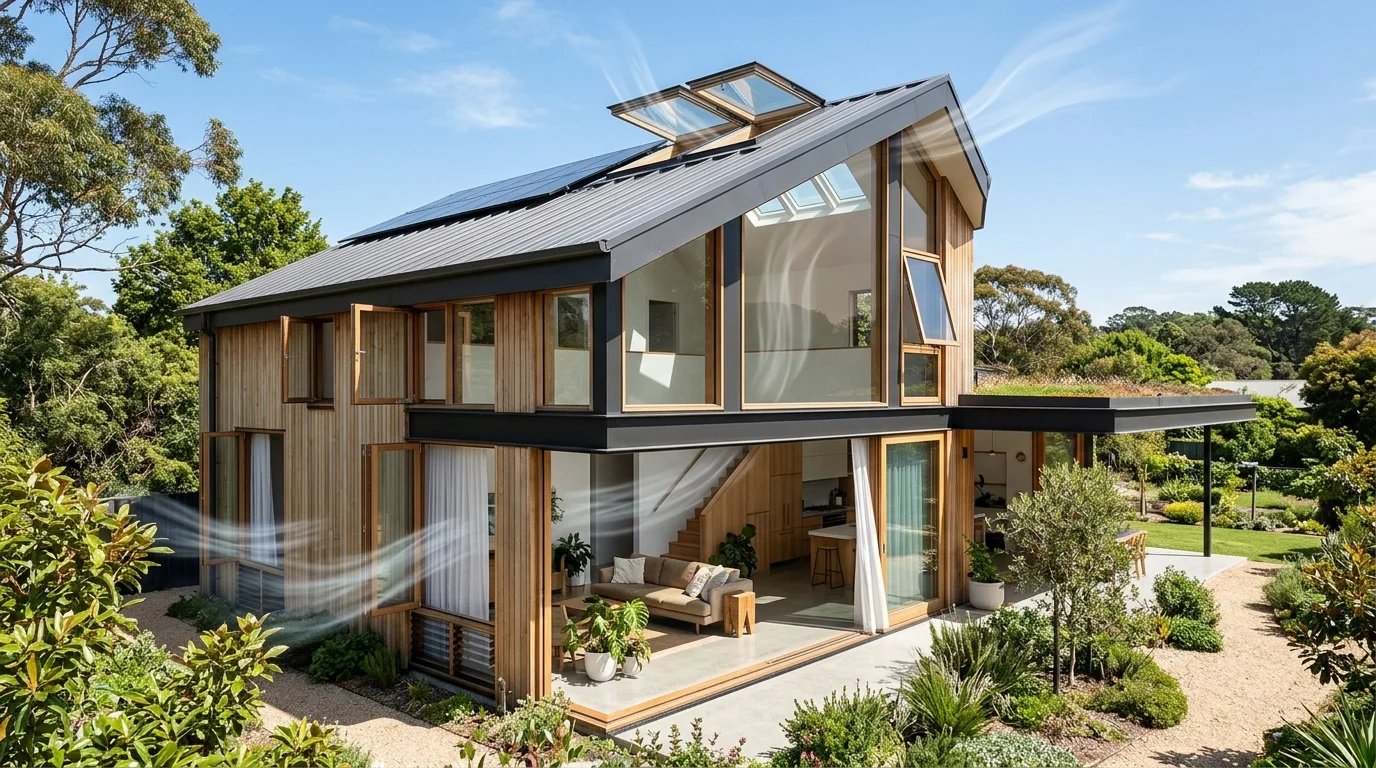
Modern properties are built tighter and better insulated than ever before. While this keeps warmth inside and lowers heating bills, it also creates an unintended side effect: trapped moisture, stagnant air, and pollutant buildup. Many homeowners turn to noisy, power-hungry extractor fans to solve this, but nature offers an effective, zero-carbon alternative.
What is Passive Ventilation and How Does It Work?
Passive ventilation is a natural airflow method that circulates fresh air throughout a building using natural forces like wind pressure and thermal buoyancy, operating entirely without electric fans or mechanical power. Instead of burning electricity to turn fan blades, a natural ventilation system relies on basic laws of physics to exchange stale indoor air with clean, filtered outdoor air.
The Physics: Wind-Driven Pressure vs. The Stack Effect
A well-designed building harnesses two natural physical phenomena to keep air moving constantly:
-
Wind-Driven Pressure: As outdoor breezes hit the exterior of a home, high pressure builds on the windward side. At the same time, low pressure forms on the leeward (sheltered) side. This natural pressure differential pulls fresh air inside through open windows or wall inlets while drawing stale air out through exhaust openings.
-
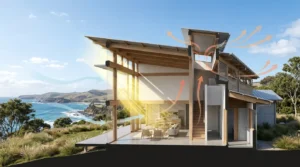
The Stack Effect (Thermal Buoyancy): Warm air is less dense than cold air, so it naturally rises. As everyday household activities like cooking, showering, and breathing warm up the indoor atmosphere, that warm, stale air climbs toward the ceiling. When it exits through high roof vents, it creates a gentle suction that draws cool, fresh air into lower living areas.
The 4 Primary Types of Passive Ventilation Systems
Different properties require different airflow configurations based on architectural layout, orientation, and climate.
1. Cross-Ventilation (Dual-Facade Airflow)
Cross-ventilation is the simplest and most recognizable form of natural airflow. By placing operable windows or background ventilators on opposite or adjacent walls of a room, breezes travel straight across the living space. This setup works exceptionally well for cooling open-plan rooms quickly during warmer months.
2. Single-Sided Ventilation
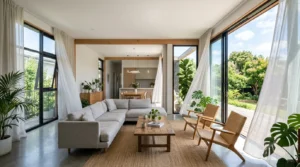
When a room only has windows on a single exterior wall, single-sided ventilation takes over. Fresh air enters through the lower portion of an open window while warmer, stale air exits through the top section. While less powerful than dual-facade layouts, using high and low wall vents can significantly increase its efficiency.
3. Passive Stack Ventilation (PSV)
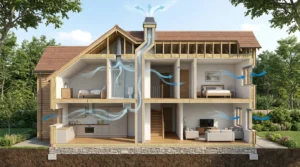
Passive stack ventilation systems, often abbreviated as PSV, utilize vertical ducts that run from moisture-prone zones (such as kitchens and bathrooms) up through the roof ridge. As the stack effect pulls warm, humid air upward through these vertical flues, fresh outdoor air is drawn in through window trickle vents in dry living areas like bedrooms and lounges. This provides quiet, continuous background ventilation without using any electricity.
4. Advanced Concepts: Solar Chimneys, Wind Catchers, and Earth Tubes
Sustainable architecture often expands natural airflow with dedicated thermal structures:
-
Solar Chimneys: Tall vertical shafts painted dark or glazed to absorb sunlight. The sun superheats the air at the top of the shaft, accelerating the upward convection current and pulling substantial volumes of cool air through the house.
-
Wind Catchers (Badgirs): Traditional architectural towers with multi-directional roof louvers designed to capture high-altitude winds and channel cool breezes down into living spaces.
-
Earth Tubes (Earth-Air Heat Exchangers): Underground pipes that draw incoming fresh air through the earth before it reaches the house, naturally pre-cooling air in summer and pre-warming it in winter.
Comparing Ventilation Strategies: Passive vs. Active vs. Hybrid
Choosing how to ventilate a home involves balancing initial setup expenses, ongoing running costs, and maintenance demands.
| Feature | Passive Ventilation | Active Mechanical Ventilation (MEV/MVHR) | Hybrid (Mixed-Mode) Systems |
| Electricity Consumption | Zero kWh | Moderate to High (Continuous fan operation) | Low (Intermittent sensor-based fans) |
| Running Costs | Free | Requires electricity and periodic filter replacements | Low running cost |
| Noise Levels | Completely silent | Low hum to noticeable fan noise | Silent during passive mode |
| Maintenance | Minimal (occasional vent cleaning) | High (annual filter changes, duct cleaning, motor checks) | Moderate (sensor and fan maintenance) |
| Heat Recovery | None (unless paired with earth tubes) | High (MVHR systems recover up to 90% of heat) | Moderate |
| Air Filtration | Basic insect/dust screens | Advanced HEPA and pollen filtration | Multi-stage background filtration |
Passive Ventilation vs. Mechanical Ventilation with Heat Recovery (MVHR)
In hyper-insulated Passivhaus builds, Mechanical Ventilation with Heat Recovery (MVHR) is often chosen because it extracts heat from stale exhaust air and transfers it to incoming outdoor air. However, MVHR requires airtight construction, expensive ductwork, and constant electricity. A natural ventilation system offers a simpler, cost-effective alternative for traditional and retrofit builds where mechanical complexity is unnecessary.
Eliminating Condensation, Damp, and Black Mould
Excessive moisture is one of the most common causes of property damage and health issues in residential homes.
Managing Relative Humidity Levels
Everyday household routines introduce litres of water vapour into the air. If indoor relative humidity rises above 60%, moisture condenses against cold exterior walls, window panes, and behind furniture. A continuous natural airflow system flushes out this moisture-laden air before it settles, keeping relative humidity within the healthy 40% to 60% range.
Preventing Sick Building Syndrome
Poor indoor air quality leads to headaches, fatigue, and respiratory irritation, a condition known as sick building syndrome. Continuous passive stack vents and trickle vents exchange indoor air constantly, safely dispersing volatile organic compounds (VOCs), carbon dioxide, and allergens.
How to Retrofit Passive Ventilation in an Existing Home
You do not need to construct a new building to take advantage of natural airflow. Many older homes can be retrofitted quickly and affordably.
1. Install Window Trickle Vents and Acoustic Ventilators
Adding trickle vents to existing window frames provides controlled background ventilators that keep fresh air entering the property even when windows are locked shut for security. If outside traffic noise is a concern, acoustic background ventilators use sound-absorbing baffles to let air in while keeping street noise out.
2. Fit Hygro-Regulated Passive Stack Vents
Modern passive stack vents come equipped with intelligent, humidity-sensitive dampers. These mechanical components expand and contract based on room humidity without requiring electric sensors. When humidity surges during cooking or showering, the damper opens wider to extract vapour rapidly, then closes down once moisture levels normalize to prevent heat loss.
3. Maintain Clear Internal Air Paths
For natural airflow to work properly across multiple rooms, air needs a pathway between intake points and exhaust ducts. Trimming interior doors to leave a 10 mm gap above the floor allows air to move freely from dry rooms toward wet room exhaust vents.
Climate Realities: Managing Heat Loss and Summer Overheating
A common concern with natural systems is whether they can handle extreme seasonal temperature shifts.
Stopping Winter Drafts and Uncontrolled Air Infiltration
Uncontrolled air leaks through cracks in walls cause noticeable cold drafts. Proper passive systems prevent this by utilizing manually adjustable or humidity-controlled dampers. These restrict air throughput during freezing winter storms while still providing the baseline air changes per hour needed for fresh air.
Using Night Purge Ventilation and Thermal Mass in Summer
During hot summer spells, homes with exposed thermal mass materials (such as brick, stone, or concrete floors) can use night purge ventilation. By opening secure upper and lower vents overnight, cool night air flushes out the heat absorbed by walls and floors during the day. The building stays significantly cooler the following afternoon without turning on air conditioning.
Building Regulations and Performance Standards
Modern building codes, such as UK Building Regulations Part F and international standards like ASHRAE 62.2, require homes to maintain minimum ventilation rates to protect health.
-
Air Changes per Hour (ACH): Residential buildings generally require a baseline ventilation rate that replaces 0.3 to 0.5 of the total indoor air volume every hour.
-
Airtightness Considerations: In properties with high air permeability (older or standard modern homes), natural pressure differences easily achieve these targets. For ultra-airtight homes with permeability rates below 3 m³/(h·m²), hybrid systems or dedicated solar chimneys ensure that air exchange targets are met consistently year-round.
Pros and Cons of Passive Ventilation
Understanding the key advantages and potential drawbacks helps determine if this approach suits your property.
Advantages
-
Zero Running Costs: Operates completely free of electrical power charges.
-
Quiet Operation: No mechanical hums, vibrating fan motors, or duct resonance.
-
Low Maintenance: No motors to burn out, electronic circuit boards to fail, or expensive annual servicing.
-
Sustainable and Eco-Friendly: Lowers overall building emissions and reduces household carbon footprints.
-
Natural Mould Prevention: Provides steady, reliable moisture control around the clock.
Disadvantages
-
Weather Dependent: Flow rates fluctuate depending on external wind speeds and outdoor temperature differences.
-
No Active Heat Recovery: Heat carried by exhaust air cannot be recycled back into incoming air without secondary hybrid systems.
-
Limited Fine Filtration: Standard natural vents cannot house dense HEPA filters without restricting the natural airflow needed for circulation.
FAQs
Is passive ventilation enough for a modern airtight home?
In extremely airtight homes, natural buoyancy alone may slow down during calm, warm days when indoor and outdoor temperatures are identical. In these builds, adding humidity-tracking dampers, solar chimneys, or low-wattage hybrid assist fans ensures steady air changes throughout the entire year.
How much does it cost to install passive stack ventilation?
A typical retrofit involving trickle vents and two or three vertical passive stack ducts generally costs between £800 and £2,000, depending on roof access and ceiling layout. Because there are no recurring electric bills or motor replacements, the system often pays for itself quickly compared to running mechanical ventilation units.
Do passive vents cause cold drafts in winter?
Properly installed background ventilators and hygro-regulated passive stack vents do not create aggressive drafts. They diffuse incoming air gently across ceiling surfaces, allowing it to mix with existing room warmth before reaching living height.
Final Verdict:
Harnessing natural airflow is one of the most cost-effective, durable, and sustainable ways to protect a home from damp, mould, and stale air. By using natural physical forces like wind pressure and the stack effect, you can create a healthy, self-regulating indoor environment that keeps air fresh all year long without increasing your energy bills.



Leave a Reply