

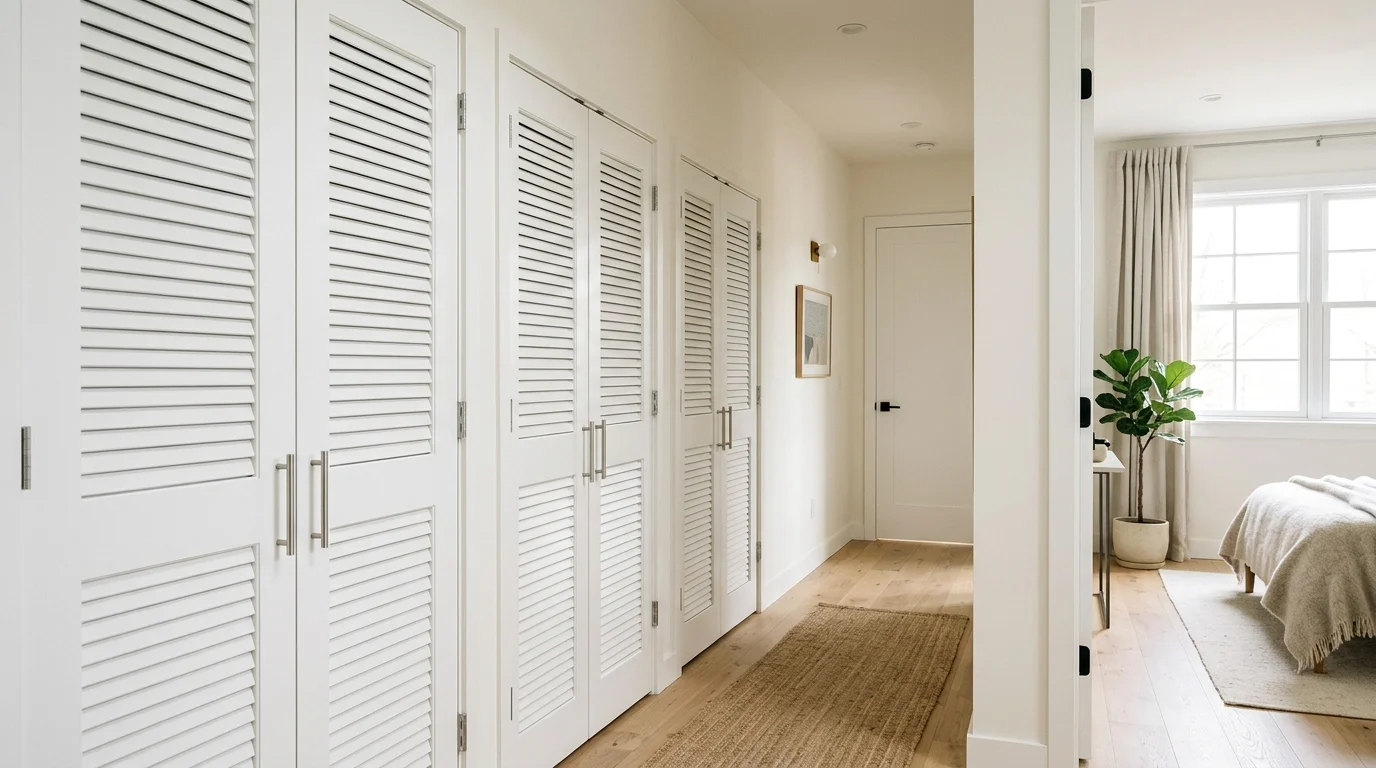
Louvers on doors may look like a small design detail, but they can change how a room feels and functions. You may notice them on closet doors, bathroom doors, laundry room doors, pantry doors, and utility room doors. These doors usually have horizontal slats inside the panel, which allow air to move through while still keeping the space partly covered.
A louvered door does more than improve the look of a room. It can support airflow, ventilation, moisture control, odor reduction, and comfort in small or enclosed spaces. At the same time, this style does not suit every room. Some areas need stronger sound control, better privacy, more security, or proper fire safety. This guide explains door louvers in simple terms, including how they work, where they perform best, which materials to choose, and what mistakes to avoid.
What Are Door Louvers?
Door louvers are angled slats or vented openings built into a door panel. These slats usually sit horizontally and allow air to pass through the door even when someone closes it. In simple words, they help a room breathe.
A regular solid door blocks airflow between two spaces. A louvered door allows air circulation while still keeping the area separated. That is why homeowners often choose louvered doors for closets, utility rooms, laundry areas, bathrooms, pantries, and HVAC closets.
Manufacturers create some slats for real airflow and others only for decoration. Functional slats are known as true louvers because they let air move through the door. Decorative slats are known as false louvers because they give the door a louvered look without real ventilation.
Why Do Doors Have Louvers?
The main purpose of door louvers is ventilation. When a room or closet stays closed for a long time, the air inside can become stale. Moisture, odors, and heat may collect in that space. A louvered door helps air move in and out naturally.
This feature works well in many areas of the home. Closets need air movement to keep clothes fresh. Laundry rooms often collect heat and humidity. Bathrooms need moisture control. Pantries can feel stuffy when they stay closed. HVAC closets may need airflow for equipment performance. Utility rooms also benefit from better air movement.
Door louvers can also help with light control and partial privacy. The angled slats allow some light and air to pass through while reducing direct visibility. This makes them useful when you want a space to feel open without exposing it completely.
How Do Louvered Doors Work?
Louvered doors work through slatted openings. The angled slats create small gaps that let air move from one side of the door to the other. This movement helps reduce trapped air, dampness, odor, and heat.
Slat angle plays an important role. A good angle allows airflow while limiting direct views into the room. This creates a balance between ventilation and privacy. Wider gaps usually increase airflow, but they can reduce privacy. Narrower gaps may improve privacy, but they can limit air movement.
Room type should guide your choice. A closet may need steady airflow. A bathroom may need both moisture control and better privacy. A utility or mechanical room may require stronger airflow depending on the equipment inside.
Main Types of Door Louvers
Several types of louvers appear in residential and commercial doors. Understanding the difference helps you choose the right louvered door for your space.
True Louvers
True louvers allow air to move through the door. They work best for closets, laundry rooms, HVAC closets, utility rooms, and other spaces where ventilation matters.
False Louvers
False louvers create the look of real louvers, but they do not provide real airflow. Designers often use them when the goal is style rather than ventilation.
Fixed Louvers
Fixed louvers have slats that stay in one position. They provide consistent airflow and often appear in interior louvered doors, closet doors, and utility doors.
Adjustable Louvers
Adjustable louvers have movable slats. They allow you to control airflow, light, and privacy. This type works well when a room has changing needs throughout the day.
Full Louver Doors
A full louver door has slats across most of the door surface. It gives maximum airflow and suits closets, laundry areas, storage spaces, and utility rooms.
Half Louver Doors
A half louver door combines louvers with a solid panel. This option gives a balance of airflow, privacy, and style.
Common Places Where Louvered Doors Work Best
Louvered doors can serve many residential and commercial spaces. The best location depends on airflow needs, privacy expectations, and the purpose of the room.
Closet Doors
Louvered closet doors help clothes, shoes, and stored items stay fresher. Closed closets can trap humidity and odor. A vented closet door allows air to move through, which reduces the chance of a musty smell.
Bathroom Doors
A bathroom louvered door can support moisture control by allowing air to escape. Privacy still matters, though. Louvers do not block sound or visibility as well as solid doors, so they work better in powder rooms, attached bathrooms, or spaces where full privacy is not the main concern.
Laundry Room Doors
Laundry rooms often create heat and humidity. Louvered laundry room doors help air circulate around washers, dryers, and storage areas. Better airflow can make the room feel less stuffy and more comfortable.
Pantry Doors
A pantry louvered door can improve airflow in a closed storage space. This works especially well in kitchens where heat, food odors, or stale air may collect.
HVAC and Utility Room Doors
HVAC closet door ventilation matters because some mechanical spaces need proper airflow. A louvered door may help equipment receive enough air, but requirements can vary. For HVAC rooms, utility rooms, and mechanical spaces, always check manufacturer guidance or local building rules.
Commercial Spaces
Commercial louvered doors often appear in mechanical rooms, restrooms, storage areas, and service spaces. In these settings, airflow, durability, and safety rules matter more than decoration alone.
Benefits of Door Louvers
Louvers on doors offer several practical benefits, especially in spaces that need regular airflow.
Better Air Circulation
Air movement is the biggest benefit. A louvered door allows fresh air to pass through and helps prevent a closed space from feeling stale.
Reduced Moisture and Musty Smells
Moisture can create unpleasant odors in closets, bathrooms, basements, and laundry areas. Door louvers improve ventilation and help reduce trapped humidity.
Improved Comfort in Small Spaces
Small rooms can become warm and stuffy. A ventilated door can make these areas feel more comfortable without keeping the door open.
Stylish Interior Appearance
Modern louvered doors can add texture and character to a room. They suit farmhouse, coastal, traditional, minimalist, and modern interiors.
Practical Use in Utility and Mechanical Areas
Some utility areas need ventilation more than privacy. In these spaces, a louvered door can work better than a solid door.
Drawbacks of Louvered Doors
Louvered doors offer many advantages, but they also have limits. A smart choice depends on both the benefits and the possible drawbacks.
Less Sound Privacy
Air passes through the slats, and sound can travel through them too. This makes louvered doors less suitable for bedrooms, offices, or rooms where quietness matters.
Less Visual Privacy
Louvers reduce direct visibility, but they do not provide the same privacy as solid doors. Slat angle and spacing can affect how much someone can see through the door.
More Dust Movement
Open slats allow dust to move between spaces. This may create problems in storage rooms, workshops, or dusty areas.
Harder Cleaning
Louver slats can collect dust. Cleaning between the slats takes more time than wiping a flat solid door.
Limited Use in Some Door Openings
Louvered doors may not suit entry doors, high security rooms, bedrooms, or fire-rated openings unless the product has approval for that purpose.
Louvered Doors vs Solid Doors: Which Is Better?
The right choice depends on what the room needs most. Choose louvered doors when airflow, ventilation, moisture control, or heat movement matters. They work well for closets, laundry rooms, pantries, bathrooms, utility spaces, and HVAC closets.
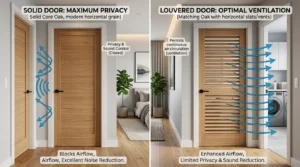
Choose solid doors when privacy, sound control, insulation, and security matter more. Bedrooms, offices, main entry points, and private rooms usually need solid doors. A simple rule can help. Use a louvered door where air needs to move. Choose a solid door where privacy, quietness, or security matters more.
Materials Used for Louvered Doors
Louvered doors come in several materials. Each option has its own style, strength, and maintenance needs.
Wood Louvered Doors
Wooden louvered doors offer a warm and natural look. They suit bedrooms, closets, living areas, and traditional interiors. You can paint or stain them, but they need protection in humid spaces.
MDF Louvered Doors
MDF often costs less than solid wood. It works well for interior louvered doors and painted finishes. Proper sealing matters if you plan to use it near moisture.
PVC Louvered Doors
PVC louvered doors resist moisture and clean easily. They work well in bathrooms, laundry rooms, and utility spaces.
Metal or Steel Louvered Doors
Metal louvered doors and steel door louvers suit commercial and mechanical spaces. They offer strength, durability, and practical airflow.
Composite Louvered Doors
Composite doors can offer a balance of durability, style, and lower maintenance. They suit homeowners who want a wood-like appearance with better resistance to moisture or wear.
Design Styles for Louvered Doors
Door louvers can fit many design styles. They are not limited to old closet doors. Modern louvered doors can create a clean and stylish look in bedrooms, hallways, and utility spaces. White louvered closet doors can make a room feel bright and fresh. Dark metal louvered doors can suit industrial interiors. Farmhouse louver doors can add warmth and character to a home.
Decorative false louver doors work well when you want style without ventilation. Full louver doors create a more open and airy appearance. Half louver doors provide a more balanced look with added privacy.
Fire-Rated and Commercial Door Louver Considerations
Fire-rated door louvers need special attention. Never cut or add vents to a fire-rated door without checking whether the product has approval for that use.
A fire door works as part of a safety system. An incorrect change can affect its performance. In commercial buildings, fire-rated openings may require listed louvers, approved sizes, proper placement, and sometimes a fusible link louver. A fusible link louver reacts to heat and helps support fire protection in certain rated assemblies. If the door sits in a corridor, stairway, mechanical room, smoke barrier, or commercial fire-rated area, check building code, manufacturer instructions, or a qualified professional before making changes.
Can You Add Louvers to an Existing Door?
You may be able to add a louver insert to an existing door, depending on the door type and location. For a basic interior door, a skilled DIY person or carpenter can cut an opening and install a door louver insert. This can improve airflow for closets, laundry rooms, or storage spaces. Avoid this change on fire-rated doors, exterior security doors, structural doors, or doors that must meet building code requirements. When in doubt, buy a proper louvered door or ask a professional installer.
How to Choose the Right Louvered Door
The room should guide your decision. For closets, airflow and odor control may matter most. For bathrooms, moisture control matters, but privacy also needs attention. In laundry rooms, think about heat and humidity. For HVAC closets, airflow requirements may need to match equipment needs. In commercial spaces, safety and code compliance should come first.
Material also matters. Wood looks beautiful, PVC handles moisture well, and metal performs better in heavy-duty areas. Cleaning should influence your decision too. If the door will collect dust quickly, choose a design that allows easier maintenance.
Maintenance Tips for Louvered Doors
Louvered doors need regular cleaning because dust can settle between the slats. For weekly care, use a microfiber cloth, duster, or vacuum brush attachment. During deeper cleaning, wipe between the slats with a damp cloth. A small brush can help reach tight spaces.
Wood louvers may need occasional polishing, painting, or sealing. PVC and metal louvers usually clean well with mild soap and water. Avoid harsh chemicals unless the manufacturer recommends them. Repair loose, warped, or damaged slats early. Small issues can become harder to fix when you ignore them.
Common Mistakes to Avoid With Louvered Doors
One common mistake involves choosing a louvered door only because it looks nice. The door should match the room’s function. Another mistake involves using louvers where full privacy matters. A louvered bathroom door, for example, may not suit every home. Sound and visibility need careful thought.
Some homeowners also choose the wrong material. Wood can look great, but it may not suit high-moisture areas unless you seal it properly. PVC or composite may work better in damp rooms. The most serious mistake involves modifying a fire-rated door without approval. This can create safety and compliance problems. For commercial buildings, always check the rules before installing or changing door louvers.
FAQs
What are door louvers?
Door louvers are slats or vented openings in a door that allow airflow, light movement, and partial privacy.
Why do doors have louvers?
They improve ventilation, reduce trapped moisture, control odors, and make enclosed spaces feel less stuffy.
Are louvered doors good for closets?
Yes. Louvered closet doors help clothing and stored items get better air circulation.
Are louvered doors good for bathrooms?
They can help with bathroom ventilation, but privacy and sound control need careful consideration.
Do louvered doors provide privacy?
They provide partial privacy, but not as much as solid doors. Slat angle and spacing affect the privacy level.
Do louvered doors block sound?
No. They do not block sound very well because the slats allow air and noise to pass through.
Are louvered doors outdated?
No. Modern louvered doors still work well in closets, laundry rooms, bathrooms, pantries, and stylish interiors.
Conclusion
Louvers on doors can improve airflow, moisture control, odor reduction, and comfort in the right spaces. They work well for closets, laundry rooms, bathrooms, pantries, utility areas, and some commercial rooms. This style does not solve every problem. If you need strong privacy, better sound control, higher security, or fire-rated protection, a solid door or an approved commercial solution may work better.
The best choice depends on the room’s purpose. A louvered door can look stylish and function well when ventilation matters, but it should also match the space, material needs, privacy expectations, and safety requirements.



Leave a Reply