

What Is a Commissary Kitchen?
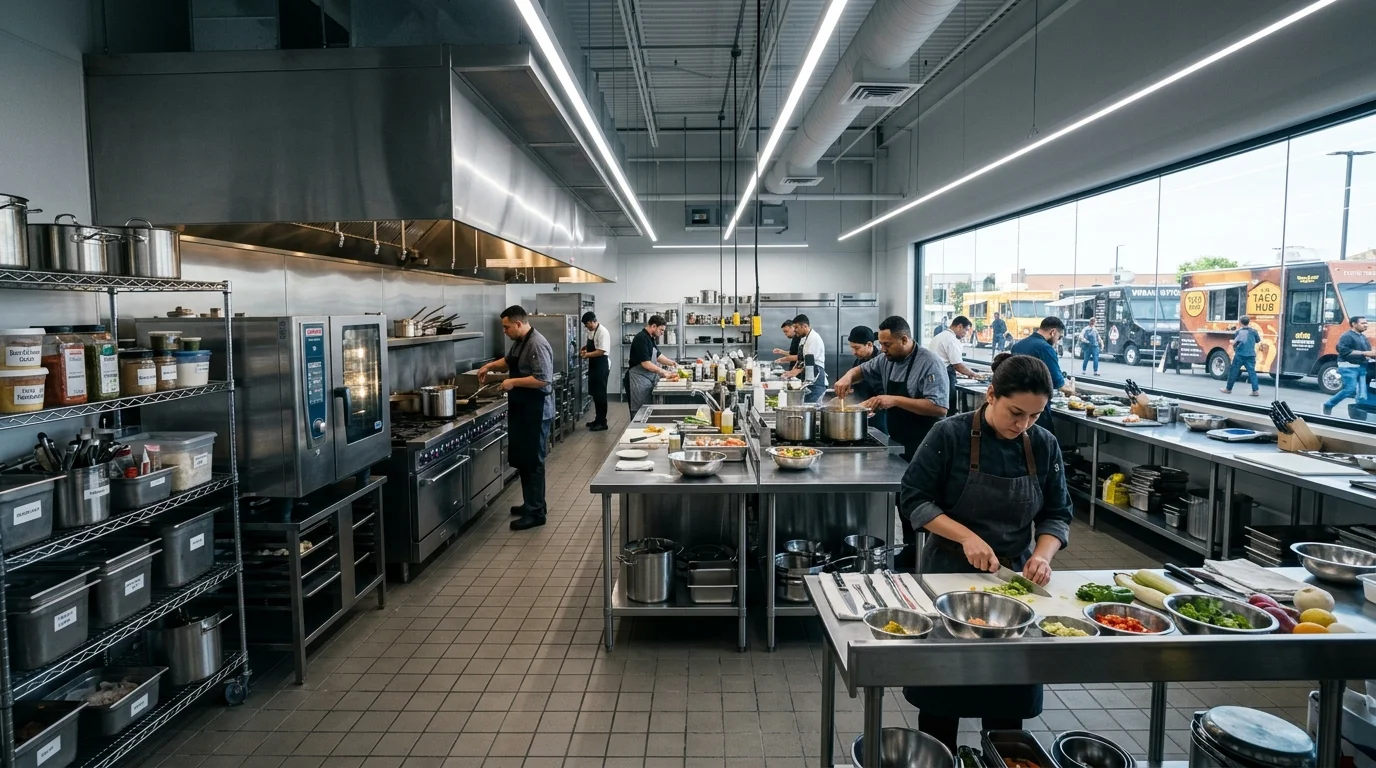
A commissary kitchen is a shared commercial kitchen space designed for food businesses that need a licensed and fully equipped cooking facility without building their own restaurant kitchen. It is used by food trucks, catering services, meal prep companies, and small food startups that require professional food production space.
In most cases, a commissary kitchen provides access to cooking equipment, refrigeration, storage areas, and sanitation systems that meet health and safety regulations. Instead of investing heavily in infrastructure, businesses rent space as needed, making it a flexible entry point into the food industry.
How It Works
The shared kitchen model operates by allowing multiple businesses to use the same space at different times. Users reserve time slots based on their production needs, which can be hourly, daily, or monthly. Each business is given access to commercial-grade equipment and assigned storage areas for ingredients and packaging. The facility manages cleaning schedules and ensures compliance with food safety standards.
Food truck operators often rely on this system because many regions require food preparation to be done in an approved licensed kitchen before serving customers.
Who Uses Shared Kitchen Facilities?
A wide range of food businesses depend on shared kitchen spaces. Food truck owners use them for daily preparation and cleaning. Catering companies prepare large quantities of food for events. Meal prep businesses use them for bulk cooking and weekly deliveries.
Delivery-focused food brands and cloud kitchen operators also rely on these facilities to produce food without running dine-in restaurants. Startups and bakery businesses often begin in these environments before expanding into larger operations.
Comparison With Ghost Kitchen and Cloud Kitchen
Although these terms are often used together, they represent different models in the food industry. A commissary kitchen is focused on shared food preparation and storage. A ghost kitchen operates as a delivery-only restaurant without a physical dining area. A cloud kitchen is a broader system that may include multiple virtual restaurant brands operating from a centralized kitchen setup.
The main distinction is that shared kitchens focus on production infrastructure, while ghost and cloud kitchens focus more on brand execution and delivery services.
Benefits of Using a Shared Kitchen
Using a shared commercial kitchen reduces startup costs significantly since businesses do not need to build or equip their own facility. It also provides access to licensed and health-approved environments, which is essential for legal food production. Another advantage is flexibility. Businesses can rent space based on demand, making it easier for startups to enter the market with lower financial risk. It also allows scalability as food operations grow without requiring large upfront investments.
Limitations and Challenges
Despite the advantages, there are some limitations. Since the facility is shared, scheduling conflicts can occur during peak hours. Storage space may also be limited depending on demand. Businesses must also follow strict operational rules set by the facility, which can reduce flexibility. For companies that require specialized setups, customization options may be limited.
Cost of Renting Space
Pricing varies depending on location, equipment, and usage type. Most facilities charge hourly rates, while regular users may choose monthly plans. Additional charges may apply for storage, cleaning services, and peak-hour usage. In major cities, costs tend to be higher due to increased demand for licensed commercial kitchen space.
Legal Requirements and Compliance
Food businesses using shared kitchens must follow strict food safety regulations. This includes proper certification for staff, compliance with health department guidelines, and adherence to sanitation standards. The facility itself must be licensed and regularly inspected. Many food trucks and catering businesses are legally required to prepare food in approved commercial kitchens before selling to customers. Insurance coverage is often required as well.
Real World Use Cases
A commissary kitchen plays a critical role in several food business models. Food trucks use it as a base for daily preparation and cleaning. Catering companies rely on it for preparing large event meals efficiently. Meal prep businesses use it for bulk cooking and packaging weekly meal plans. Startup food brands often use shared kitchen space to test recipes and launch products with minimal investment. These examples show how essential shared kitchen infrastructure has become for modern food operations.
How to Choose the Right Commissary Kitchen
Selecting the right commissary kitchen is important for smooth operations. Location is a key factor because it affects daily logistics and delivery efficiency. Availability of equipment is also important depending on the type of food being prepared. Pricing structure, hygiene standards, storage capacity, and booking flexibility should also be evaluated carefully. Businesses should choose a facility that aligns with both their current needs and future growth plans.
Future of Commissary Kitchens
The commissary kitchen model is expected to grow as the food delivery industry expands. More businesses are moving toward delivery-focused operations, increasing demand for shared kitchen infrastructure.
Future developments may include AI-based scheduling systems, integration with cloud kitchen networks, and more automated food production environments. Multi-brand kitchen hubs are also becoming more common, allowing multiple food brands to operate under one system efficiently.
FAQs
What is a shared kitchen used for?
It is used for food preparation, cooking, storage, and packaging by food businesses like food trucks, catering services, and startups.
Do food trucks need a shared kitchen?
In many regions, food trucks are legally required to use a licensed commercial kitchen for preparation and cleaning.
Is it cheaper than a restaurant kitchen?
Yes, it significantly reduces startup and operational costs.
Can I start a food business without my own kitchen?
Yes, many businesses begin by renting shared kitchen space instead of building their own facility.
Final Summary
A shared commercial kitchen system provides a practical and cost-effective solution for food entrepreneurs. It allows businesses to operate legally, scale efficiently, and reduce infrastructure costs while maintaining professional food production standards.



Leave a Reply