


Garden cushions make your patio, rattan furniture, outdoor sofa, bench, or dining set feel comfortable and inviting. But once rain, frost, dust, pollen, UV rays, insects, and damp weather get involved, those same cushions can quickly become musty, stained, faded, or difficult to use. When it comes to storing garden cushions, the goal is simple: keep them clean, dry, breathable, and protected from the weather.
The good news is that you do not need a complicated system. A garden cushion storage box, cushion storage bag, shed, garage, indoor cupboard, or storage bench can all work well if you prepare the cushions properly first. The real mistake is putting damp or dirty cushions away and hoping they will be fine. Over time, that can lead to mould, mildew, bad smells, foam rot, pest damage, and fabric wear.
This guide explains how to store garden cushions properly, where to keep them, which storage method is best, how to handle winter storage, and what mistakes to avoid.
Why Storing Garden Cushions Properly Matters
Outdoor cushions are designed for comfort, but not all of them are made to survive constant rain, frost, snow, and trapped moisture. Even weather-resistant cushions can suffer if they are left outside for long periods without protection. Fabric can fade in strong sunlight, foam can hold water, seams can weaken, and mildew can spread if airflow is poor.
That is why storing garden cushions is not only about keeping your garden tidy. It protects the fabric, filling, colour, shape, and freshness of your cushions. It also saves money because you will not need to replace your patio cushions or garden furniture cushions as often.
Proper garden cushion storage helps prevent:
- Mould and mildew caused by damp fabric
- Musty odours from trapped moisture
- Fading caused by sunlight and UV rays
- Damage from mice, insects, spiders, and other pests
- Foam rot and misshapen cushions
- Stains from dirt, leaves, pollen, food marks, and rainwater
If you live in a wet climate or deal with long UK winters, a good storage routine becomes even more important.
Clean and Dry Cushions Before Storage
Before storing garden cushions, always clean them properly. Dirt, pollen, dust, food crumbs, sunscreen, and bird droppings may look harmless, but they can turn into stains or attract pests once the cushions are packed away.
Start by brushing off loose debris. If the covers are removable, check the care label and wash them as recommended. For non-removable covers, use warm water, a mild soap solution, and a soft brush or cloth. Avoid harsh chemicals unless the cushion label says they are safe for the fabric.
If you notice mould or mildew, treat it before storage. A mild white vinegar and water solution can help with light mildew on many outdoor fabrics, but always test a small hidden area first. For stubborn stains, use a fabric-safe cleaner made for outdoor cushions.

Drying is the most important part of the process. Never store damp cushions. Place them upright in a sunny, airy spot and allow both the fabric and foam to dry fully. If cushions are thick, press gently to check for hidden moisture inside. A cushion can feel dry on the outside while still holding water in the filling.
A simple pre-storage checklist:
| Step | What to Do | Why It Matters |
|---|---|---|
| Brush | Remove leaves, dust, crumbs, and debris | Prevents stains and pests |
| Wash | Clean covers or spot clean fabric | Keeps cushions fresh |
| Treat | Remove mould, mildew, or marks | Stops damage spreading |
| Dry | Air dry completely before packing | Prevents damp and bad smells |
| Inspect | Check zips, seams, ties, and foam | Helps you repair issues early |
This simple routine makes outdoor cushion storage safer and more effective.
Best Places to Store Garden Cushions
The best place for storing garden cushions is somewhere dry, clean, raised from the floor, and protected from rain. Indoor storage is usually the safest option, especially during winter. A spare cupboard, utility room, loft, under-bed storage area, basement, or garage can work well if the space is dry and well ventilated.
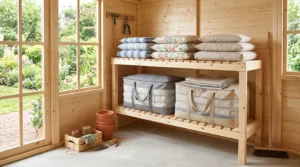
A garden shed is also a popular choice, but it should not be damp or leaky. If your shed gets condensation, use breathable covers, raise cushions off the floor, and avoid sealing them tightly in plastic. Moisture trapped inside a shed can still cause mould and mildew.
For short-term daily storage, a garden cushion storage box, outdoor cushion storage box, deck box, or garden storage bench is convenient. These options are useful during summer when you want to protect cushions from overnight rain, insects, dust, and morning dew.
If you have a balcony, balcony cushion storage can be handled with a compact waterproof storage box, a cushion storage bag, or an outdoor storage cabinet. Just make sure cushions are not pressed against wet walls or left directly on cold flooring.
Best Garden Cushion Storage Options Compared
There is no single best solution for every home. The right garden cushion storage depends on your space, weather, cushion size, and whether you need short-term or winter protection.
| Storage Option | Best Use | Pros | Cons |
|---|---|---|---|
| Garden cushion storage box | Outdoor or patio storage | Easy access, tidy, good for daily use | Must be weatherproof and placed correctly |
| Cushion storage bags | Indoor, shed, or garage storage | Lightweight, affordable, space-saving | Not always fully waterproof |
| Vacuum bags | Temporary space saving | Reduces bulk | Can compress foam and trap moisture |
| Storage bench | Small gardens and patios | Seating plus storage | Limited space inside |
| Garage or shed shelving | Winter cushion storage | Keeps cushions raised and dry | Needs a clean, dry area |
| Indoor cupboard | Long-term protection | Best against rain and pests | Requires indoor space |
| Waterproof outdoor storage box | Outside storage | Strong rain protection | Needs ventilation to prevent condensation |
For storing garden cushions outside, a waterproof garden cushion storage box is usually better than a basic fabric bag. Look for a box with a tight lid, raised base, durable material, and some form of ventilation. If you use cushion storage bags, keep them in a shed, garage, or covered area rather than leaving them fully exposed to heavy rain.
A breathable cushion storage bag is better than a sealed plastic bag if there is any risk of moisture. Plastic bags may seem practical, but they can trap damp air and create the perfect conditions for mildew.
Winter Storage for Outdoor Cushions
When storing garden cushions in winter, think about moisture first. Cold weather, frost, rain, snow, and poor airflow can quickly damage outdoor cushions. Even water-repellent cushions are not always suitable for being left outside all winter.
The safest winter cushion storage method is to clean the cushions, dry them fully, and place them indoors or in a dry garage or shed. If you do not have indoor space, use a waterproof outdoor storage box and place it on a flat, raised surface where water cannot pool around the base.
Avoid leaving standard garden cushions on rattan furniture, benches, outdoor sofas, or dining chairs through winter. They may look fine for a few days, but repeated moisture can lead to mould, fabric staining, and foam damage.
For UK winter storage, follow these rules:
- Store cushions indoors if possible
- Use a dry shed or garage if indoor space is limited
- Keep cushions off cold floors
- Use a breathable cover or bag
- Avoid sealing damp cushions in airtight containers
- Check cushions every few weeks during wet weather
- Keep them away from mice, insects, and sharp tools
If you own Sunbrella cushions, Olefin cushions, SunProof cushions, or other weather-resistant outdoor cushions, they may handle rain better than standard fabric. Still, long-term protection is recommended if you want them to stay fresh and comfortable.
Can You Leave Garden Cushions Outside?
You can leave some outdoor cushions outside for short periods, especially during dry weather, but it is not the best habit. Overnight dew, sudden rain, insects, bird mess, and damp air can all affect fabric and foam. If you are asking, can garden cushions be left outside overnight, the safest answer is yes for occasional dry nights, but no as a regular routine.
If cushions are labelled all-weather, quick-dry, water-repellent, or UV-resistant, they can usually cope better outside. However, water-resistant does not always mean waterproof. Once moisture gets through seams, zips, or fabric, the inside can take a long time to dry.
For daily use, keep outdoor furniture cushions in a deck box, storage bench, or covered patio when not in use. For bad weather or winter, move them to a better-protected space.
Cushion Storage Bag vs Storage Box
One of the biggest questions is whether to use a cushion storage bag or storage box. Both can work, but they are not the same.
A garden cushion storage bag is good if you want something light, affordable, and easy to move. It works well in a garage, shed, utility room, loft, or under-bed storage space. It is also useful for patio cushion storage when you need a quick way to group cushions.
A garden cushion storage box is better if you need outdoor protection. A waterproof storage box, deck box, or outdoor storage bench gives stronger protection from rain, pests, dirt, and accidental damage. For large cushion sets from rattan garden furniture, a garden cushion storage box waterproof large enough for the full stack is often the better choice.
How to Choose the Right Size Storage Box
One thing many guides miss is sizing. A storage box that is too small will crush the cushions, bend the foam, and make zips or seams work harder than they should. A box that is too large can waste space, but it may be useful if you also store throws, outdoor pillows, garden furniture covers, or small accessories.
To choose the right size, stack your cushions neatly and measure:
- Length of the longest cushion
- Width of the widest cushion
- Height of the full cushion stack
Then choose a box or bag slightly larger than your measurements. Leave a little room for airflow and easy removal. Do not force cushions into a tight container, especially thick sofa cushions, chaise lounge cushions, bench cushions, or dining cushions.
If you have mixed cushion types, place larger cushions at the bottom and smaller outdoor pillows on top. Avoid putting heavy tools, pots, or garden equipment over them.
Common Mistakes to Avoid
One mistake people make when storing garden cushions is focusing only on the container and ignoring the condition of the cushions. Even the best waterproof box cannot protect cushions that are already damp or dirty inside.
If your cushions already smell musty, air them outside on a dry day. Clean the covers if possible, treat mildew, and let the foam dry fully before packing them again.
FAQs
What is the best method for storing garden cushions?
The best method is to clean the cushions, dry them fully, and store them in a dry, ventilated place such as an indoor cupboard, garage, shed, or waterproof storage box. For long-term storage, indoor or covered storage is usually safer than leaving cushions outside.
How do I stop garden cushions going mouldy?
Keep them dry, clean them before storage, avoid sealed plastic bags, and choose breathable storage where possible. Mould grows when fabric stays damp and airflow is poor.
Can you store damp cushions?
No. Damp cushions should never be packed away. Let them dry completely in fresh air before using a cushion storage bag, deck box, or indoor storage space.
Are cushion storage bags waterproof?
Some cushion storage bags are water-resistant, but many are not fully waterproof because zips and seams can let moisture in. For outdoor use, a waterproof storage box is usually safer.
Can garden cushions be stored in a shed?
Yes, garden cushions can be stored in a shed if the shed is dry, clean, and ventilated. Keep cushions raised from the floor and away from damp walls.
Can garden cushions be left outside overnight?
They can be left outside occasionally in dry weather, but it is better to place them in a deck box, storage bench, or covered area to protect them from dew, rain, and insects.
Can you store garden cushions in plastic bags?
It is better to avoid standard plastic bags because they can trap moisture. Use breathable cushion storage bags or a dry storage box instead.
How do you protect outdoor cushions from mice?
Use sealed boxes, keep cushions raised from the floor, clean off food crumbs, and avoid storing them in cluttered corners. Check shed and garage areas regularly for signs of pests.
Final Thoughts
Good cushion storage is not difficult, but it does require a little care. Clean them, dry them properly, choose the right storage method, and protect them from rain, pests, sunlight, and winter weather.
If you want the easiest everyday solution, use a waterproof garden cushion storage box or deck box near your patio. If you want the safest long-term option, keep your cushions indoors or in a dry garage or shed. With the right routine, your outdoor cushions will stay fresh, comfortable, and ready for every sunny day.




Leave a Reply