

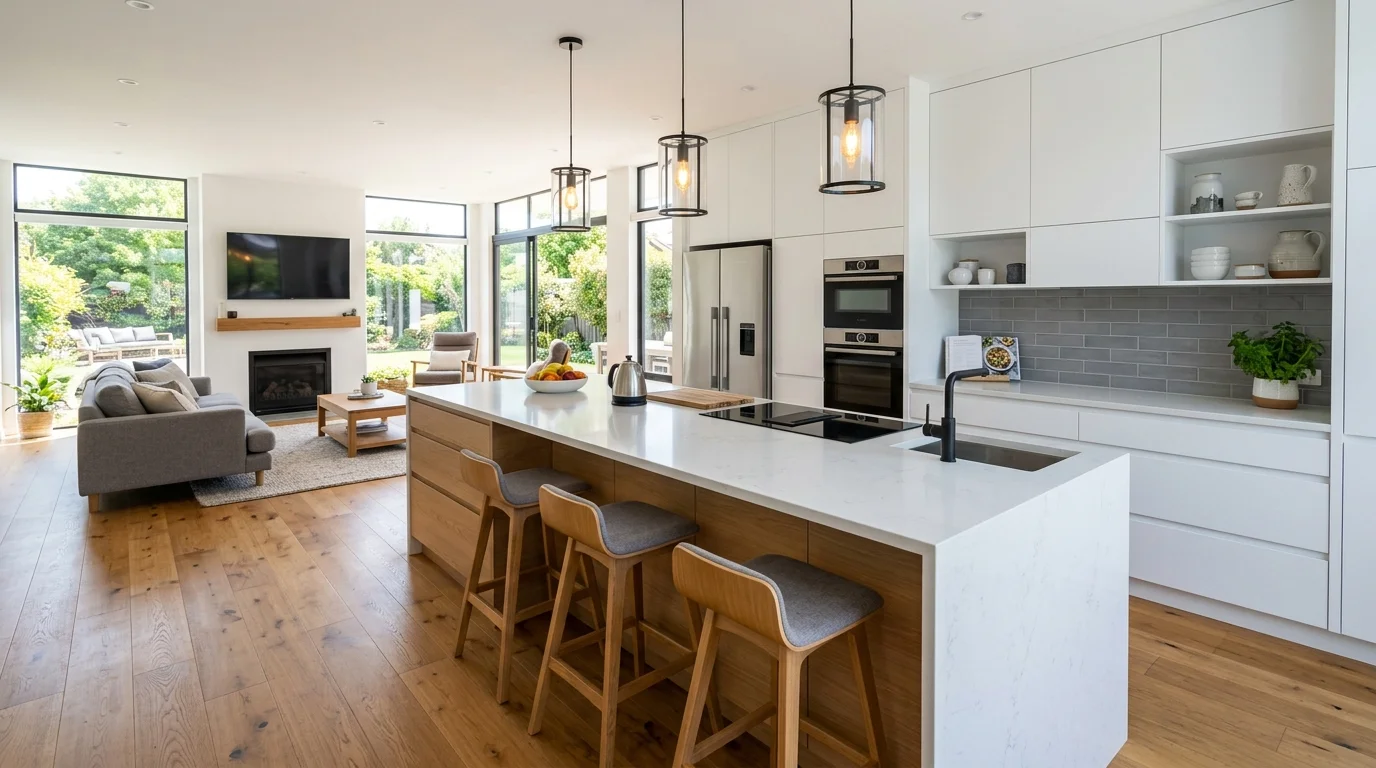
The kitchen is no longer just a place for cooking. In many modern homes, it has become the heart of daily life, where family members gather, guests are entertained, meals are prepared, and conversations happen naturally. That is why the best open kitchen ideas focus on more than appearance. A good open kitchen design should feel spacious, practical, easy to move through, and visually connected to the living or dining area.
An open kitchen can make a small home feel larger, brighten a dark interior, and create a smoother connection between cooking, dining, and relaxing. However, it also needs careful planning. Without the right layout, storage, lighting, and ventilation, an open kitchen can quickly feel messy, noisy, or poorly organized.
This guide covers layout options, island and peninsula designs, storage solutions, lighting tips, zoning methods, small-space ideas, common mistakes, and real-life problems such as smell control and visible clutter.
What Is an Open Kitchen?
An open kitchen is a kitchen that connects directly with another living space, usually a dining room, living room, or family room. Instead of being separated by full walls and doors, the cooking area becomes part of a larger open-plan kitchen layout.
In simple terms, an open kitchen creates a shared space where cooking, eating, and socializing happen together. Some homes use a fully open concept kitchen with no barriers, while others use a semi-open kitchen with a glass partition, half wall, sliding door, or peninsula to create soft separation.
These open kitchen ideas are especially useful for homes where space, light, and connection matter. They work well in apartments, compact homes, modern houses, and family spaces where people want the kitchen to feel less isolated.
Why Open Kitchens Are Popular in Modern Homes
Modern homeowners prefer open kitchens because they make the home feel more connected. Instead of keeping the cook away from everyone else, an open kitchen allows conversation to continue while food is being prepared. A modern open kitchen can also improve natural light. When walls are removed, windows from the living or dining area can brighten the kitchen. This makes the whole space feel larger and more inviting.
Another reason modern open kitchen ideas are popular is flexibility. One open area can serve many purposes. It can work as a cooking zone, dining area, homework spot, entertainment space, and casual family gathering area. For smaller homes, this multi-purpose function is a major benefit.
The key is balance. An open kitchen should look beautiful from the living area, but it should also support daily cooking, cleaning, movement, and storage.
Best Open Kitchen Layouts to Consider
Before choosing open kitchen ideas, it is important to select the right layout. The layout decides how easily you can cook, move, serve food, and keep the space organized.
One-Wall Open Kitchen
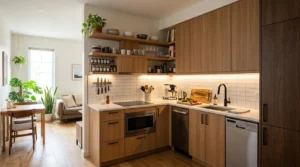
A one-wall open kitchen places all cabinets, appliances, and counters along one wall. This is a great option for apartments, studio flats, condos, and narrow homes. It saves floor space and keeps the room open for a dining table or sofa.
To make this layout more practical, use tall cabinets, built-in appliances, under-cabinet lighting, and vertical storage. A small movable island or rolling cart can also add extra prep space when needed.
L-Shaped Open Kitchen
An L-shaped open kitchen uses two connected walls or counter runs. It is one of the most flexible layouts because it works in both small and medium homes. It gives you a good cooking zone while keeping the kitchen connected to the dining or living area. This layout is ideal if you want an open kitchen living room design without making the kitchen feel too exposed.
U-Shaped Open Kitchen
A U-shaped open kitchen offers more counter space and storage. It works best in larger areas or homes where cooking is a major daily activity. One side of the U can open toward the living or dining area, creating a natural serving counter or breakfast bar. This layout is useful for people who need strong kitchen workflow, especially for food prep, cooking, and cleaning.
Galley Open Kitchen
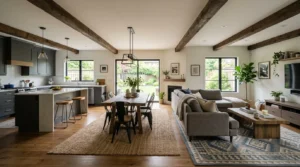
A galley open kitchen has two parallel counters. It is useful for long and narrow floor plans. To keep it from feeling closed in, one side can open toward the dining or living room. Use light colors, reflective backsplash materials, slim cabinets, and good lighting to make this layout feel airy.
Open Kitchen With Island
An open kitchen with island works well in medium and large homes. The island can be used for food prep, seating, storage, serving, or even as a visual boundary between the kitchen and living room. A kitchen island with seating is especially helpful for families and people who entertain often. Add pendant lights over the island to make it a strong focal point.
Open Kitchen With Peninsula
A peninsula is connected to a wall or cabinet run, unlike an island, which stands separately. An open kitchen with peninsula is ideal for small homes because it gives you extra counter space without requiring as much room as a full island. It can also work as a breakfast bar, serving counter, or soft divider between the kitchen and dining area.
Open Kitchen Without Island
Not every kitchen needs an island. In small homes, an island can block movement and make the space feel crowded. A dining table, slim counter, foldable table, or rolling cart can sometimes work better. If you have a compact open kitchen design, prioritize clear walkways, hidden storage, and simple furniture.
25 Smart Design Tips for an Open Kitchen
The following open kitchen ideas combine style, storage, lighting, layout, and functionality so the space feels beautiful and practical.
1. Use a Kitchen Island as the Centerpiece
A kitchen island can become the main feature of an open kitchen. It provides extra counter space, storage, and casual seating. For a luxury open kitchen, consider a waterfall island with stone, quartz, or marble-style surfaces.
2. Add a Peninsula for Small Spaces
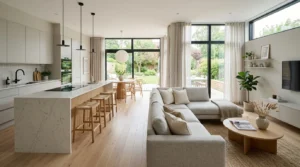
If your space is too small for an island, a peninsula is a smart alternative. It creates a natural boundary while keeping the room open. Add bar stools to turn it into a breakfast counter.
3. Create Cooking, Prep, and Cleaning Zones
A functional kitchen needs clear zones. Keep the prep area close to the sink, the cooking area near the stove, and the cleaning zone near the dishwasher or dish storage. This improves kitchen workflow and makes daily use easier.
4. Use Pendant Lighting to Define the Island
Pendant lights over a kitchen island help separate the cooking zone from the rest of the room. They also add style and warmth.
5. Keep Open Shelving Minimal
Open shelving can make a kitchen feel lighter, but too much of it can look messy. Use open shelves for attractive items like bowls, cups, plants, or cookbooks, and keep daily clutter inside closed cabinets.
6. Remove Bulky Upper Cabinets
In a small open kitchen, bulky upper cabinets can make the space feel heavy. Replace some with open shelves, glass-front cabinets, or tall storage units on one side.
7. Use a Rug to Define the Living Area
A rug is a simple way to create zones without walls. Place one under the sofa or coffee table to separate the living area from the kitchen.
8. Add a Glass Partition
A glass partition, frosted glass panel, or fluted glass divider gives privacy without blocking light. This works well in semi-open kitchen ideas where you want separation but not a closed-off feeling.
9. Choose a Continuous Color Palette
Use colors that flow naturally from the kitchen into the living and dining areas. Neutral colors, white and wood combinations, soft gray, beige, and warm tones work especially well.
10. Try Two-Tone Cabinets
Two-tone kitchen cabinets add depth to an open kitchen. You can use darker lower cabinets with lighter upper cabinets, or combine wood with white for a modern open kitchen design.
11. Use Flooring to Separate the Kitchen
A flooring transition can define the kitchen without building walls. You can use tile in the kitchen and wood in the living room, or choose different patterns in the same color family.
12. Add Hidden Appliance Storage
Visible appliances can make an open kitchen look cluttered. An appliance garage, pantry cabinet, or tall storage unit can hide mixers, blenders, coffee machines, and small tools.
13. Make the Island Multi-Functional
An island can include drawers, shelves, a sink, cooktop, wine storage, or seating. Choose features based on how you use your kitchen every day.
14. Maximize Natural Light
Large windows, skylights, glass doors, and reflective surfaces help make the kitchen feel larger. Natural light also improves the look of countertops, cabinets, and flooring.
15. Use Vertical Storage
Wall-mounted racks, tall pantry units, cabinet risers, and pull-out shelves are excellent for compact kitchens. Vertical storage is especially useful in apartment open kitchen layouts.
16. Add a Breakfast Bar
A breakfast bar creates casual seating without needing a full dining table. It is useful for quick meals, coffee, working from home, or helping children with homework.
17. Repeat Materials Across the Room
Use similar wood tones, metal finishes, or stone textures in the kitchen and living room. This makes the open space feel intentional and cohesive.
18. Bring the Outdoors In
Large sliding doors, bifold doors, or a wall of windows can connect the kitchen to a patio, balcony, or garden. This creates a bright indoor-outdoor feeling.
19. Use a Statement Backsplash
A backsplash can become a focal point in an open kitchen. Try textured tiles, marble-style slabs, geometric patterns, or warm handmade tiles.
20. Add Ceiling Details
Exposed beams, ceiling panels, or a false ceiling can define the kitchen area from above. This is useful when the floor plan is open but you still want visual separation.
21. Keep Walkways Clear
A beautiful island is not useful if it blocks movement. Leave enough space around counters, seating, appliances, and doors so people can move comfortably.
22. Plan Ventilation Early
Good ventilation is essential in an open kitchen. A strong range hood, chimney, exhaust fan, or cross-ventilation system helps control cooking smells, smoke, steam, and heat.
23. Choose Quiet Appliances
Open kitchens share space with living areas, so appliance noise matters. Choose a quiet dishwasher, silent chimney, low-noise refrigerator, and soft-close cabinets.
24. Use Sliding Doors for Flexibility
Sliding glass doors can turn an open kitchen into a semi-open kitchen when needed. This is helpful if you want privacy during heavy cooking.
25. Consider a Prep Kitchen for Heavy Cooking
If you cook often or use strong spices, a small prep kitchen or dirty kitchen can help. This keeps the main open kitchen cleaner and more guest-friendly.
Small Open Kitchen Ideas for Apartments and Compact Homes
Small open kitchen ideas should focus on space-saving design, smart storage, and visual lightness. The goal is to make the kitchen feel open without sacrificing function.
Use a one-wall or L-shaped layout if the room is narrow. Choose a peninsula instead of a full island if floor space is limited. Keep colors light, use reflective backsplashes, and install under-cabinet lighting to brighten prep areas.
For apartments, use built-in appliances, slim bar stools, foldable dining tables, and wall-mounted shelves. Avoid oversized cabinets or bulky furniture. A compact open kitchen design works best when every item has a clear purpose.
If you want open kitchen ideas for small homes, focus on hidden storage, vertical cabinets, light colors, and furniture that can serve more than one function.
Open Kitchen Storage Ideas to Reduce Clutter
Storage is one of the biggest challenges in an open kitchen because everything is visible from the dining or living room. A clutter-free design depends on closed storage, organized drawers, and smart appliance placement. Use deep drawers for pots, pans, and dishes. Add pull-out spice racks, built-in bins, tray dividers, and pantry cabinets. If you have an island or peninsula, use the base for extra storage.
An appliance garage is useful for hiding coffee machines, toasters, mixers, and blenders. If you use open shelving, keep it simple and decorative. Too many items on display can make the kitchen feel busy. Practical open kitchen ideas should always include storage planning because beauty alone will not make the space easy to live with.
How to Zone an Open Kitchen Without Walls
Zoning means creating separate areas without fully closing the space. In an open kitchen layout, zoning helps the kitchen, dining area, and living room feel connected but organized. Lighting is one of the easiest zoning tools. Use pendant lights over the island, a chandelier over the dining table, and softer lighting in the living area. Rugs can also define the sofa area or dining space.
Furniture placement matters too. A sofa can face away from the kitchen to create a soft boundary. A dining table can sit between the kitchen and living room as a transition point.
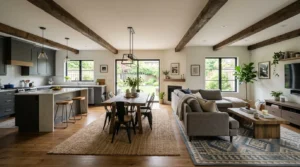
Other zoning methods include glass partitions, half walls, different flooring, ceiling beams, wall paneling, and color changes. These details help create zones without walls while keeping the space bright and open.
Open Kitchen Lighting Ideas
Lighting can make or break an open kitchen. A single ceiling light is usually not enough. You need layered lighting for cooking, dining, and relaxing.
Use task lighting under cabinets for food prep. Add pendant lights over the island or breakfast bar. Use recessed lights for general brightness and wall sconces for warmth. If possible, bring in natural light through windows, skylights, or glass doors. Good open kitchen lighting ideas should support both function and mood. Bright lighting helps during cooking, while softer lighting makes the dining and living areas feel comfortable in the evening.
Open Kitchen Problems and How to Solve Them
Good open kitchen ideas should also solve real-life problems. Open kitchens are beautiful, but they come with challenges.
Cooking Smells
Cooking smells can spread into the living room. Use a strong chimney, range hood, exhaust fan, or cross-ventilation system. If you cook spicy or oily food often, consider a semi-open kitchen or sliding glass partition.
Visible Clutter
Because the kitchen is always visible, clutter becomes more noticeable. Use closed cabinets, hidden pantry storage, deep drawers, and appliance garages.
Noise
Dishwashers, exhaust fans, blenders, and refrigerators can disturb the living area. Choose quiet appliances and add soft materials like rugs, curtains, cushions, and upholstered chairs to reduce echo.
Less Privacy
Some people do not like guests seeing the cooking area. A half wall, fluted glass divider, tall cabinet unit, or sliding door can create privacy without closing the kitchen completely.
Fewer Walls for Cabinets
Open layouts usually have fewer walls for storage. Use tall cabinets, island storage, pantry units, and smart drawer systems to make up for it.
Open Kitchen vs Closed Kitchen: Which Is Better?
An open kitchen is better if you want a spacious, social, and modern home layout. It works well for entertaining, family interaction, and small homes where walls make the interior feel tight.
A closed kitchen is better if you cook heavily, want more privacy, need better smell control, or prefer hiding mess from guests.
A semi-open kitchen gives you the best of both. It keeps the kitchen visually connected but adds a partition, sliding door, or half wall for privacy and smell control.
When comparing open kitchen vs closed kitchen, think about your cooking habits, family lifestyle, ventilation needs, storage requirements, and how often you entertain.
Open Kitchen Design Mistakes to Avoid
The wrong design choices can make an open kitchen feel messy or uncomfortable. Avoid these common mistakes:
- Choosing an island that is too large for the room
- Ignoring ventilation and smell control
- Using too many open shelves
- Forgetting task lighting
- Blocking walkways around the island
- Mixing too many colors and materials
- Not planning enough closed storage
- Placing noisy appliances too close to the living area
- Ignoring the connection between kitchen and living room style
- Choosing beauty over daily function
The best open kitchen ideas should look good, but they should also support real cooking, cleaning, storage, and movement.
FAQs
What is the best layout for an open kitchen?
The best layout depends on your space. A one-wall kitchen is good for apartments, an L-shaped layout works for small and medium homes, and an island layout is best for larger spaces.
Is an open kitchen good for small homes?
Yes, an open kitchen can make a small home feel bigger and brighter. Use light colors, compact appliances, hidden storage, and a peninsula instead of a large island.
How do you separate an open kitchen from the living room?
You can separate the areas with pendant lighting, rugs, furniture placement, flooring changes, glass partitions, half walls, ceiling beams, or a kitchen peninsula.
How do you hide mess in an open kitchen?
Use closed cabinets, deep drawers, a hidden pantry, appliance garage, built-in bins, and minimal open shelving. Keep daily-use items accessible but not always visible.
Is an island necessary in an open kitchen?
No, an island is not always necessary. Small homes may work better with a peninsula, breakfast bar, foldable table, rolling cart, or dining table.
Are open kitchens still in style?
Yes, open kitchens are still popular because they support modern living, family interaction, entertaining, and flexible use of space. Semi-open designs are also becoming popular for people who want more privacy.
Conclusion
The right open kitchen design should make your home feel brighter, more spacious, and easier to use. A successful layout is not only about removing walls. It is about planning storage, lighting, ventilation, movement, seating, and visual connection.
These open kitchen ideas can work for apartments, small homes, large family houses, and modern open-plan interiors. Whether you choose a kitchen island, peninsula, one-wall layout, glass partition, hidden pantry, or semi-open design, focus on how the space will support your daily lifestyle.
A beautiful open kitchen should feel welcoming from the living room, practical during cooking, easy to clean, and comfortable for everyone who uses the home.

Leave a Reply