

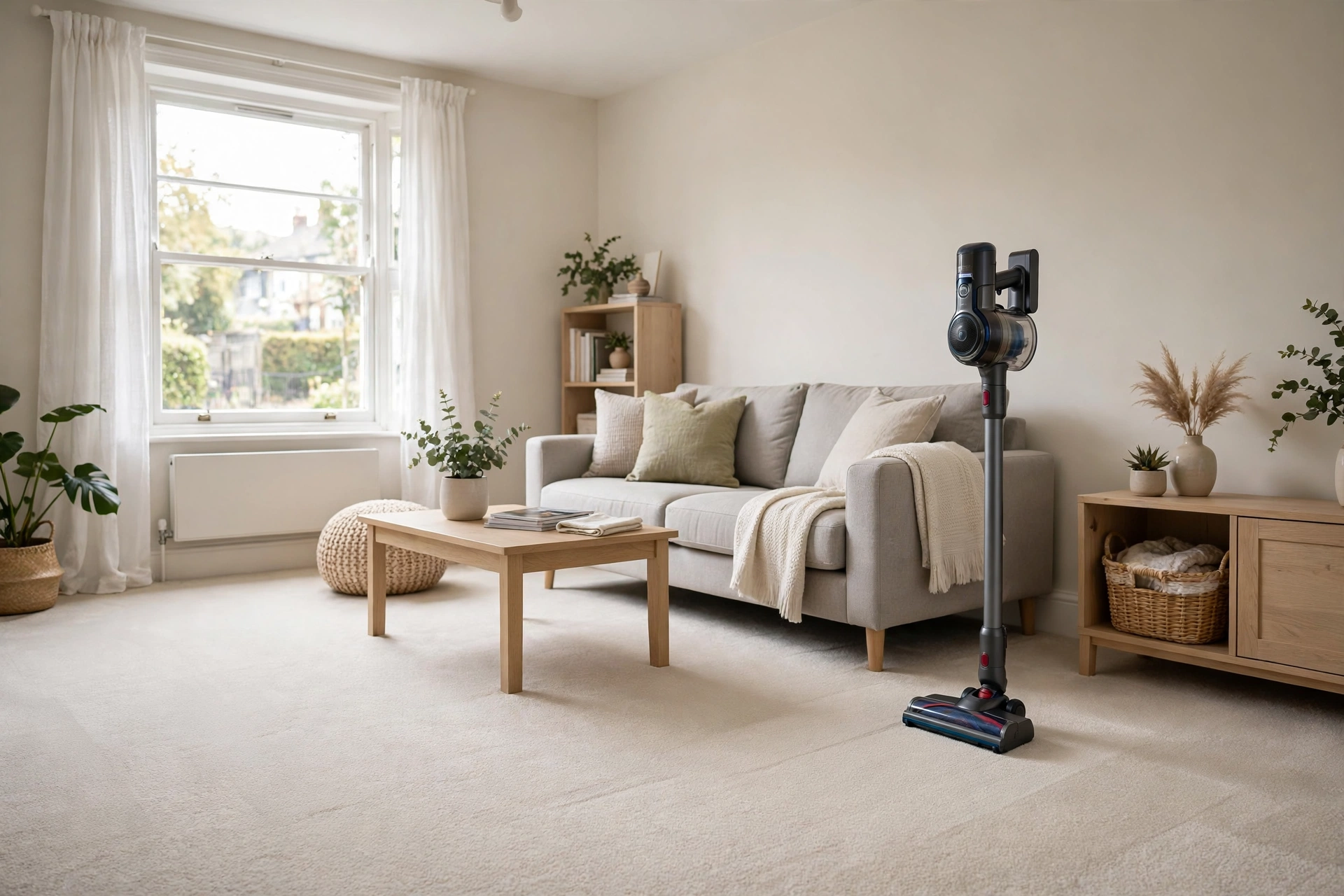
To learn how to clean carpet properly, start with one rule: match the method to the carpet. A quick vacuum suits a hallway runner. A deep clean suits a living-room carpet after muddy winters. This guide covers routine care, spot cleaning, deep cleaning and hire machines. Follow the steps, and you can keep every carpet fresh without guesswork.
You do not need fancy kit to get good results. Most jobs need a vacuum, a white cloth, cold water and a mild solution. For bigger jobs, a shampoo machine or a hired cleaner can help. We also explain when to stop and call a professional. Some marks and smells need more than a home treatment.
Know Your Carpet Before You Wet It
Carpets differ more than they look. Wool feels soft and warm, but it hates heat and harsh chemicals. Synthetic fibres, such as nylon and polyester, cope with more wear and more water. Read the care label first. You can often find it on the carpet edge or in the shop paperwork. If you cannot find a label, play safe and treat the carpet as wool. Knowing the fibre is the first step in how to clean carpet safely.
Test every solution on a hidden spot before you use it on the main carpet. Pick a corner under the sofa or inside a wardrobe. Dab a little solution on the spot, wait a day, and check for colour change or a rough feel. If the spot looks fine, you can clean the rest of the carpet. This one test can save you from a bleached patch or a ruined pile.
Too much water causes more harm than dirt. It can shrink fibres, loosen glue and leave a damp smell for days. Watch out for browning carpet too: too much water can leave a brown tinge as the fibres dry. Use just enough liquid to dampen the pile, then blot it up. A carpet should feel slightly damp after cleaning, never soaking wet.
Routine Care: How to Clean Carpet Between Deep Cleans
Regular care does most of the work. Vacuum high-traffic areas twice a week and bedrooms once a week. Make slow passes and overlap each stroke, because a fast pass leaves dust behind. Empty the vacuum bag or bin before it fills up, or the suction drops. A clean vacuum picks up far more dirt than a clogged one. A steady routine is the easiest part of how to clean carpet well.
Stop dirt at the door. Put a sturdy doormat at every entrance and ask everyone to wipe their shoes. A no-shoes rule in the house helps even more. Move heavy furniture now and then, so the pile does not flatten. While you freshen the floor, do not forget the rest of the room. Our blinds guide shows how to keep window dressings dust-free too.
A carpet freshener gives a quick lift between deep cleans. Sprinkle it evenly, leave it for the time on the pack, then vacuum it up. It freshens the pile and lifts light smells, but it does not replace a proper clean. Use it after vacuuming, not instead of it.
How to Clean Carpet by Hand: Step by Step
Hand cleaning suits small areas and fresh stains. Follow these steps in order, and do not skip the test patch.
- Vacuum the area first. Loose dirt turns to mud if you wet it.
- Mix a mild solution. Add a few drops of washing-up liquid to a bowl of cold water.
- Dab the solution on with a clean white cloth. Work from the edge of the stain toward the centre.
- Blot, never rub. Rubbing pushes dirt deeper and frays the pile.
- Rinse by blotting with plain cold water. Repeat until no soap remains.
- Dry the spot well. Press a dry towel on it, then let air flow over it. Keep feet off until it feels dry.
Always use cold water on stains. Hot water can set a stain and make it permanent, so keep the kettle away from the carpet. If a stain has already dried, cold water and patience work better than heat. Cold water is the safest start when you learn how to clean carpet stains.
This method shows how to clean carpet without a machine. It works for most everyday marks. For ground-in dirt or a full room, move on to deep cleaning instead.
Stain Removal: How to Clean Carpet Stains the Right Way
Speed matters with stains. Blot a fresh spill at once with a clean cloth. Press down, lift, and repeat with a fresh part of the cloth. Never rub a spill: rubbing spreads it and drives it into the pile. Work from the outside in, so the stain does not grow. These rules form the base of how to clean carpet after any spill.
Blood needs cold water and nothing else at first. If you want to know how to get blood out of carpet, start by blotting the fresh blood with cold water. Keep blotting with clean water until the cloth comes away clear. Hot water sets blood, so never use it here. A carpet stain remover can help with any faint mark that stays behind.
Nail varnish looks scary, but you can lift it. A common question is how can i get nail varnish out of carpet without making it worse. Blot up any wet varnish first. Then dab the mark with a little nail varnish remover, after a hidden-spot test. Many people ask how to get nail varnish out of carpet. The answer stays the same: work slowly, blot, and do not flood the fibres. If the varnish has dried hard, pick off the loose flakes first, then treat what stays.
Pets leave their own marks. A pet carpet cleaner lifts urine and sick from the pile, and it beats a general spray for smells. Sprinkle bicarbonate of soda on the spot, leave it, then vacuum. For mud, let it dry first, then vacuum and blot what stays. Greasy spots need a little washing-up liquid in cold water, blotted on and rinsed off.
Deep Cleaning: How to Clean Carpet with Shampoo, Steam and Hire Machines
Routine care, spot cleaning and deep cleaning do three different jobs. Routine care keeps dirt down day to day. Spot cleaning tackles single marks as they happen. Deep cleaning lifts ground-in dirt from the whole carpet. Deep cleaning is the part of how to clean carpet that lifts what vacuuming leaves behind.
A shampoo machine gives the deepest home clean. Carpet shampoo products work by lifting dirt into foam, which you then rinse and extract. Use the amount on the pack — more soap leaves a sticky film that grabs dirt. A carpet shampooer with steamer adds hot water extraction, which suits heavily used rooms. Let the carpet dry fully before you walk on it.
Match the solution to the machine. A carpet cleaning solution for carpet cleaner machines goes in the tank, not straight on the pile. A carpet cleaner for steam cleaner models needs a low-foam solution, or the machine can overflow. Scrubber machines take a carpet scrubber solution on large areas. An industrial carpet cleaner or an industrial carpet shampooer handles whole houses and very dirty carpets. It is heavy and thirsty for water, so think twice before you hire one that big. For most homes, a standard machine does the job.
Hiring a machine suits a one-off deep clean. Carpet cleaner hire lets you clean a whole house in a day without storing a big machine. Hire prices vary by machine and area, so check what the hire covers before you book. Carpet cleaning cost for a professional job also varies, and it depends on room size and how dirty the carpet is.
Rugs Need a Different Touch
Rugs are not small carpets. They have their own backing, and some cannot take much water. Shake a rug outside first, then vacuum both sides. A pet rug cleaner handles pet messes on rugs without soaking the fibres. A rug cleaner powder gives a dry refresh: sprinkle it on, leave it, then vacuum it up. Check the label before you wet a rug, and never soak a hand-knotted one. If a rug smells musty, air it outside on a dry day first. Rugs need the same care as the carpet around them, so learn how to clean carpet and rugs together.
When to Call a Professional
Some carpets need more than home methods. Call a professional if stains stay after two tries, or if a smell comes back each time the carpet dries. A pro can also help with large areas, flood damage and delicate wool. When repair or replacement beats cleaning, a pro will tell you. A carpet with worn patches, a torn backing or a permanent stain may cost more to save than to replace.
You can still learn how to clean carpet yourself for most jobs. Home methods handle routine care, fresh spills and a yearly deep clean. A professional steps in for the rest. If every method here has failed and the carpet still looks tired, book a pro. Repeating treatments that do not work wastes time and can harm the pile.
Frequently Asked Questions
How often should I deep clean my carpet?
Most homes need a deep clean once or twice a year. Homes with pets or children may need it more often. Vacuum weekly between deep cleans, and spot clean spills as they happen. A deep clean is part of how to clean carpet properly, not a separate chore.
Can I use hot water on carpet stains?
No. Use cold water first, because hot water can set many stains. Blot the stain with cold water and a mild solution, then let it dry. If the mark stays, repeat the cold treatment rather than reaching for heat.
How do I get blood out of carpet?
Blot fresh blood with cold water at once. Keep blotting with clean water until the cloth comes away clear. Never use hot water, because it sets blood. If a faint mark stays, a carpet stain remover can help.
Is it cheaper to hire a carpet cleaner or buy one?
Hiring suits a one-off deep clean, while buying suits a home that needs regular deep cleans. Hire and machine prices vary, so compare both before you decide. For most homes, hiring once or twice a year works out well.




Leave a Reply