


If you’ve ever run a finger along your blinds and been surprised by the grey line of dust left behind, you already understand why learning how to clean blinds properly makes such a difference to a room. Blinds sit right in the path of sunlight, cooking steam, and everyday household dust, so they build up grime faster than most people expect. The good news is that knowing how to clean blinds doesn’t require expensive equipment or a whole afternoon set aside. With the right approach for your blind type, whether that’s vinyl, wood, fabric, or aluminium, you can have them looking fresh again in well under twenty minutes. This guide walks through every method and material, so you always know exactly what to do, no matter what’s hanging in your window.
Why Regular Blind Cleaning Matters
Blinds are one of the most overlooked surfaces in a home. Because they sit flat against a window, dust settles into every slat, and pet hair, pollen, and cooking grease cling to them far more than most people notice. Dirty blinds can also worsen allergies, since trapped dust and pollen get stirred into the air every time the blind is raised or lowered. Beyond the health side, clean blinds simply make a room look brighter, since sunlight passes through the slats far more clearly once the grime is gone.
What You’ll Need Before You Start
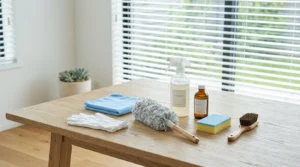
Most of the tools below are things you likely already own, which is part of what makes learning how to clean blinds such an easy habit to build into your regular routine:
- A microfiber cloth or duster
- A soft brush attachment for your vacuum
- Warm water and a mild dish soap
- White vinegar (for a natural degreasing rinse)
- A pair of cotton gloves or old socks
- A bath towel to protect the floor
- A soft sponge or old toothbrush for detailed spots
How to Clean Blinds by Material
Not every blind should be cleaned the same way. The material determines how much moisture and pressure is safe to use.
Vinyl and Faux Wood Blinds
These are the easiest to clean since they’re fully water-resistant. Close the blinds so the slats overlap, wipe from top to bottom with a damp microfiber cloth, then flip the tilt rod and repeat on the other side. For heavier grime, a warm water and dish soap solution works well.
Real Wood Blinds
Wood needs a lighter touch, since too much water can cause warping or discolouration. Stick to a dry duster or a barely damp cloth, working with the grain, and dry each slat immediately afterwards with a clean towel.
Fabric and Roman Blinds
Vacuum fabric blinds with the soft brush attachment first to lift loose dust, then spot clean any marks with a small amount of mild soap and water on a soft cloth. Avoid soaking fabric, as it can shrink or leave water rings once dry.

Aluminium and Venetian Blinds
These respond well to both dry dusting and a full soak, which makes them one of the more forgiving styles when it comes to how to clean blinds thoroughly. Wipe each slat individually with a cloth wrapped around your fingers for a quick clean, or remove the blind entirely for a deeper wash.
The Deep Clean Method: Soaking Your Blinds
For blinds that haven’t been cleaned in a while, soaking is by far the most effective option. This is the method most people search for when they want to know how to clean blinds that have built up months of grease and dust.
- Take the blinds down carefully, following the mounting brackets’ release clips.
- Fill a bathtub with warm water and a generous splash of dish soap.
- Lay the blinds flat in the water and let them soak for around fifteen minutes.
- Gently wipe each slat with a sponge or cloth, working from one end to the other.
- Rinse thoroughly with clean water, then hang the blinds over a towel rail or shower rod to air dry completely before rehanging.
This soak method works best for vinyl, faux wood, and aluminium blinds. Wood and delicate fabric should stick to the drier methods described above instead.
The Quick Weekly Dusting Routine
A quick weekly dust is the simplest way to stop grime from building up in the first place, and it means you’ll rarely need the full soak treatment. Close the blinds fully, run a microfiber duster or a sock-covered hand along each slat, then open the blinds the other way and repeat on the reverse side. This two-minute habit is often the easiest answer to how to clean blinds without ever taking them off the window.
How to Clean Blinds Without Taking Them Down
Not everyone has the time to remove and soak their blinds every month, and thankfully it isn’t necessary. A damp microfiber cloth folded around a butter knife or a specialised blind cleaning tool can slide between slats while they’re still hanging, lifting dust from both sides in a single pass. For sticky kitchen grease, add a small amount of white vinegar to the water for extra cutting power without leaving a residue.
Common Mistakes to Avoid
- Using too much water on wood blinds, which can cause warping over time.
- Scrubbing fabric blinds hard enough to fray the material.
- Skipping the drying step, which can leave water spots on vinyl and metal slats.
- Cleaning only the front side and forgetting the dust that collects behind each slat.
How Often Should You Clean Your Blinds?
A light dusting once a week keeps most blinds looking fresh, while a deeper wash every one to two months prevents grease and dust from building up into something harder to shift. Kitchens and bathrooms tend to need attention more often, since steam and cooking residue settle onto slats faster than in other rooms. Sticking to this simple routine is really all there is to how to clean blinds well over the long term.
FAQs
What is the fastest way to clean blinds?
A microfiber duster run along each closed slat, front and back, is the quickest option and takes only a couple of minutes per window.
Can you clean blinds in the bathtub?
Yes, soaking vinyl, faux wood, and aluminium blinds in a warm soapy bath is one of the most thorough ways to remove built up grime.
Should wood blinds ever get wet?
Only very lightly. Use a barely damp cloth rather than soaking, and dry each slat straight away to prevent warping or discolouration.
How often should blinds be cleaned?
A quick dust weekly, with a deeper clean every one to two months, is enough to keep most blinds free of dust and grease buildup.
Final Thoughts
Once you know how to clean blinds properly for your specific material, it becomes a quick habit rather than a dreaded chore. A weekly dust paired with an occasional deeper wash will keep your windows looking bright and your indoor air noticeably cleaner.




Leave a Reply