

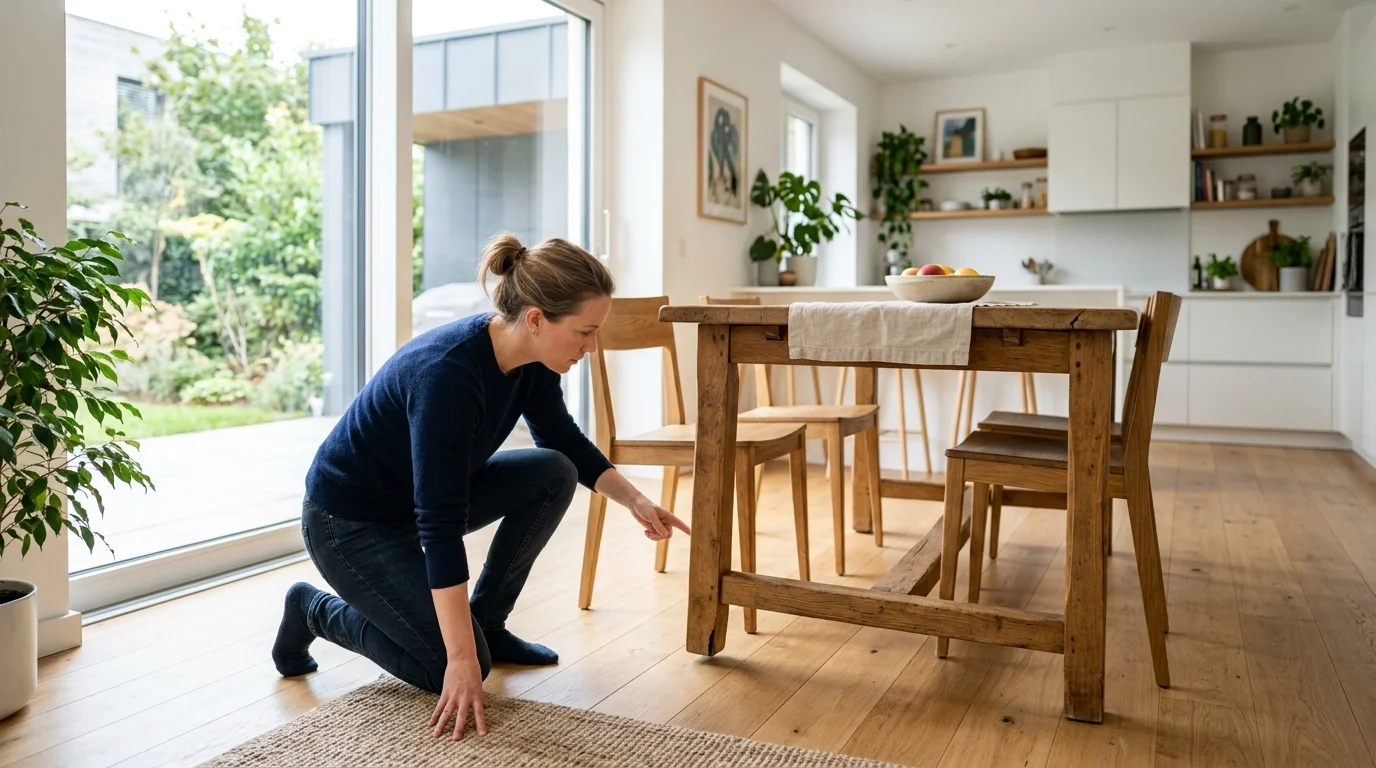
A wobbly table is one of the most common furniture problems in any home, and thankfully, it’s also one of the easiest to fix yourself. Whether it’s a dining table that rocks every time someone leans on it, or a coffee table that won’t sit flat, learning how to fix a wobbly table takes just a few minutes and a handful of basic tools. In this guide, we’ll walk through every method, from quick temporary fixes to permanent repairs that will keep your table steady for years.
Why Does a Table Become Wobbly?
Before reaching for a shim or a screwdriver, it helps to understand what’s actually causing the wobble. The most common causes are:
- Uneven flooring – older homes especially can have floors that slope slightly, which throws off an otherwise perfectly level table.
- Loose joints or fixings – wood tables are held together with glue, dowels, and screws that loosen over time with regular use.
- Uneven leg lengths – a leg can be cut slightly shorter than the others, or wear down unevenly if the table is dragged rather than lifted.
- Warped wood – changes in humidity can cause wooden tabletops or legs to swell, shrink, or bow slightly.
- A cracked or split leg – structural damage will always cause instability, no matter how level the floor is.
Tools and Materials You’ll Need
Most wobbly table fixes only require items you probably already have at home:
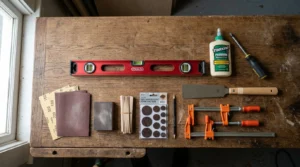
- A spirit level
- A screwdriver (flathead and Phillips)
- Wood glue
- Sandpaper (medium grit)
- Felt or rubber furniture pads
- Thin wood shims, cork, or cardboard (for quick fixes)
- A saw or hacksaw (only needed if you’re trimming a leg)
- Clamps (for gluing loose joints)
How to Fix a Wobbly Table Step by Step
1. Find the Source of the Wobble First
Place the table on a flat, hard floor rather than carpet, and gently rock it by hand. Watch which leg lifts off the ground – that’s the short one, or the one that needs adjusting. If all four legs touch the floor but the table still rocks, the issue is more likely a loose joint than an uneven leg.
2. Check and Tighten Every Joint
Turn the table upside down (or tilt it onto its side with help) and inspect where the legs meet the frame. Tighten any screws or bolts with a screwdriver or wrench. If a joint feels loose even after tightening, remove the fixing, add a small amount of wood glue into the joint, and re-tighten. Clamp it and leave it to dry for a few hours before turning the table back over.
3. Level an Uneven Leg With a Shim
This is the fastest fix and works well for tables on hard flooring:
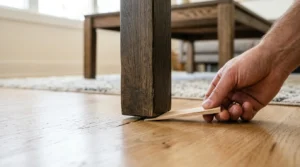
- Rock the table to identify the short leg.
- Cut a small wedge from cork, cardboard, or a thin wood shim.
- Slide it under the short leg until the table sits flat.
- Glue the shim in place so it doesn’t slip out later, then trim off any excess with a craft knife.
For a more polished look, felt-backed furniture levelers (sold in most hardware shops) can be stuck to the bottom of the leg and adjusted without any visible wedge.
4. Trim a Leg That’s Too Long
If one leg is clearly longer than the rest rather than the others being short, it’s usually neater to trim it down instead of shimming the other three. Measure the difference carefully, mark a straight line around the leg, and use a saw to remove a thin slice. Sand the cut edge smooth and test the table again before adding a felt pad.
5. Fix a Wobble Caused by Uneven Flooring
Sometimes the table itself is perfectly built, and the floor is the real problem. In this case, self-adhesive rubber or felt levelling pads with adjustable thickness are the simplest solution. Stick one under whichever leg sits in the lowest part of the floor and adjust until the table stops rocking.
6. Repair a Cracked or Split Leg
A split leg needs to be addressed before it gets worse. Apply wood glue into the crack, squeeze the sides together, and hold with a clamp (or tightly wrapped tape) for at least 24 hours. For a leg that’s cracked near a joint, a metal L-bracket screwed discreetly into the underside of the tabletop and leg will add extra support once the glue has cured.
Fixing a Wobbly Glass or Metal Table
Glass-topped and metal-framed tables wobble for slightly different reasons – usually loose bolts at the leg connections rather than wood movement. Tighten every visible bolt with an Allen key or spanner first. If the frame itself is bent, a professional repair or replacement leg is usually a safer option than trying to force it straight, since bent metal can crack the glass top.
How to Prevent a Table From Becoming Wobbly Again
- Always lift furniture instead of dragging it across the floor.
- Check and re-tighten screws or bolts every few months, especially on tables that get daily use.
- Avoid placing wooden furniture too close to radiators or in direct sunlight, as this speeds up warping.
- Add felt pads to the base of each leg to protect both the floor and the joints from uneven pressure.
FAQs
Why does my table wobble even on a flat floor?
This usually points to a loose joint rather than an uneven leg. Tighten every screw and bolt where the legs meet the frame, and re-glue any joint that still feels loose afterwards.
Is it better to shim a short leg or trim the long ones?
If only one leg is short, shimming is quicker and less risky. If one leg is clearly longer than the other three, trimming it down usually gives a cleaner, more permanent result.
Can I fix a wobbly table without tools?
A folded piece of cardboard or cork under the short leg will steady a table temporarily, but it’s worth doing a proper fix with glue or a felt leveller so the repair lasts.
How do I stop a glass table from wobbling?
Check and tighten the bolts connecting the legs to the frame first, as this is the most common cause on glass and metal tables.
Final Thoughts
A wobbly table is rarely a sign you need a new one – in almost every case, it can be fixed at home in under half an hour. Start by identifying whether the problem is the leg, the joint, or the floor, then use the matching fix above. With the right tools and a little patience, your table will sit rock solid again.




Leave a Reply