

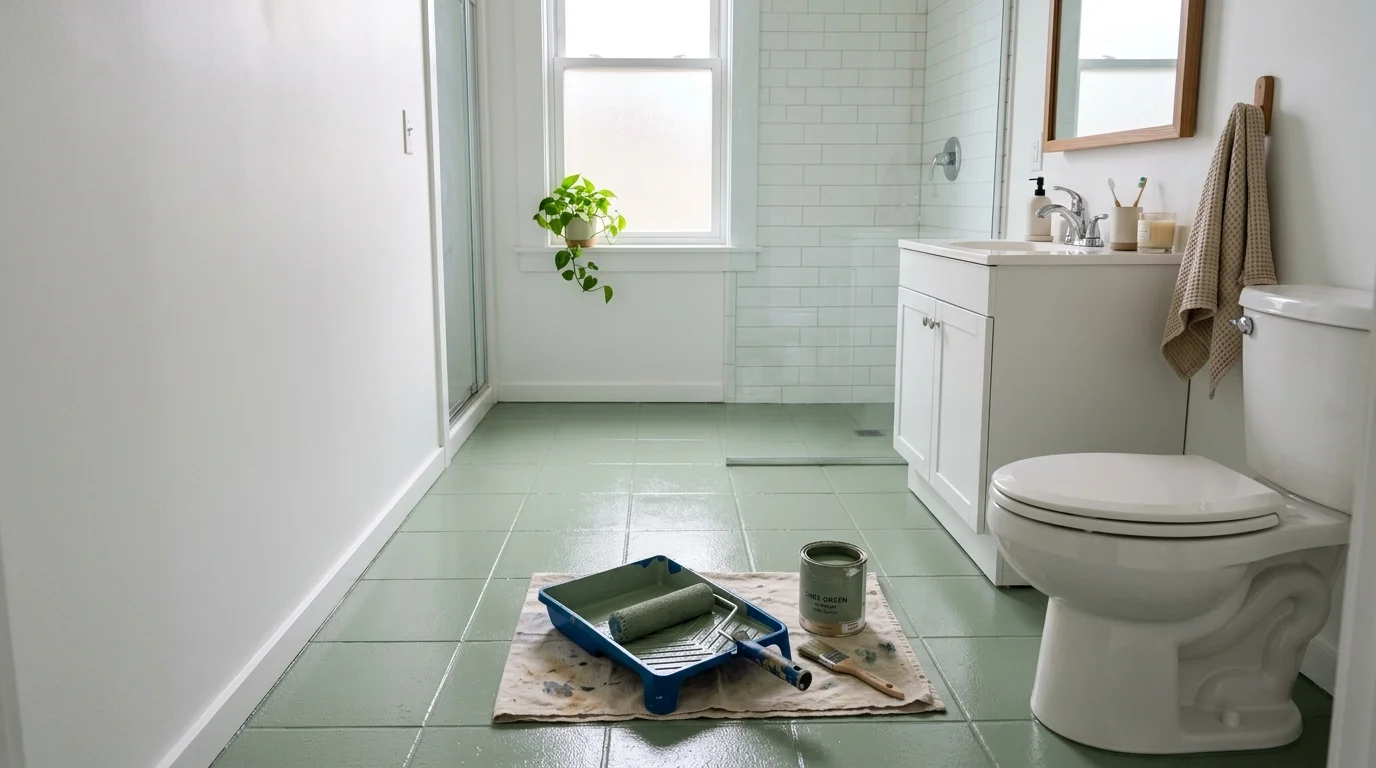
If you want to paint a tiled floor, start with the surface, not the paint can. A good tile floor paint can refresh an old bathroom, kitchen, laundry room or entryway, but it cannot hide loose tiles, crumbling grout, trapped moisture or poor cleaning.
Painting tile floors works best when the existing floor feels solid but looks outdated. This type of project can give you a budget tile floor makeover without demolition, dust or the cost of replacement. Still, you need realistic expectations. Paint sits on top of tile, so the finish depends on cleaning, sanding, primer, sealer and curing time.
This guide explains how to paint tile floors properly, what kind of floor paint to choose, when to use primer, how to seal the surface and how to prevent peeling, scratching and early wear.
Can You Paint Tile Floors?
You can paint a tiled floor when the tiles are clean, dry, secure and in good condition. Ceramic tile floors and porcelain tile floors usually work well because they can hold paint when you prepare them correctly.
A better question is whether your specific floor deserves paint. A powder room, bathroom, laundry room or low-traffic kitchen often makes a good candidate. Cracked, loose, damp or heavily worn flooring does not give paint a strong base. Paint may improve the look for a short time, but it will not fix a weak surface underneath.
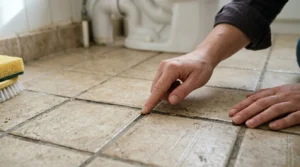
Use this simple rule before you begin: if the tile feels solid but looks ugly, painting can work. When the tile moves, cracks, or holds moisture, repair or replacement should come first.
Is Your Tile Floor a Good Candidate?
Inspect the floor before buying supplies. Check for loose tiles, cracked corners, missing grout, old caulk, stains, wax, soap scum, and moisture. Press gently on any tile that looks questionable. Movement means the tile needs repair before you add paint.
Bathroom floor tile, ceramic tile, porcelain tile and glazed tile can all handle paint when you prep them well. Glossy tile needs extra attention because slick surfaces make adhesion harder. Light sanding or scuffing helps primer and paint grip the surface.
Natural stone, travertine, marble, and slate need more caution. These materials can absorb coatings unevenly, and paint may change their original finish. Before you paint natural stone tile, test a hidden area and read the paint label carefully. The best candidates are stable floors in rooms without constant water, heavy furniture movement, or daily grit from outdoor shoes.
Pros and Cons of Painting Tile Floors
Painting floor tiles makes sense when you want to update tile floors without replacing them. It costs less than demolition, gives you control over color and design, and can completely change the room. A painted tile floor can look clean and simple, or you can create a stencil tile floor, checkerboard pattern, or faux cement tile design.
Durability creates the main tradeoff. Painted tile floors can scratch, peel, or chip when the surface lacks proper prep or the room gets heavy traffic. Moisture can also cause trouble in bathrooms, laundry rooms and kitchens. This does not make tile painting a bad idea. It means you should treat it as a smart budget update, not a permanent replacement for new tile. Choose paint when you need a quick, affordable refresh. Replacement makes more sense when the floor has structural damage, constant water exposure or heavy daily use.
Best Paint for Tile Floors
The best paint for tile floors comes from products made for floors, tile, or high-traffic surfaces. Regular wall paint creates problems because manufacturers do not build it for shoes, mopping, water, abrasion, or furniture movement. It may cover the tile at first, but it often wears down quickly.
Before you paint a tiled floor, choose a product that clearly allows floor or tile use. Floor and tile paint usually gives DIYers the easiest path. Some products come as a complete floor coating system with a base coat and top coat. Rust-Oleum floor paint and similar interior floor coatings work well for many projects because they target surfaces that receive foot traffic. Read the product label before you start because some systems need primer while others do not.
Epoxy paint can create a harder finish and may suit high-use areas. However, epoxy can challenge beginners because it often has stricter mixing rules, stronger fumes and a shorter working time. Enamel paint can also work when you pair it with strong prep and a compatible sealer.
Some homeowners use porch and patio paint on bathroom floor tile or laundry room tile. This can work only when the product suits the surface and room conditions. The safest move is simple: do not use a product unless the label supports your floor type.
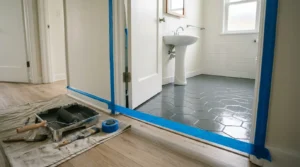
Primer, Sealer and Top Coat
Primer, sealer and top coat do different jobs. Primer helps paint grip difficult surfaces. Sealer protects the painted finish. A top coat adds durability and helps the floor handle cleaning, moisture and light abrasion.
A bonding primer helps when the tile feels glossy, slick or hard to grip. Many DIYers use products like STIX bonding primer on difficult surfaces because they create a stronger base for paint. Some floor coating kits bond without primer, so follow the product instructions instead of guessing.
Most painted tile floors benefit from sealer. A clear coat, water-based urethane sealant or tile floor top coat helps protect the paint from scratches and cleaning wear. This step matters most in bathrooms, kitchens, laundry rooms and entryways.
Finish choice also affects the final look. Matte and satin finishes hide small flaws and often look more natural. Semi-gloss and gloss finishes wipe clean more easily, but they can show imperfections and may feel slicker. In bathrooms or laundry rooms, consider a non-slip sealer or a floor coating system that allows an anti-slip additive.
Tools and Materials You Need
Good preparation requires the right supplies. For cleaning, gather a vacuum, sponge, scrub brush, microfiber cloth, bucket, and a strong degreaser such as TSP cleaner or Krud Kutter. For surface prep, keep sandpaper, painter’s tape, paintable caulk and a sanding block nearby.
For painting, use tile floor paint, bonding primer if the product requires it, a paint tray, angled brush, small roller and roller covers made for smooth surfaces. A tile stencil, delicate surface tape, artist brush or measuring tape can help if you plan to add a pattern. Prepare everything before you block off the room. Floor painting becomes frustrating when you need to stop halfway while the coating starts drying.
How Much Paint Do You Need?
Measure the length and width of the room, then multiply both numbers to calculate the square footage. Check the paint label for coverage and remember that most floors need at least two coats of color and one or more coats of sealer. A small bathroom may not need much paint, but you should still keep extra product for future touch-ups. Chips and scratches become much easier to fix when you have the original paint and sealer.
How to Prep Tile Floors for Painting
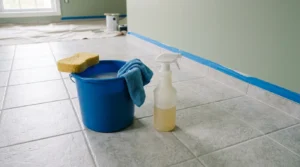
To paint a tiled floor properly, create a clean, dull, dry and stable surface. Paint struggles to bond when tile has grease, shine, dust or moisture. Start by inspecting the tile and grout. Repair loose grout, fill small gaps, and remove failing caulk. After that, clean the floor thoroughly. Tile often holds soap residue, wax, kitchen grease, old cleaners, and grime around grout lines and corners. Scrub the entire surface with a degreaser and take your time.
Rinse the floor with clean water after scrubbing. Leftover cleaner can interfere with adhesion, so do not skip this step. Once the floor dries, lightly sand or scuff glossy tile. You do not need to remove the tile finish completely. You only need to dull the shine enough for primer or paint to grip.
Vacuum the sanding dust, wipe the floor with a damp microfiber cloth, and let it dry fully. For extra confidence, test the primer or paint in a hidden spot. Let it dry, then check whether it scratches off easily. A failed test area warns you before you commit to the full floor.
How to Paint Tile Floors Step by Step
Begin at the farthest corner of the room and work toward the door. This keeps you from trapping yourself. If your product requires primer, apply a thin, even coat and let it dry fully before painting.
Use an angled brush to cut in around baseboards, toilets, cabinets, tubs and corners. A small roller works best for the main floor area. Apply thin coats rather than heavy ones. Thick paint can dry unevenly, stay tacky or create ridges around grout lines.
After the first coat dries, apply the second coat if the product instructions recommend it. Most tile floors look better and last longer with more than one thin coat. Cover grout lines carefully, but avoid flooding them with paint.
If you want a stencil tile floor or checkerboard tile floor, let the base coat dry first. Use delicate tape and thin layers to reduce bleeding. A small artist brush can clean up edges and corners. Seal the floor after the design or final color coat dries. This step protects the finish and helps the painted tile floor handle normal use.
Drying and Curing Time
Drying and curing do not mean the same thing. Dry paint may feel safe to touch, but cured paint has hardened enough for regular use. Many painted tile floor problems begin when people walk on the floor, add rugs, or move furniture back too soon.
Follow the product instructions for dry time between coats. After the final coat or sealer, give the floor enough time before daily use. Keep heavy furniture, bath mats, rugs and wet cleaning away from the surface until the coating cures. Early pressure can leave marks or pull at the finish. Ventilation, humidity and temperature also affect dry time. A humid bathroom may need more time than a dry, well-ventilated room.
How Long Does a Painted Tile Floor Last?
A painted tile floor can last from several months to a few years. Surface condition, prep quality, paint type, sealer, foot traffic and maintenance all affect the lifespan. Low-traffic bathroom floor tile often holds up better than a busy kitchen, hallway or mudroom.
Durability depends on how well you clean the tile, whether you sand glossy areas, whether you use primer correctly, how long the paint cures, and how gently you clean the floor afterward. Pets, shoes, chair legs and harsh cleaners can shorten the life of the finish.
To make painted tile floors last longer, use rugs in high-traffic areas, wipe up water quickly, avoid dragging furniture and clean with mild products instead of abrasive scrubbers.
Common Mistakes to Avoid
Poor cleaning causes many failures. Even clean-looking tile can hold grease, soap scum, wax, or cleaner residue. Paint needs a clean base to grip. Paint a tiled floor creates another common problem. It cannot handle floor traffic, so it may scratch and peel quickly. Glossy tile also needs sanding unless the paint product clearly says sanding is unnecessary. Thick coats create trouble as well.
Thin coats dry better, cure harder, and look smoother. Rushing the cure time can ruin the finish even when the floor looks dry. Damaged tile needs repair before paint. Paint cannot stabilize loose tile, cracked grout, or moisture problems.
Troubleshooting Painted Tile Floor Problems
Peeling usually points to weak adhesion. Poor cleaning, skipped sanding, missing primer, trapped moisture, or early foot traffic can all cause it. To fix peeling, remove loose paint, sand the damaged area, clean it carefully, repaint, and reseal.
Bubbling often happens when moisture gets trapped under the sealer or when the previous layer has not dried enough. Let the area dry, sand it smooth, and reapply thin coats.
A sticky or tacky floor may need more cure time. Thick coats, high humidity, or incompatible products can also cause this problem. Do not cover the floor with rugs or mats while it still feels soft. You can touch up most small scratches and chips. Clean the damaged spot, sand rough edges lightly, apply matching paint, and reseal the area.
How to Clean and Maintain Painted Tile Floors
Painted tile needs gentler care than unpainted tile. Sweep or vacuum regularly to remove grit that can scratch the coating. After the floor cures, mop with mild soap and water using a soft mop.
Avoid abrasive pads, harsh chemicals, steam mops, standing water, and aggressive scrubbing. In bathrooms, wipe up puddles and avoid leaving wet bath mats on the floor for long periods. In kitchens and entryways, use rugs where shoes, chairs or repeated foot traffic can wear the finish. Good maintenance does not require much effort. Protect the coating from scratches, water and harsh cleaning, and it will look better for longer.
Paint a tiled floor Ideas
A painted tile floor can look simple or decorative. A solid color gives the room a cleaner, calmer look, especially when the original tile feels busy or outdated. White, warm gray, charcoal, beige, and soft green work well in bathrooms and laundry rooms.
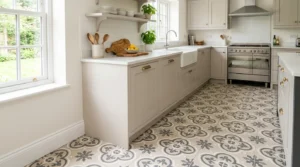
A stencil tile floor can mimic cement tile or encaustic tile without removing the original surface. This approach works best when the tile shape looks even, and the pattern stays simple. A checkerboard painted tile floor also works well in bathrooms, kitchens, and laundry rooms. Black and white feels classic, while cream and beige create a softer look. Small rooms usually look better with fewer colors. A simple design often looks more expensive than a pattern that competes with the rest of the space.
Painting Tile Floors by Room
Bathroom tile floors attract many DIYers because paint can change the room quickly. The project works best outside the shower, where the floor does not stay wet. Ventilation, sealer and routine water cleanup matter in this space.
Kitchen tile floors need careful cleaning because grease builds up over time. They also receive more foot traffic, so a durable sealer becomes important. Laundry room tile floors require moisture awareness near washers, sinks, and appliances.
Entryways and mudrooms create the toughest conditions because shoes bring in dirt and grit. If you paint these spaces, protect them with rugs and expect more maintenance. Shower floor tile needs a different approach. Standard floor paint usually cannot handle constant water exposure, so use only a product that specifically allows that use.
Painted Tile Floors vs Replacing Tile
Painting costs less, takes less time, and creates less mess than tile replacement. It makes sense when the tile feels solid, and you mainly dislike the color or style. It also works well as a temporary update, budget refresh, or bridge before a larger renovation.
Replacement makes more sense when the floor has loose tile, uneven areas, cracks or moisture problems. It also gives you a stronger long-term surface for heavy daily use. Painting improves appearance, but replacement solves deeper flooring issues.
FAQs
Can you paint ceramic tile floors?
Yes, you can paint ceramic tile floors when they are clean, dry, and stable. Strong prep, suitable primer and sealer help the finish last longer.
Can you paint a tiled floor?
Yes, porcelain tile floors can handle paint, but they often feel slick and dense. Sanding or bonding primer may improve adhesion.
Can you paint a tiled floor without sanding?
Sometimes, but only when the product says sanding is not required. Glossy tile usually benefits from sanding because it helps the paint bond.
Does painted tile scratch easily?
It can scratch when the floor lacks proper prep, sealer or cure time. Scratches also happen more often in high-traffic areas or where furniture gets dragged.
How long before you can clean painted tile floors?
Wait until the coating cures before wet cleaning. During the early curing period, sweep gently and avoid mopping, rugs and heavy use.
Final Thoughts
The best way to paint a tiled floor is to slow down before the first coat. Inspect the surface, clean it deeply, sand glossy tile when needed, use the right floor paint, seal the finish and respect the curing time.
Done correctly, painted tile can refresh an outdated bathroom, kitchen, laundry room or entryway for much less than replacement. Rushed work creates peeling, scratching and bubbling. Preparation, product choice and patience decide the result.
Leave a Reply